Posts

My Cross-Country Road Trip

Mobile device users: this post is best read horizontally.
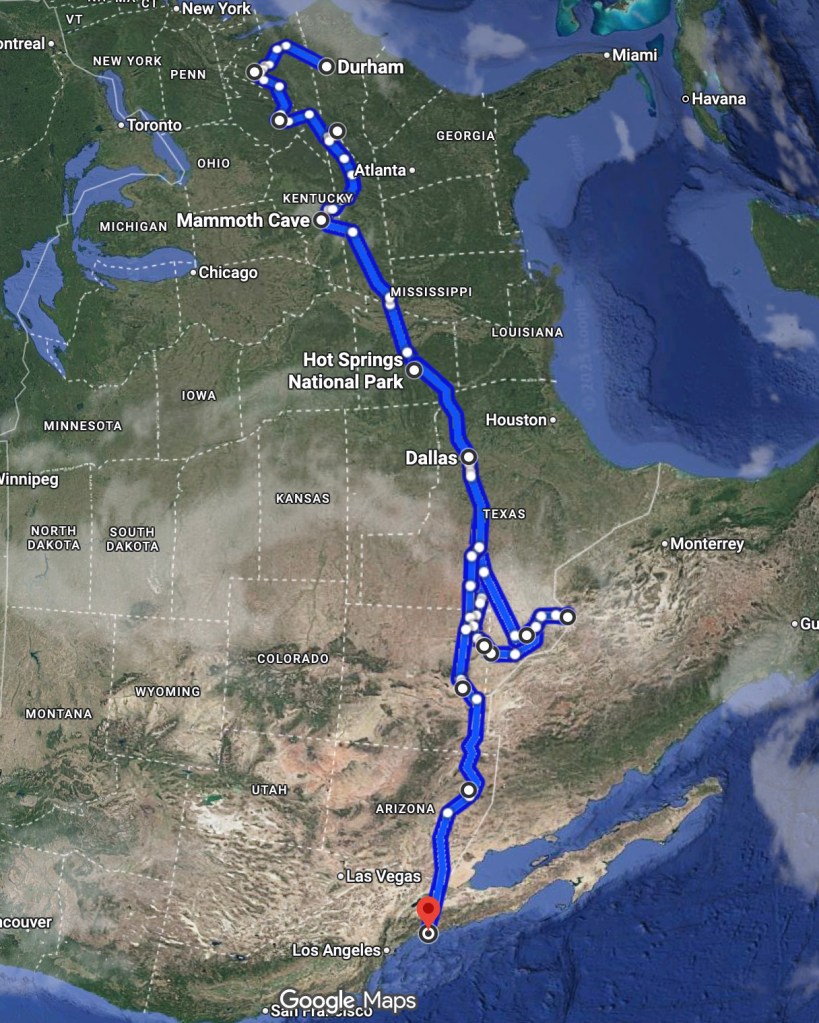
I recently moved from Durham, North Carolina to San Diego, California. I used this opportunity to take a road trip across the southern United States with my dog. The total driving distance was about 5,000 miles, which we covered in the span of two weeks.

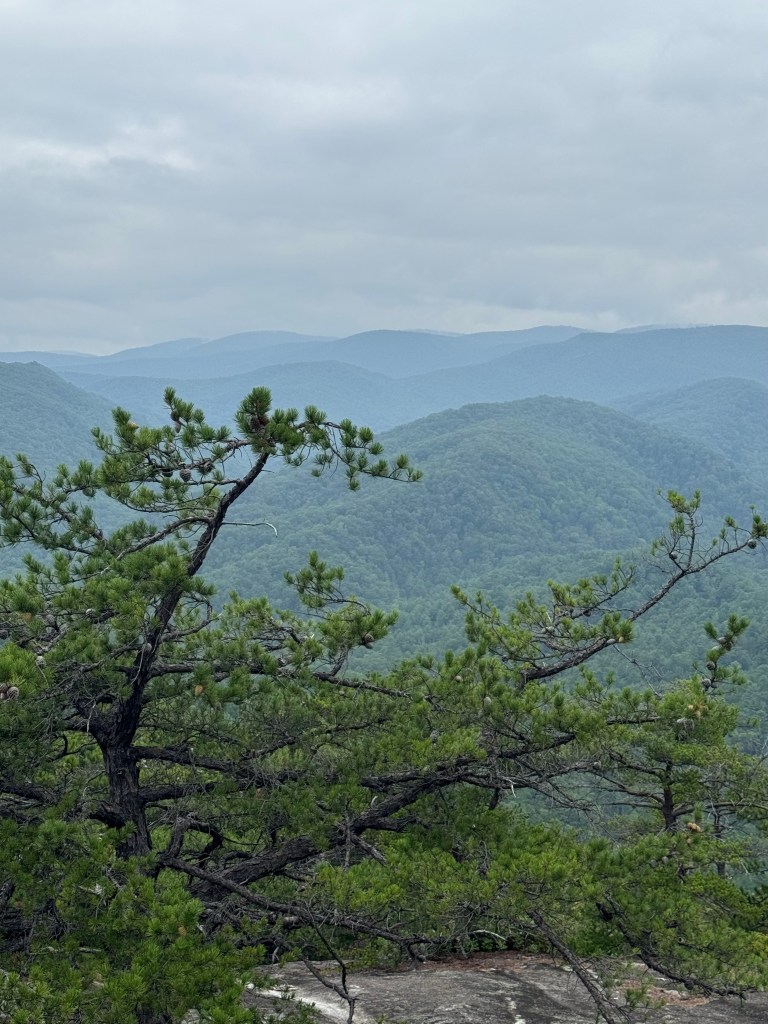
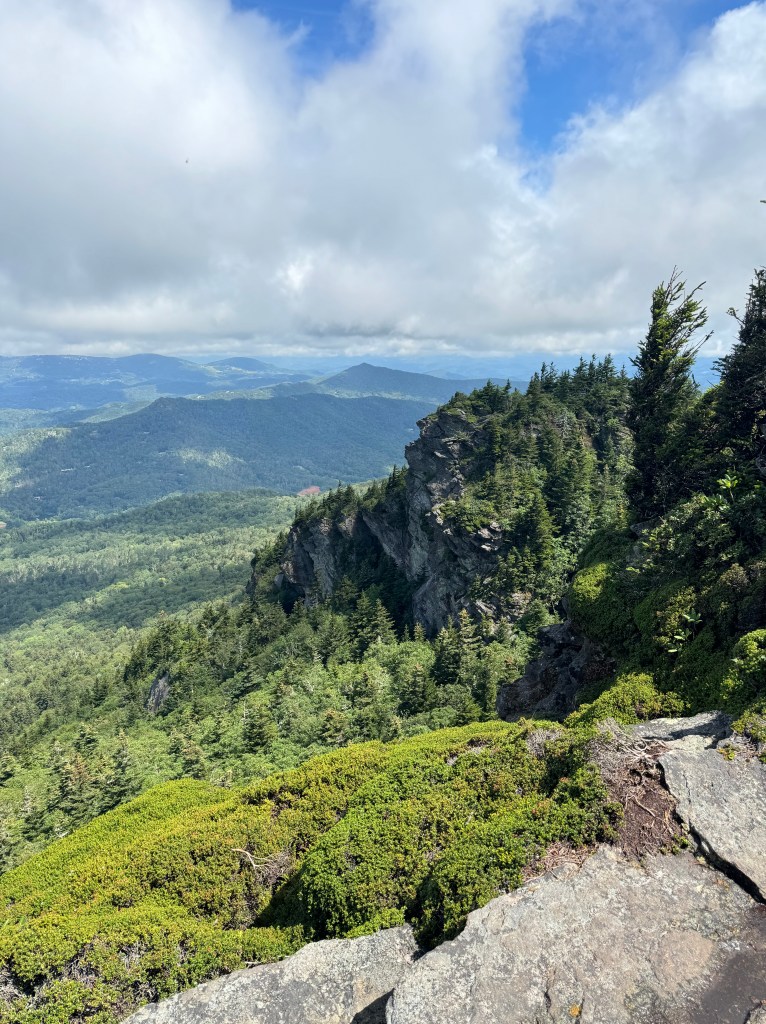
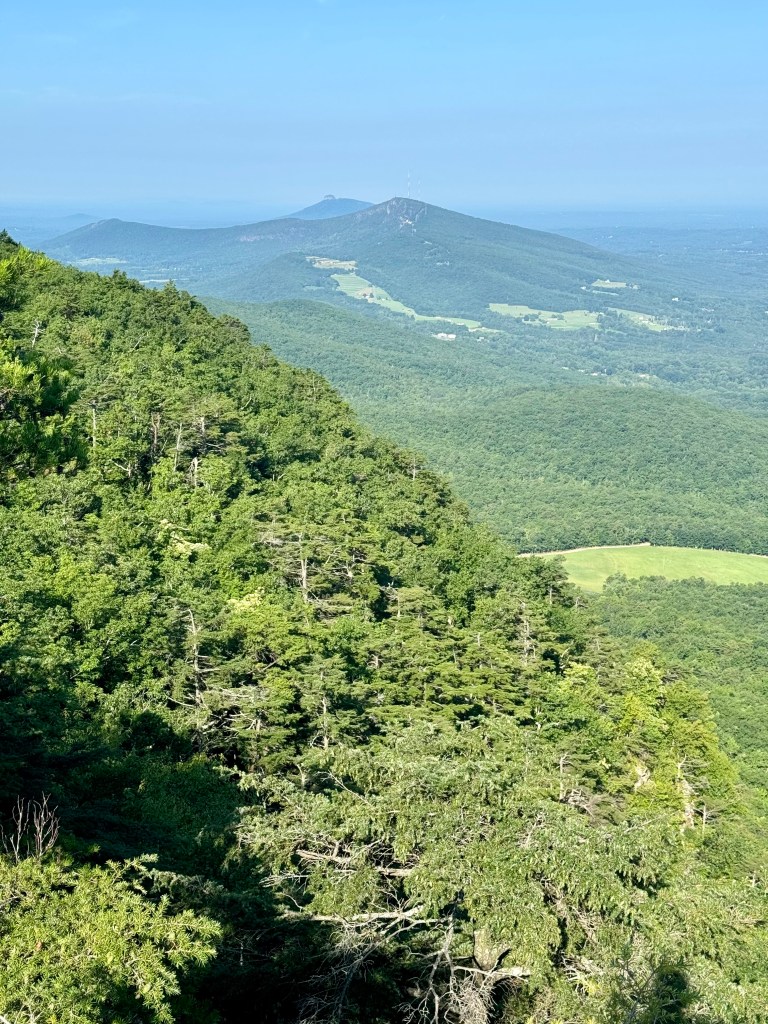
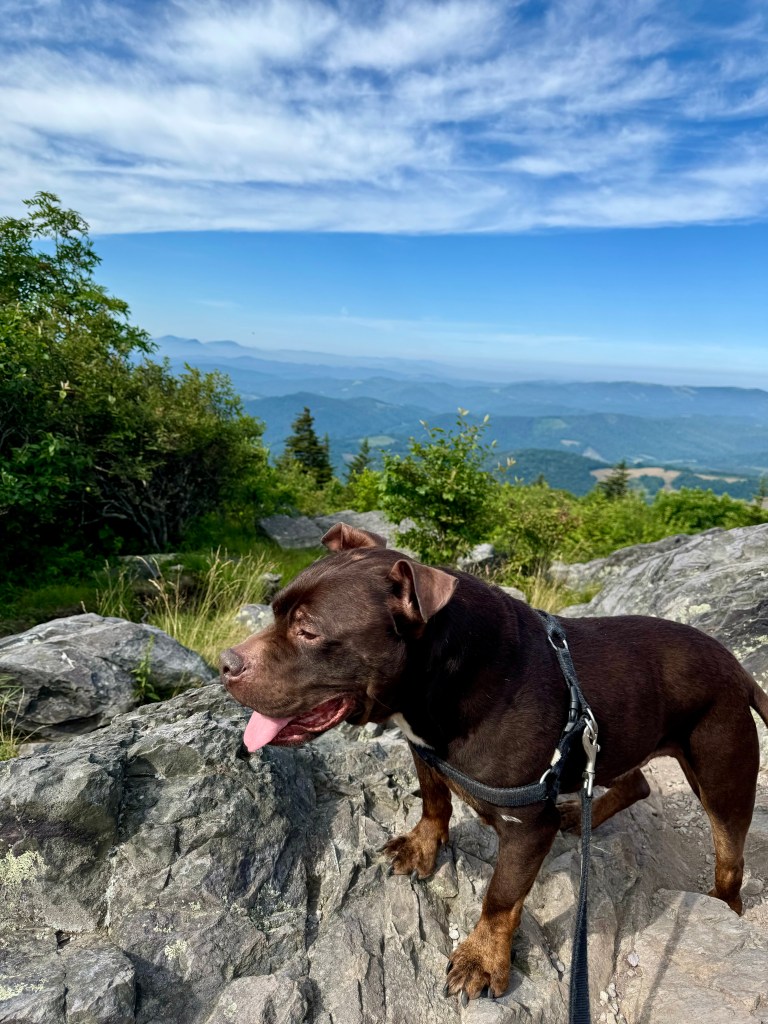
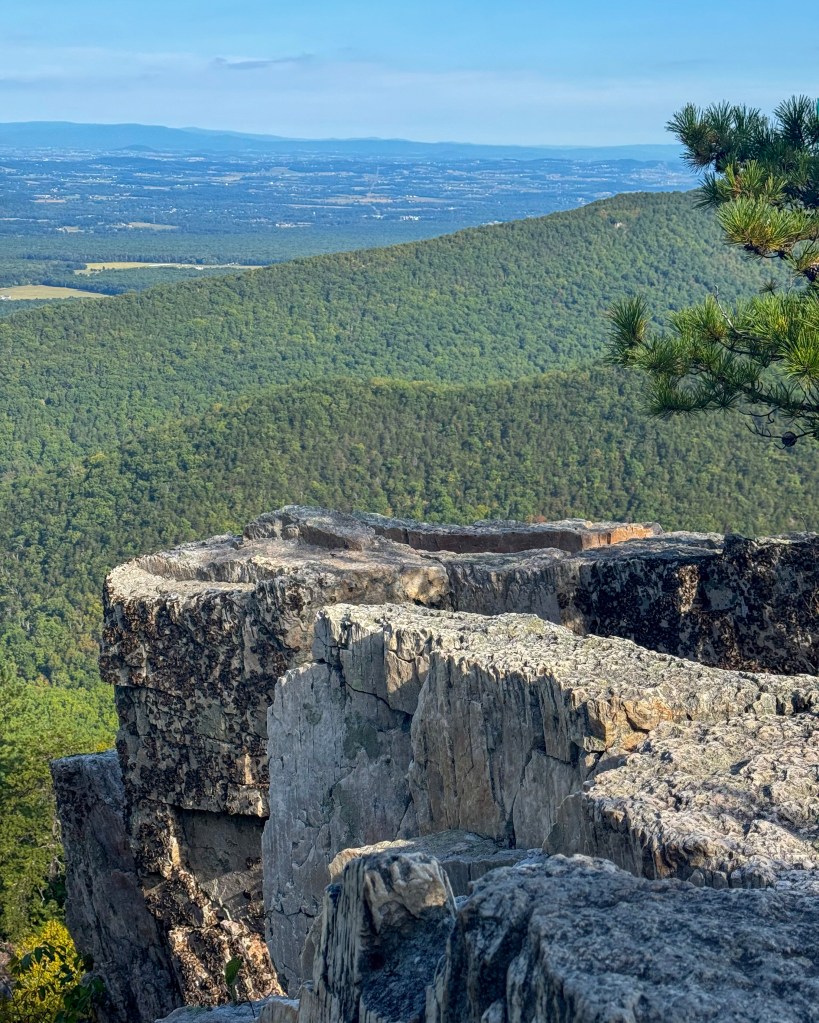
Our first stop was Shenandoah National Park in Virginia. After catching sunset at the Hawksbill Summit (4049′), Shenandoah’s highest peak, and spending the night in Harrisonburg, we hiked the Riprap – Wildcat Ridge circuit the next day. This strenuous 9.8-mile loop featured several stream crossings, panoramic views at an overlook named Chimney Rock – where this photo was taken – and a final 2-mile stretch along the Appalachian Trail.
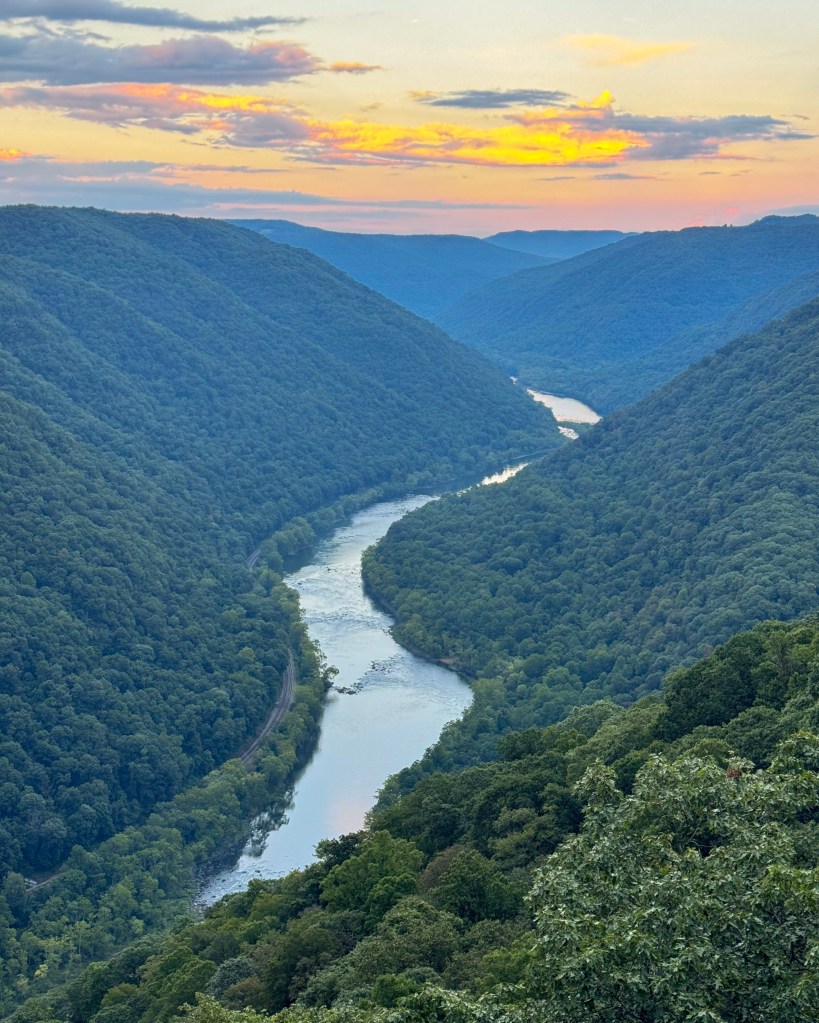
A 3-hour drive brought us to the New River Gorge National Park & Preserve, located in West Virginia. Re-designated as a national park in 2021, this park protects more than 70,000 acres of land along 53 miles of the New River. As dusk fell, we enjoyed viewing the river from the Grandview Rim and along the Castle Rock Trail.

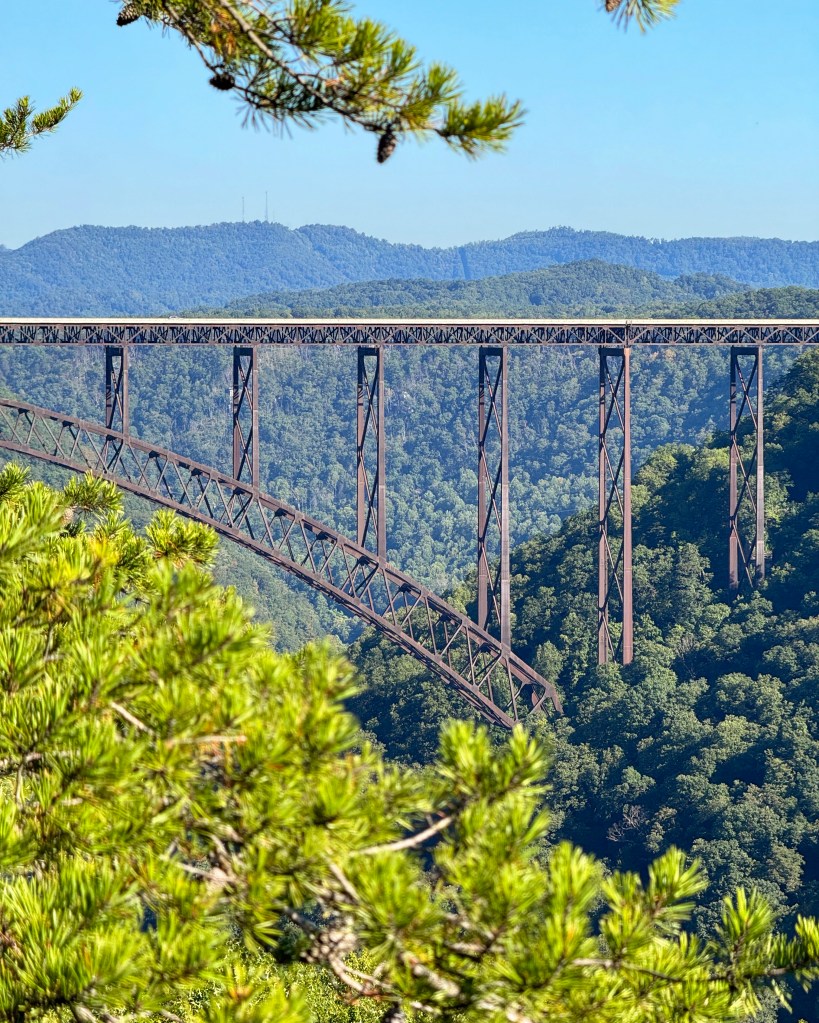
We spent the night near Fayette Town Park and, from there, hiked the Fayetteville Trail and Long Point Trail to reach arguably the best overlook for the New River Gorge Bridge, the longest steel span in the western hemisphere and no doubt the centerpiece of this national park. It was foggy when we reached Long Point, but the weather soon cleared up, allowing me to take the picture to the right (zoom in to see how tiny a car is in relation to the bridge!).
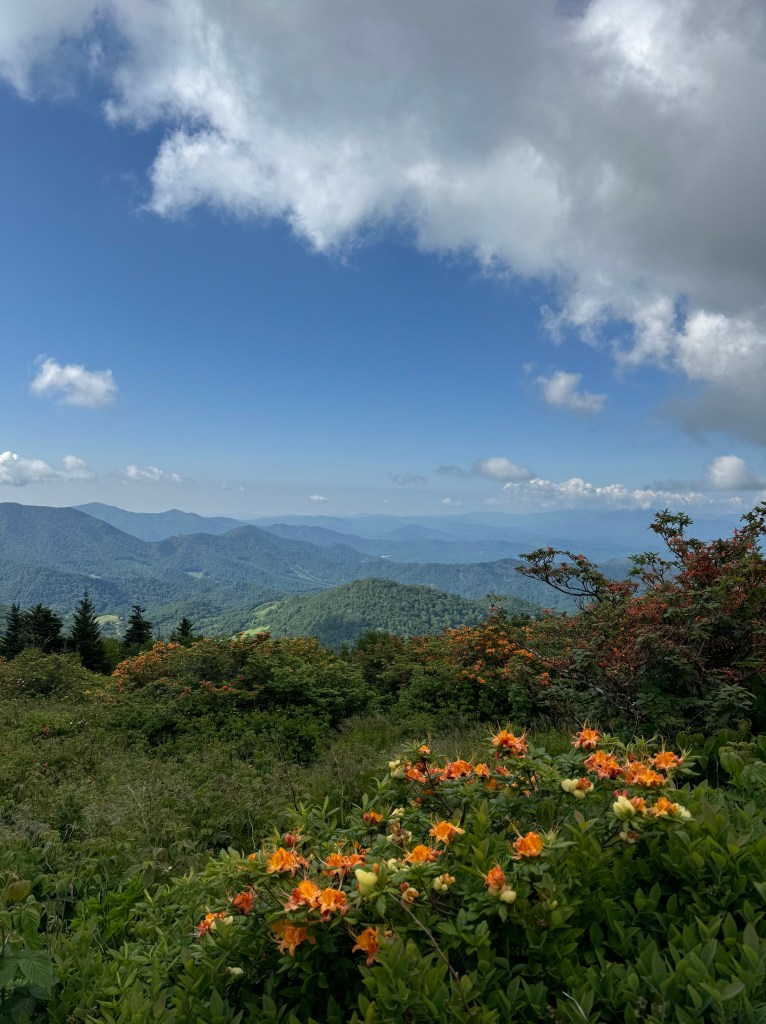
On day 4, we looped back south to the North Carolina – Tennessee border for a hike through the Roan Mountain. The area has yet to recover from damage caused by Hurricane Helene. It nevertheless remained one of my favorite hiking spots in the high country, not least for its natural population of rhododendrons, which are in full bloom around mid-June. For this visit, We parked at the Carver’s Gap and hiked to the Roan High Bluff (6268′) and Rhododendron Gardens via the Appalachian Trail.

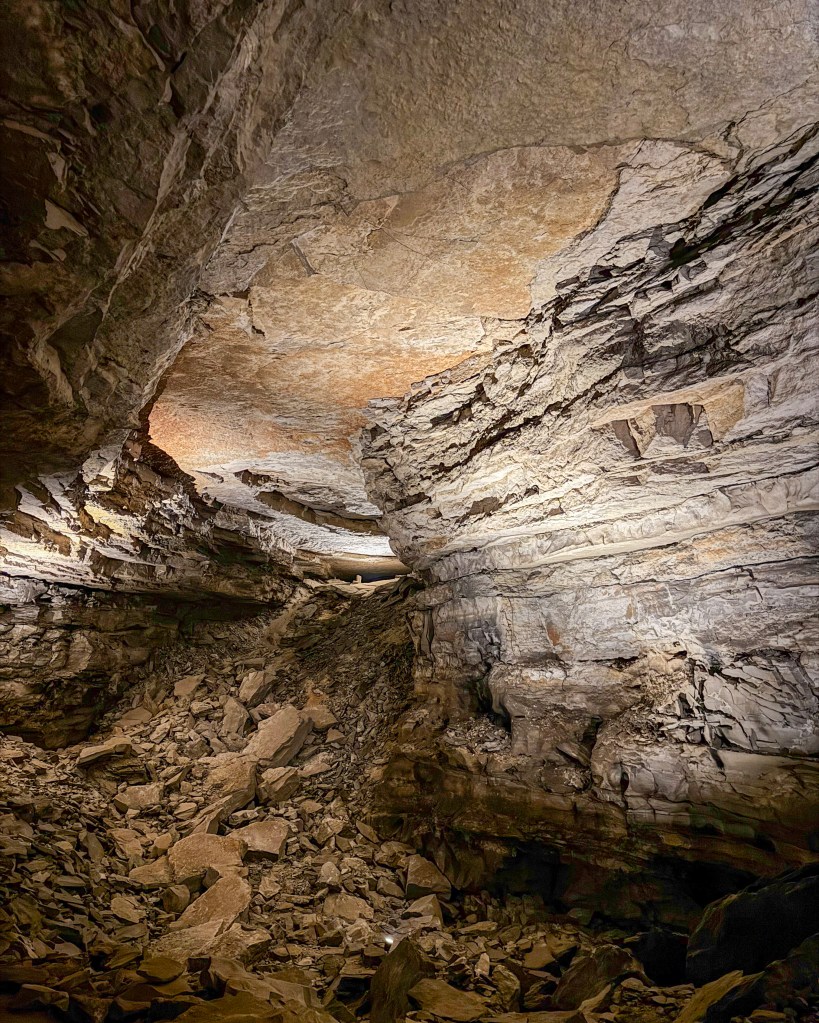
I did not know Mammoth Cave existed before planning this trip. I was positively stunned when I went on a tour at the Mammoth Cave National Park. Located in Kentucky, it is the longest known cave system, with more than 400 miles of surveyed passageways. The 4-hour Grand Avenue Tour included 4 miles of hiking, stories about the cave’s unique cultural history, and rare views of gypsum formations known as “sunflowers,” “deer antlers,” and “celery stalks.”
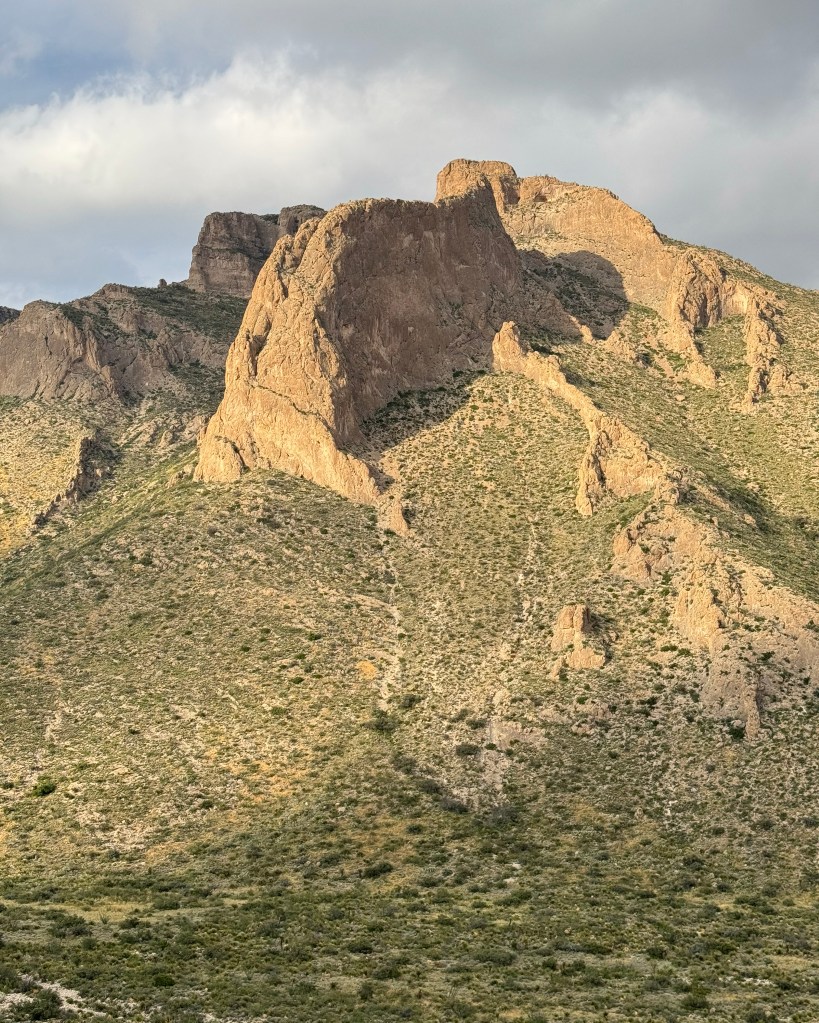
After driving through Tennessee and Arkansas, visiting my college friend in Dallas, and boarding my dog, I arrived at Carlsbad Caverns National Park in New Mexico. The 1-mile Slaughter Canyon Cave Trail offered a great introduction to the geological and ecological features of the Southwest and hinted at what to come for the next couple of days. After taking this picture, I made my way to the Bat Flight Amphitheater to watch hundreds of thousands of Brazilian free-tailed bats take flight in search of food and water.

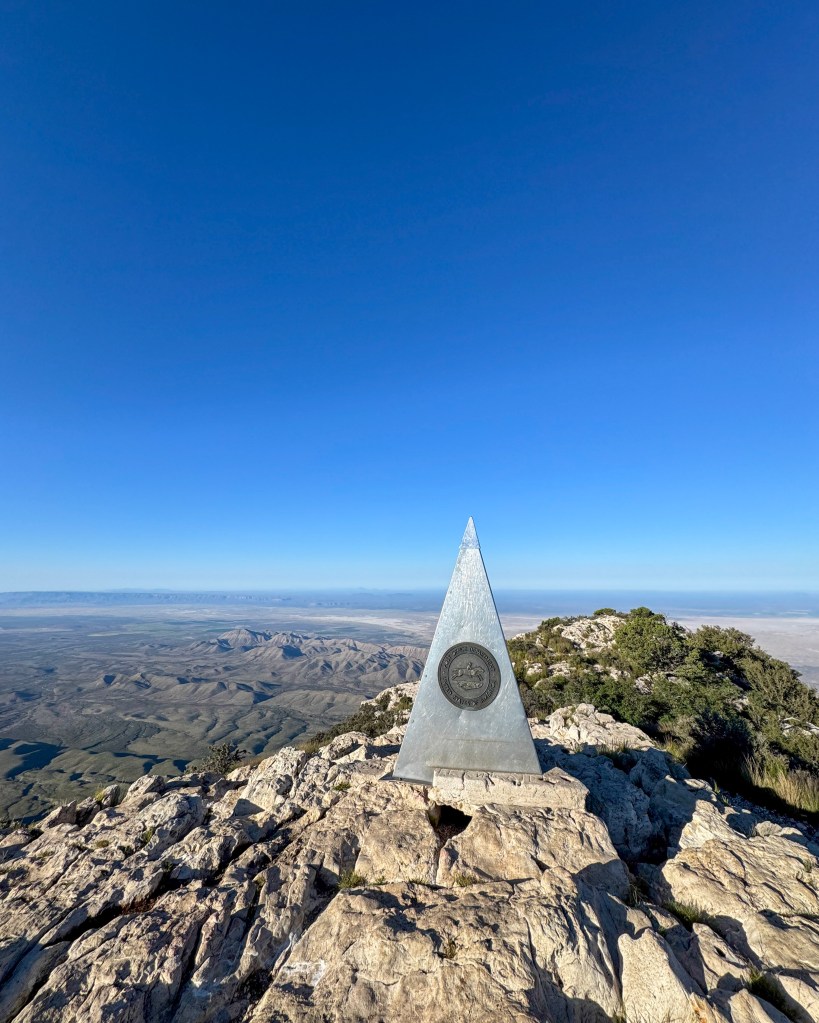
I celebrated my 22nd birthday on this road trip! The goal was to summit Guadalupe Peak (8751′), Texas’s state high point, via an 8.4-mile hike in the Guadalupe Mountains National Park. I arrived at the trailhead at 5:00AM and, with the help of a flashlight and some courage, reached the peak at around 9:00AM on a windy yet beautifully clear day.
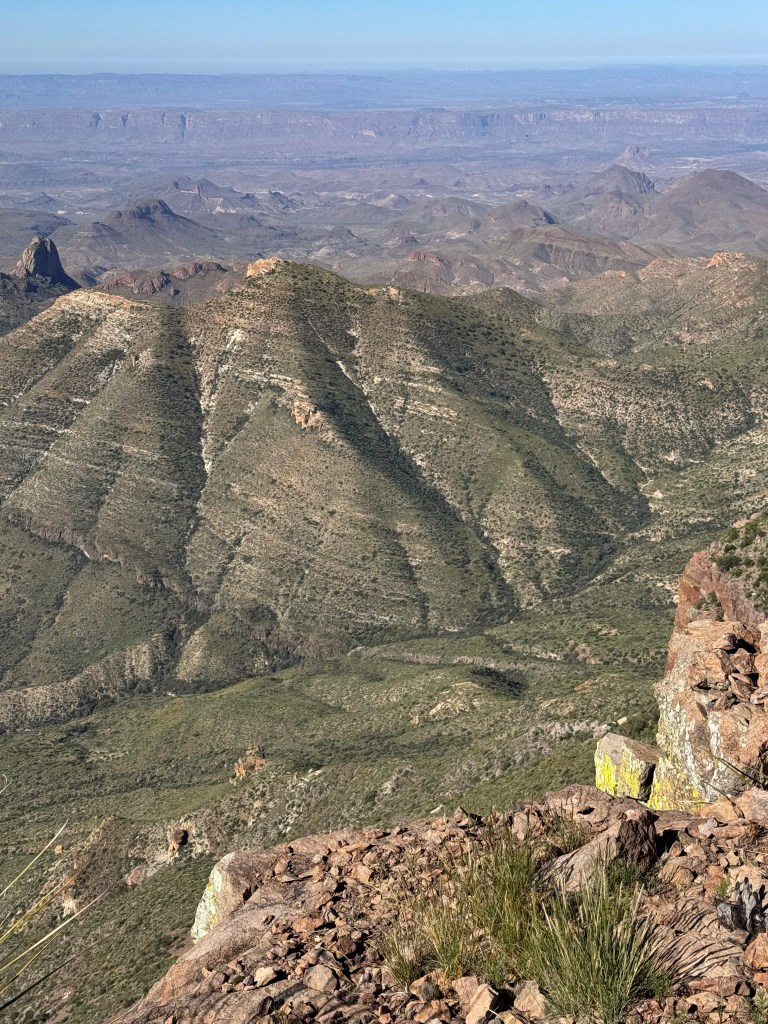
The next day I challenged myself even further by attempting a 16-mile hike in Big Bend National Park for a comprehensive view of the Chisos Mountains and Basin. This strenuous circuit hike combined the Laguna Meadows Trail, the South Rim Trail, the East Rim Trail, the Boot Canyon Trail, the Emory Peak Trail, and the Pinnacles Trail. I adored the diversity of the flora and fauna here (saw my first wild tarantula!) and would totally come back for birdwatching.

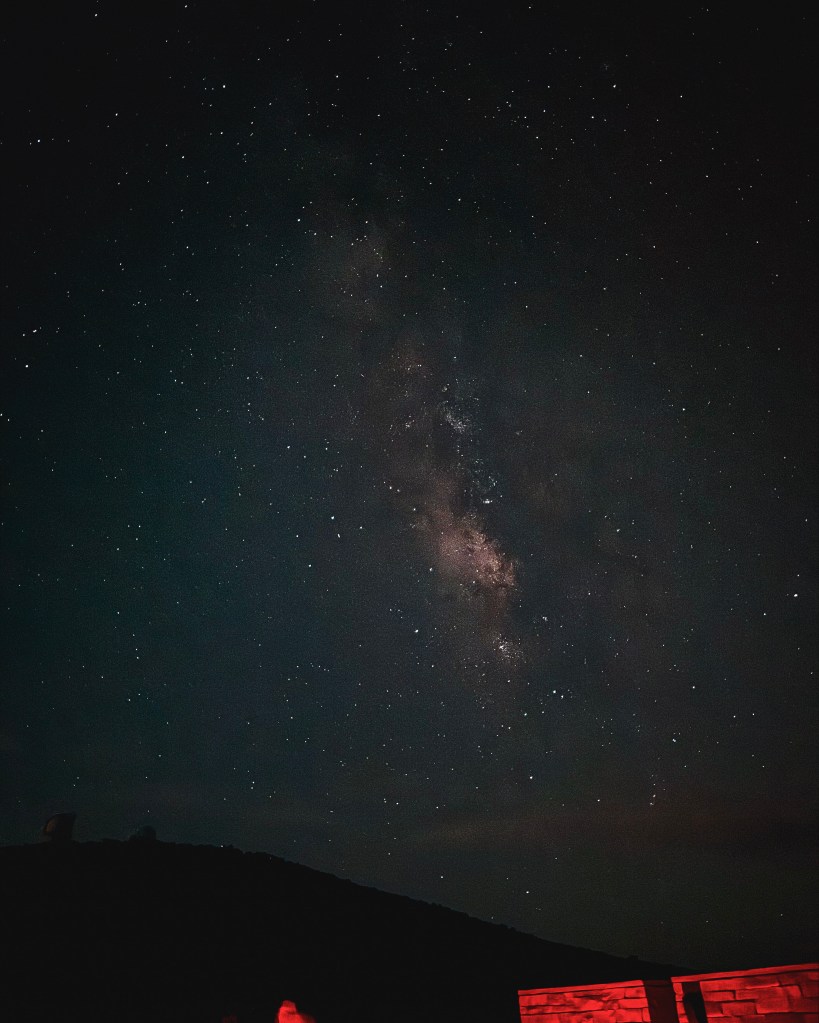
After the hike at Big Bend, I drove northward to the University of Texas’s McDonald Observatory, located at the core of the largest Dark Sky Certified preserve in the world. I got to view Saturn, a dwarf star, and various young and old galaxies as a participant of their weekly Star Party.
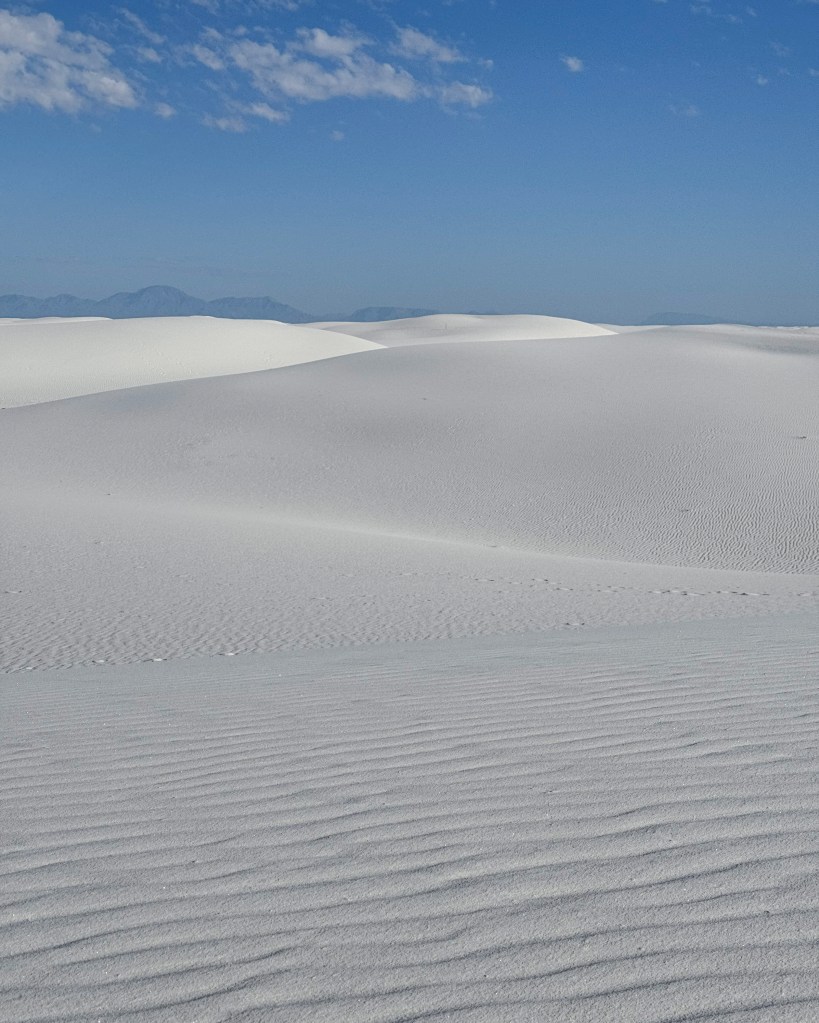
The road trip was now coming to a close. My dog and I explored the world’s largest gypsum dunefield at White Sands National Park. In addition to being incredibly hot, I remember this park as being a fun playground for my dog to frolic on.

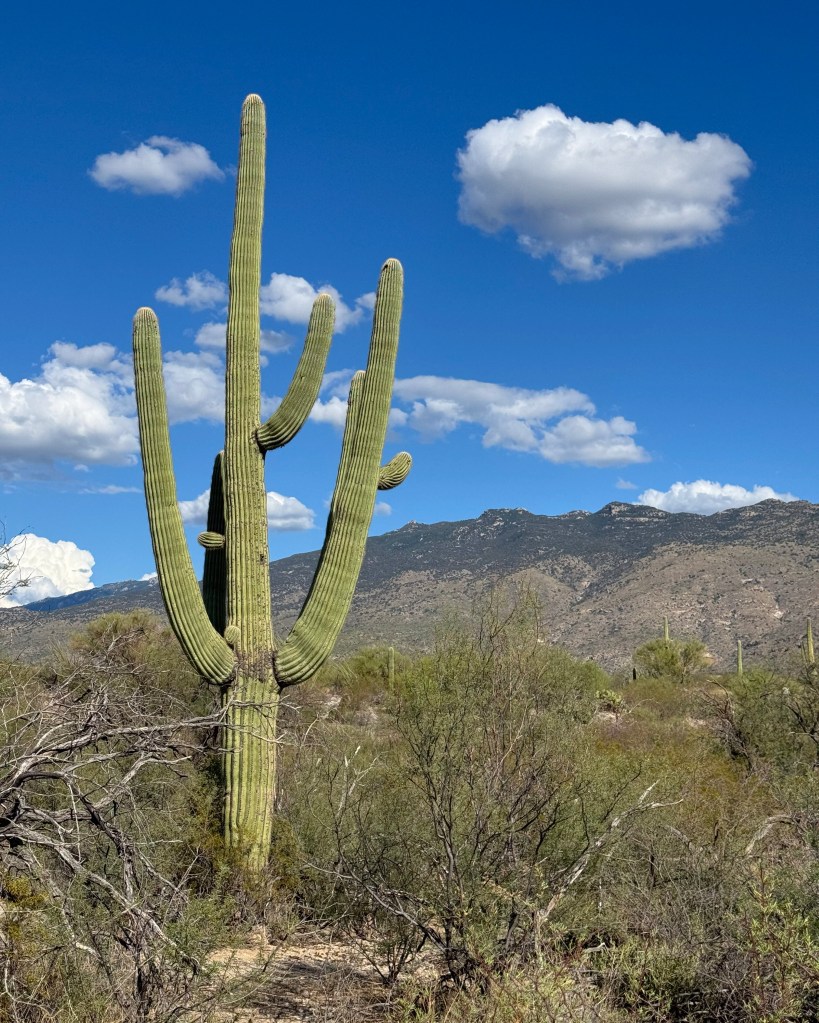
Our last major stop was Saguaro National Park, which is next to Tucson, Arizona, and named after the tree-like cactus (Carnegiea gigantea) shown in the picture. It was getting unbearably hot for us so we opted for the scenic drive along the aptly-named Cactus Forest Drive and a stroll through the Desert Ecology Trail.
Best Hiking Trails in the North Carolina High Country

I have found hiking in the North Carolina high country to be one of the most exciting experiences of my post-undergrad life. From the stunning scenery to its unique geology1 and cultural history2, I am fascinated by everything Appalachian Mountains. In this blog post, I would like to share five of my favorite summer hiking day trips in the North Carolina mountains. These hikes are arranged in order of difficulty, from moderate (e.g., the Stone Mountain Loop Trail) to strenuous (e.g., the Grandfather Trail). You can use this link to access the list of hikes in Google Maps.

In addition to documenting my weekend adventures, one of my goals in putting together this list is to make hiking in North Carolina accessible to more people. Hiking is one of the most budget-friendly activities and is, therefore, an excellent option for those looking for affordable forms of recreation. To safely hike these trails,3 which are well-marked and mostly well-maintained,4 all you likely need is water, snacks, a backpack, hiking boots, and, in the case of certain state parks, entrance fees. Most of these trails are dog-friendly: I did every hike with my eight-year-old dog, with the exception of Charlies Bunion and the Macrae Peak, where pets are not allowed.

Grassy Ridge Bald, Roan Mountain

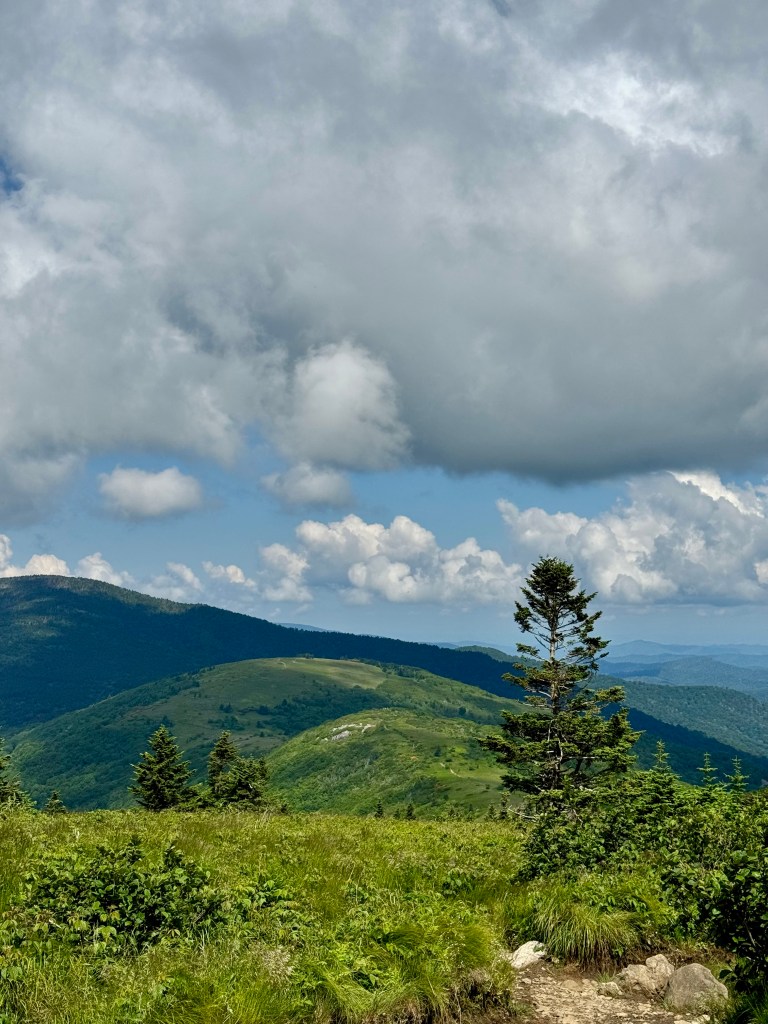
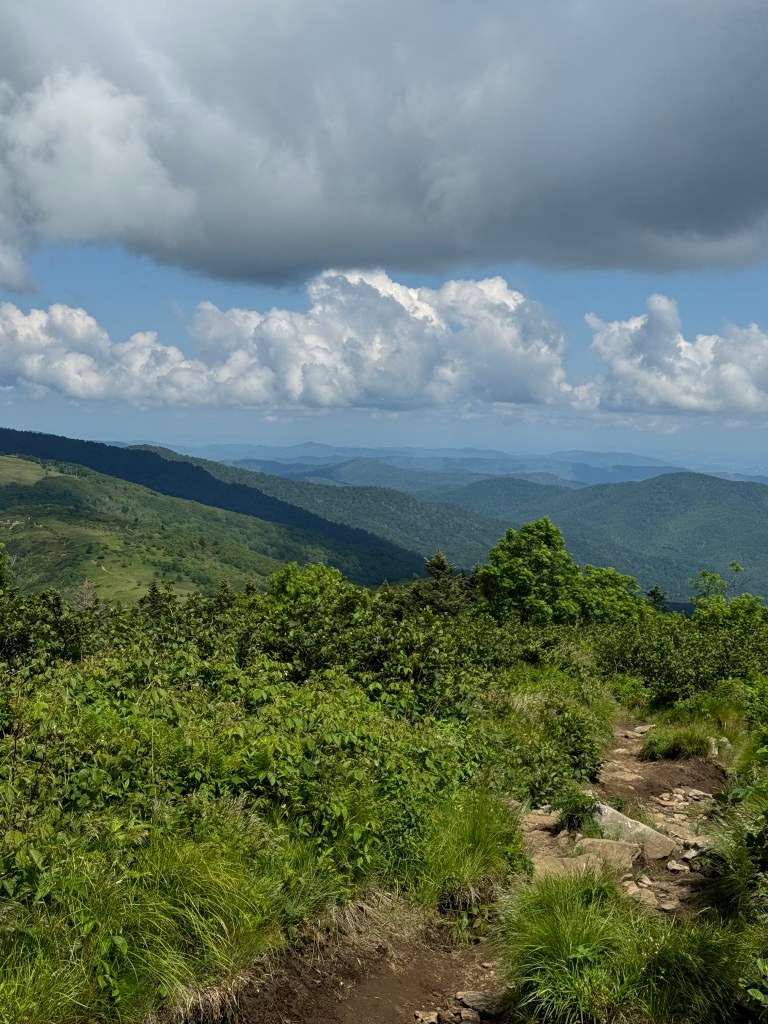
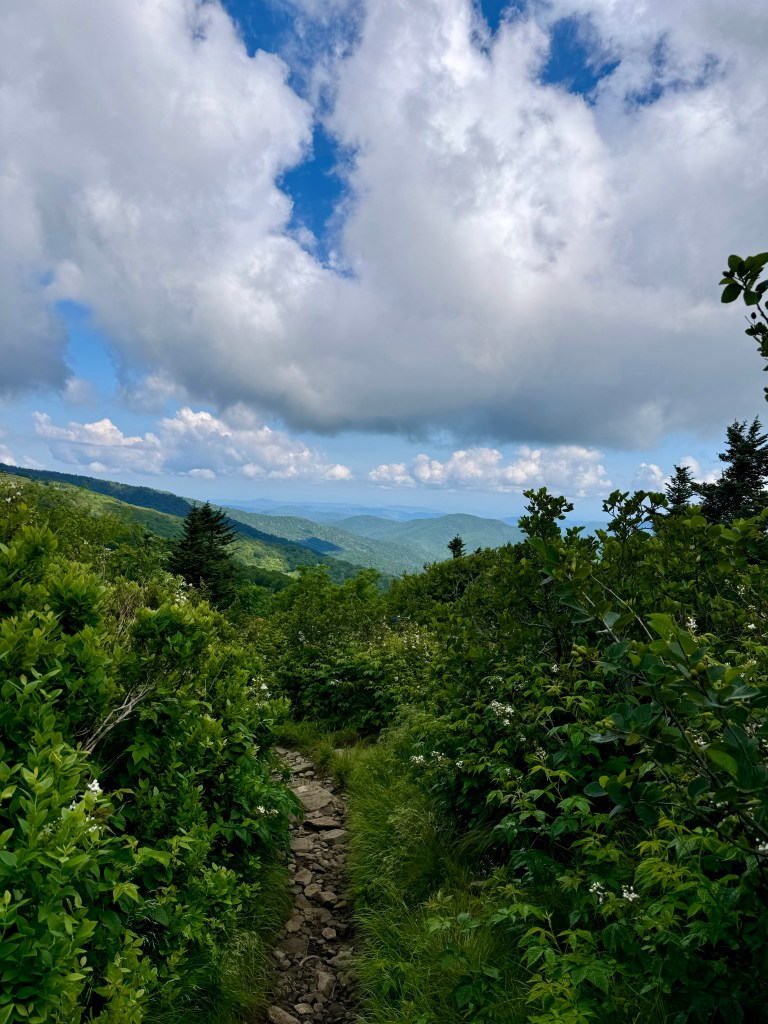
Grassy Ridge Bald is a popular destination that sits on the border of North Carolina and Tennessee. It is the first trail I decided to “seriously” hike this summer, and incidentally the easiest. This out-and-back hike starts at the Carvers Gap and follows a 2.5-mile section of the Appalachian Trail, for a total of 5 miles and an elevation gain of about 1,000 feet. The surrounding mountains are covered by rich hardwood forest and abundant rhododendrons. I recommend arriving at the Carvers Gap Trailhead early in the morning because the parking lot fill up quickly.

Stone Mountain Loop, Stone Mountain State Park

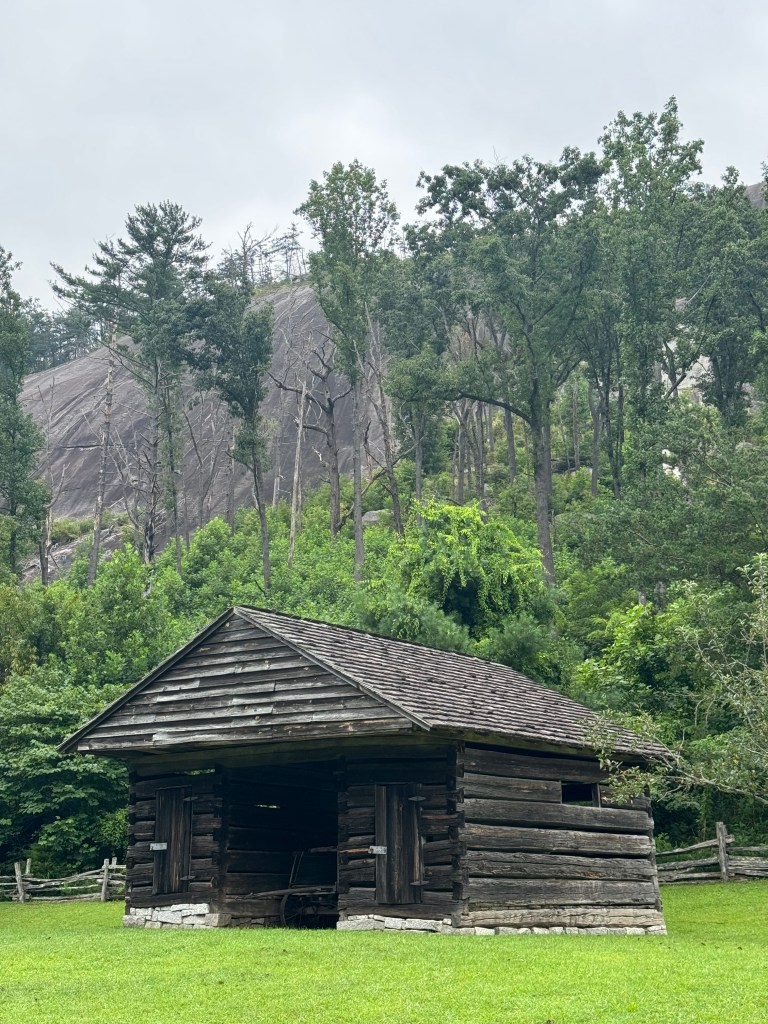
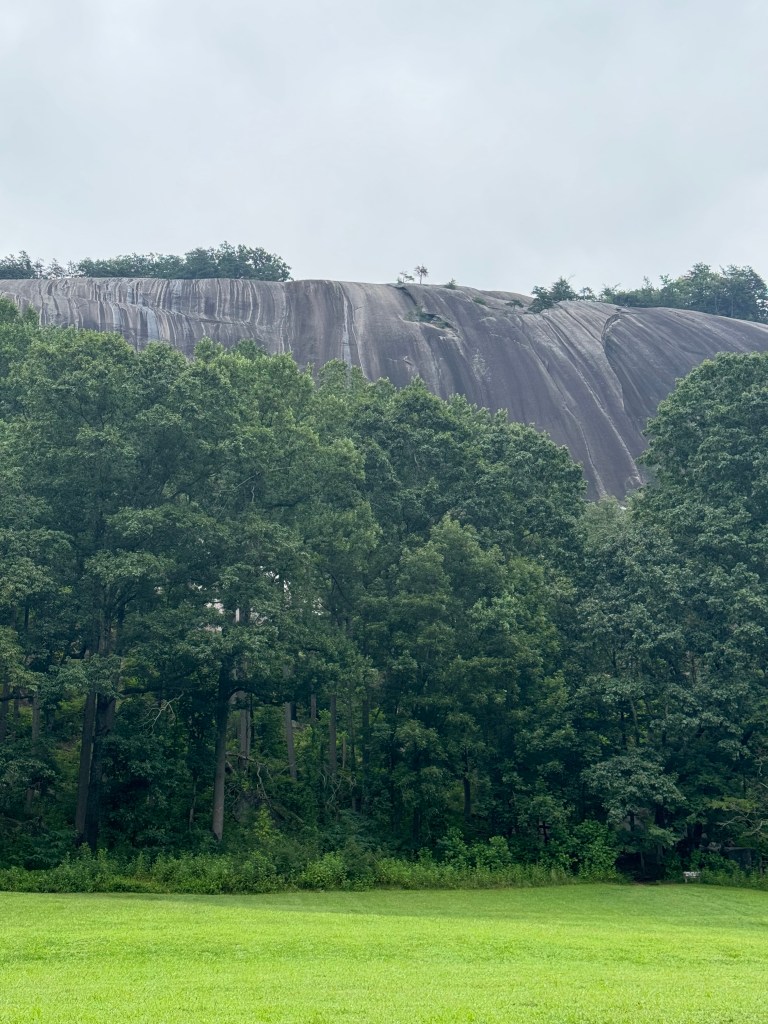
I remember the 4.5-mile Stone Mountain Loop as a trail that has it all, even on an overcast day. It offers an amazing variety of experiences, including sections that traverse the 600-foot granite dome, beautiful summit views, a waterfall, winding creeks, and a historical farmhouse. To top it all off, I also encountered a couple of raucous Red-headed Woodpeckers drumming and flying in between perches.

There are two access points to this trail: the Lower Trailhead, which is next to the historical Hutchinson Homestead, and the Upper Trailhead, which is closer to the Stone Mountain Falls. For a slow elevation climb, park at the Upper Trailhead and hike in the counterclockwise direction.

The Chimneys, Linville Gorge Wilderness Area

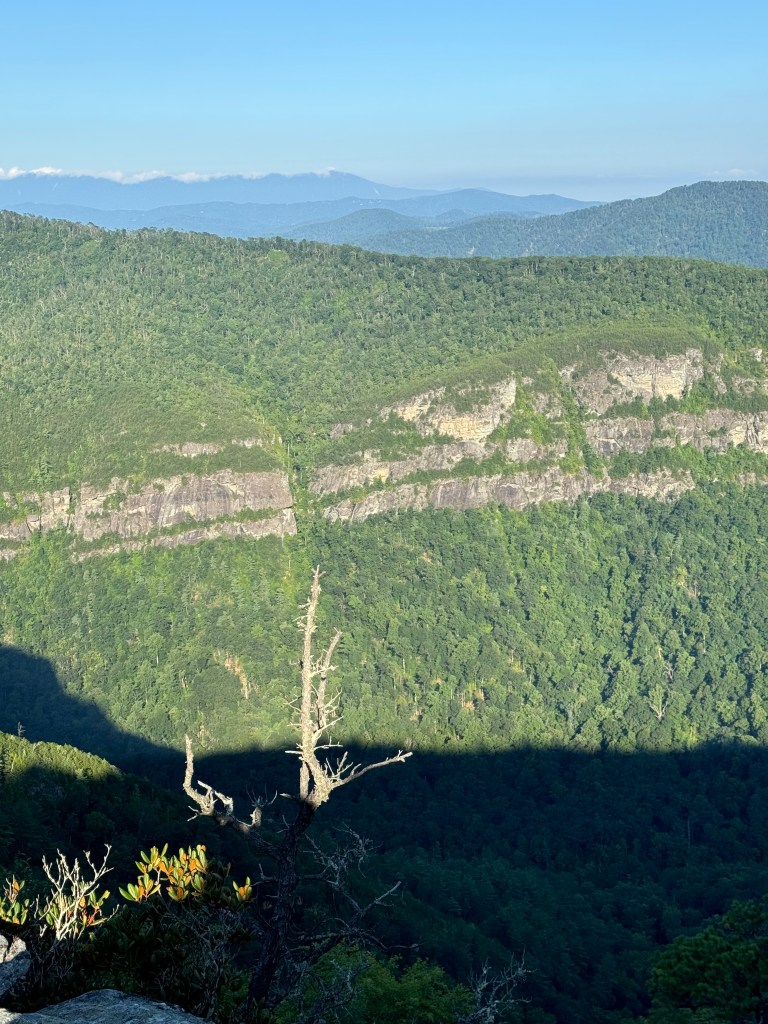
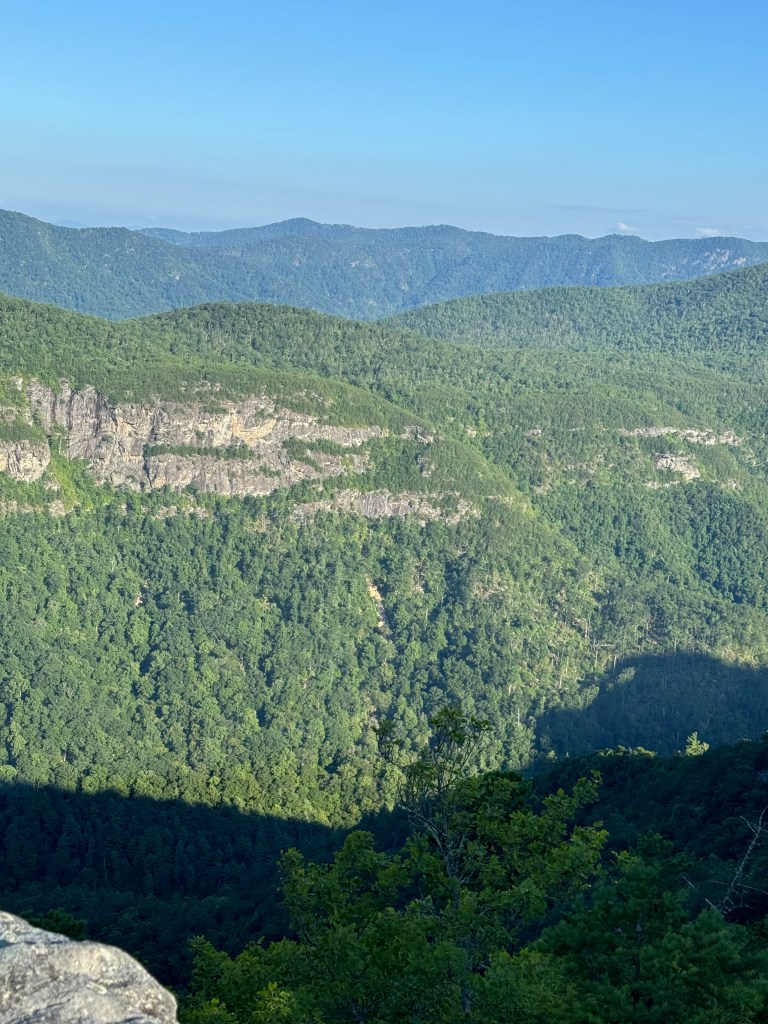
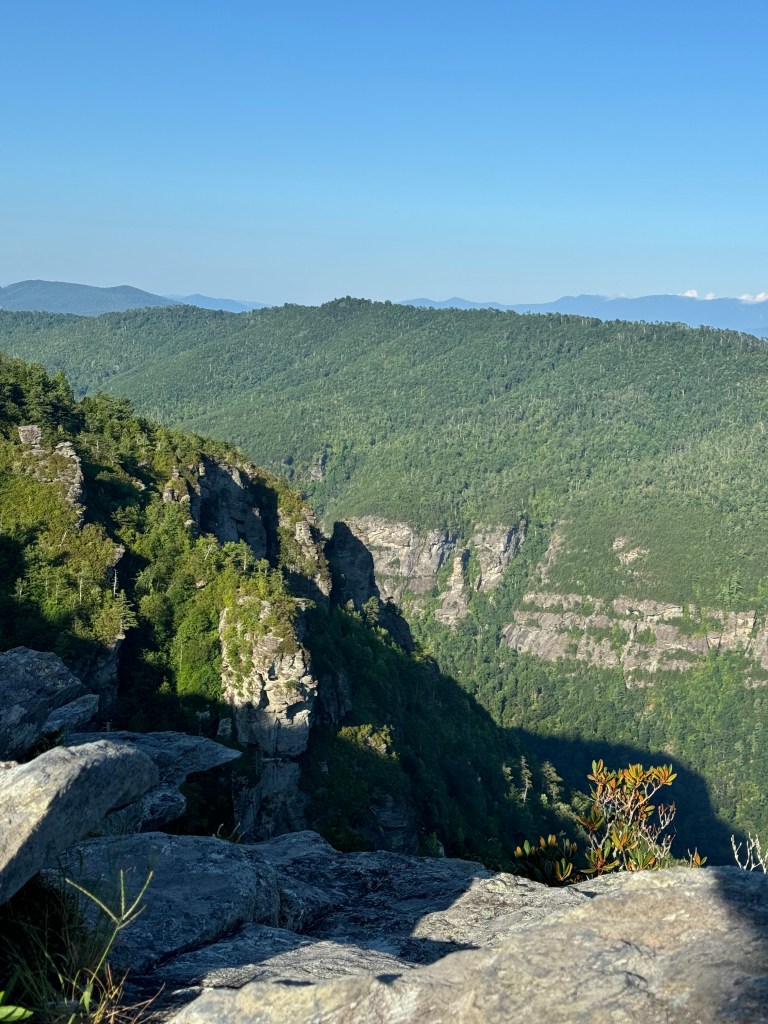
The Chimneys in the Linville Gorge Wilderness features, in my opinion, one of the most stunning sceneries in all of North Carolina. It is usually easily accessible via the Table Rock Summit parking lot; however, at the time of writing, the parking area is closed due to a landslide. I parked at the Hawksbill Mountain Trailhead up north and hiked to the Chimneys via the Spence Ridge Trailhead, Table Rock Gap Trail, and a short portion of the Mountain-to-Sea Trail for a total of 5.8 miles.

Safety is of the utmost concern when hiking in the Gorge. Trails are not signed or blazed inside the wilderness and can be difficult to navigate, not least due to the rugged terrain. It is, therefore, important to bring a map of the area and adequate water. Also note that the forest service road leading up to the wilderness area is unpaved and quite challenging to drive on.

Charlies Bunion, Great Smoky Mountains National Park

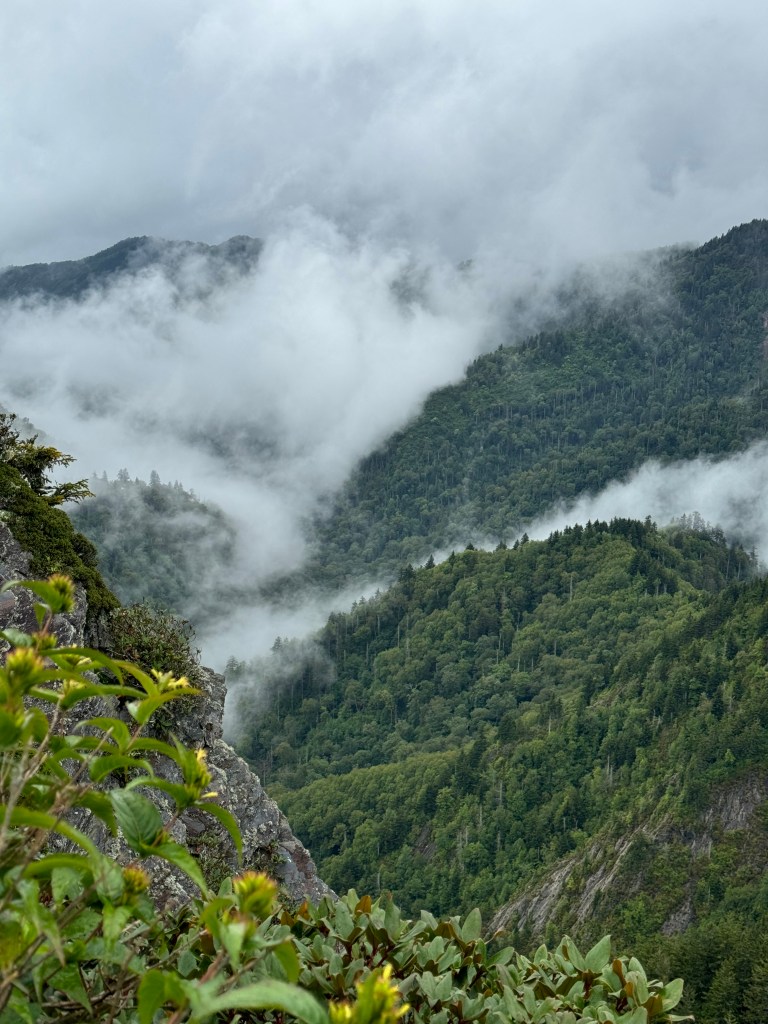
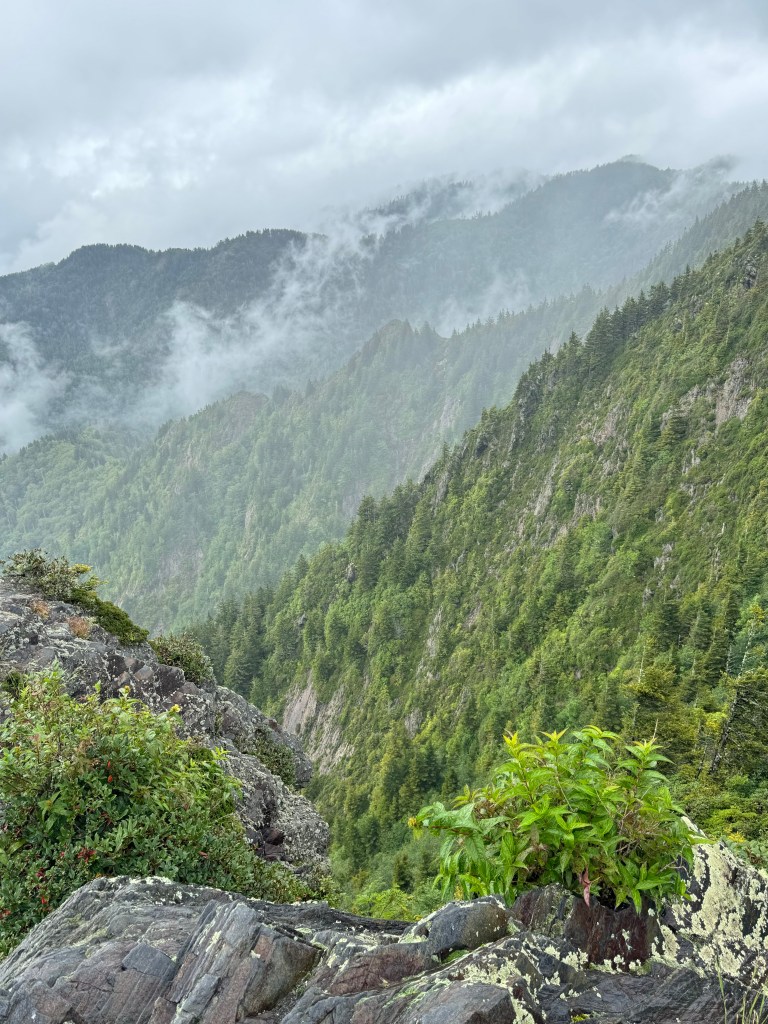
Charlies Bunion” describes a rock formation named after a local Appalachian Trail supervisor, Charlie Conner, who presumably hiked the trail with worn-out shoes, and features panoramic mountain views. My friend and I hiked 8 miles roundtrip from the Newfound Gap along the Appalachian Trail, traveling through high-elevation, spruce-fir forest on a rainy Wednesday.

Calloway Peak, Grandfather Mountain State Park

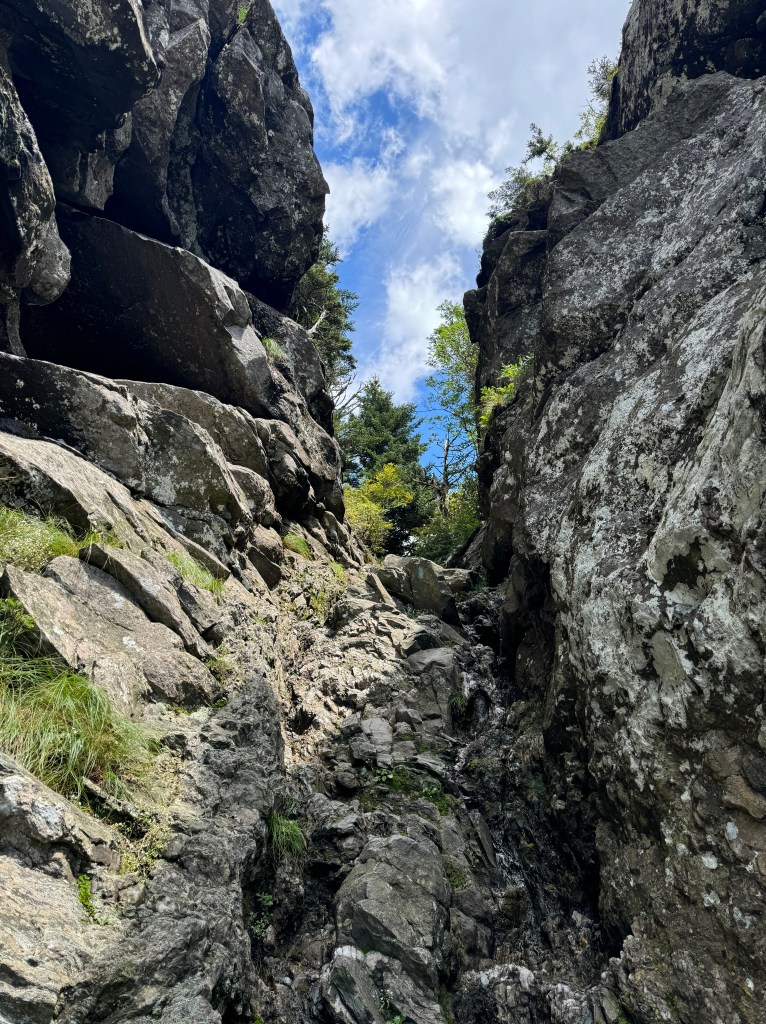
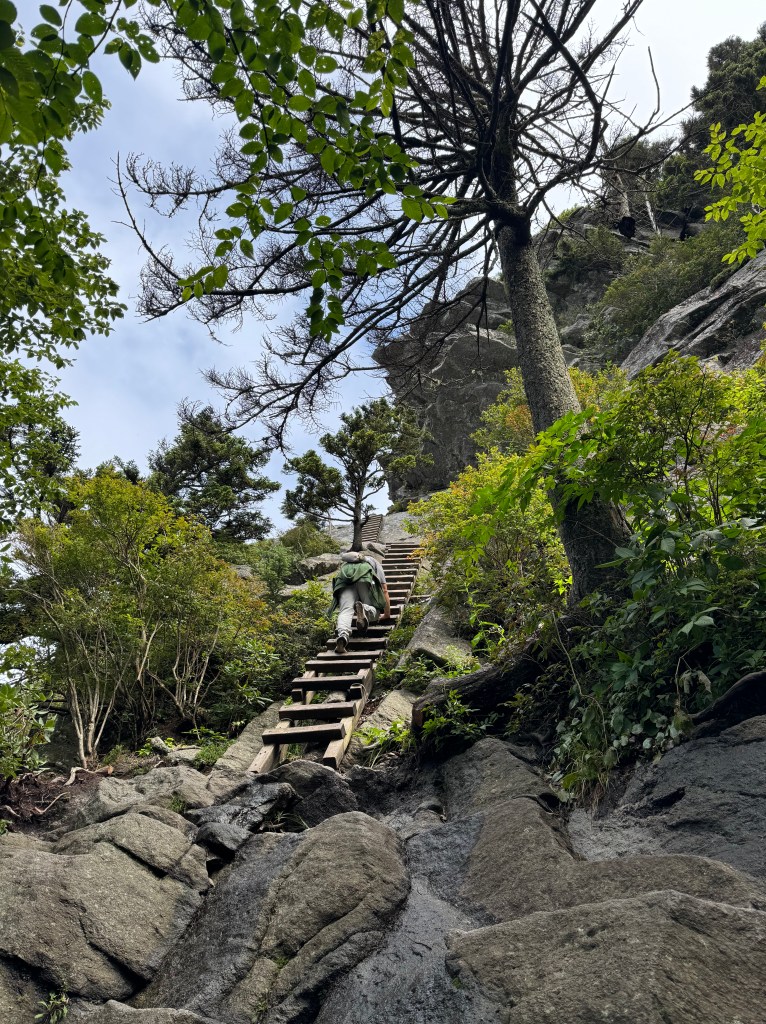
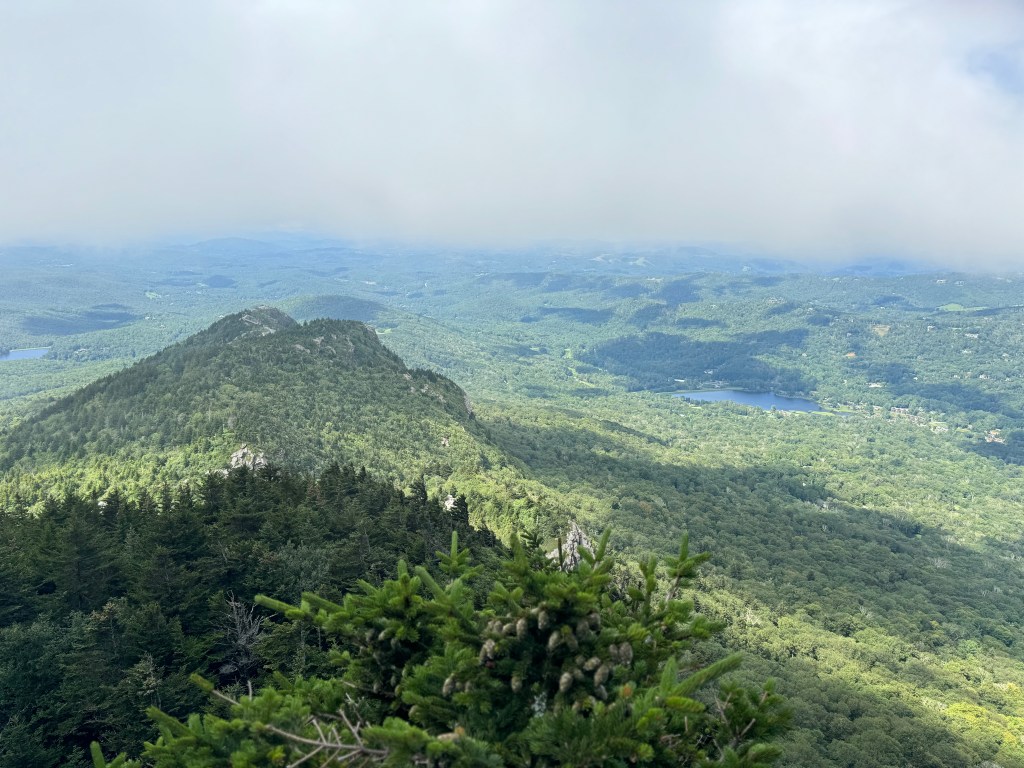
The Grandfather Trail is one of the most technically challenging hikes in North Carolina and perhaps on the entire east coast. This 4.8-mile out-and-back trail follows the ridge of the Grandfather Mountain from the Top Shop Parking Area, passing through the Macrae Peak (5845 ft) and the Attic Window Peak (5880 ft), to the Calloway Peak (5946 ft). It is an incredibly fun and rewarding trail for more experienced hikers: the steepest sections of the trail require the use of in-place cables and ladders, and there is a fair amount of rock scrambling involved.

I found this trail quite strenuous and, as someone who is working on his fear of heights, nerve-racking at times, but nevertheless highly rewarding and doable with previous hiking experience. My friend and I started hiking at 10am, and it almost took us the entire day to complete the trail (it is said that even the best hikers only average about a mile per hour). More logistical detail about this trail can be found on the Grandfather Mountain website. While no special equipment is required for this trail, it is essential to bring a pair of hiking boots with solid traction. Note, also, that the Grandfather Mountain State Park charges an entrance fee of $28-32 per day for each adult during summer months.

Footnote

  1. For an engaging introduction to the geological history of North Carolina mountains, see Sandra Clark’s Birth of the Mountains: The Geologic Story of the South Appalachian Mountains (U.S. geological survey, U.S. Department of the Interior, 2001). ↩︎
  2. The Cherokees were the largest southeastern tribe by the sixteenth century. For an introduction to the social history of the Cherokees, see The Cherokee Perspective: Written by Eastern Cherokees, pp. 3-114 (Appalachian Consortium Press, 1981). ↩︎
  3. For hiking basics, visit this excellent blog post on understanding mileage, elevation, and routes, this post on beginner hiking gear, and this one on trail etiquette. ↩︎
  4. Conditions at many trails in western North Carolina have changed due to damage from Hurricane Helene. Notably, the Mount Mitchell State Park remains closed indefinitely (as of August 2025) and is thus not included in this list. ↩︎

State Parks Are Underappreciated

This summer, I’ve been in the habit of visiting state parks in the high country and piedmont region of North Carolina. I would make the drive from Durham on Friday evening and get a couple hours of sleep in before starting the hike early in the morning. Part of the reason for this kind of schedule is to help me and my dog get used to crashing out in the car for our big road trip in September.

I’m starting to realize just how amazing and underrated some of the state parks are in North Carolina. They don’t have the prestige of National Parks but can be just as rewarding to visit. I wanted to share three parks that have stood out to me thus far: Hanging Rock in North Carolina, Roan Mountain on the North Carolina-Tennessee border, and Grayson Highlands in Virginia.

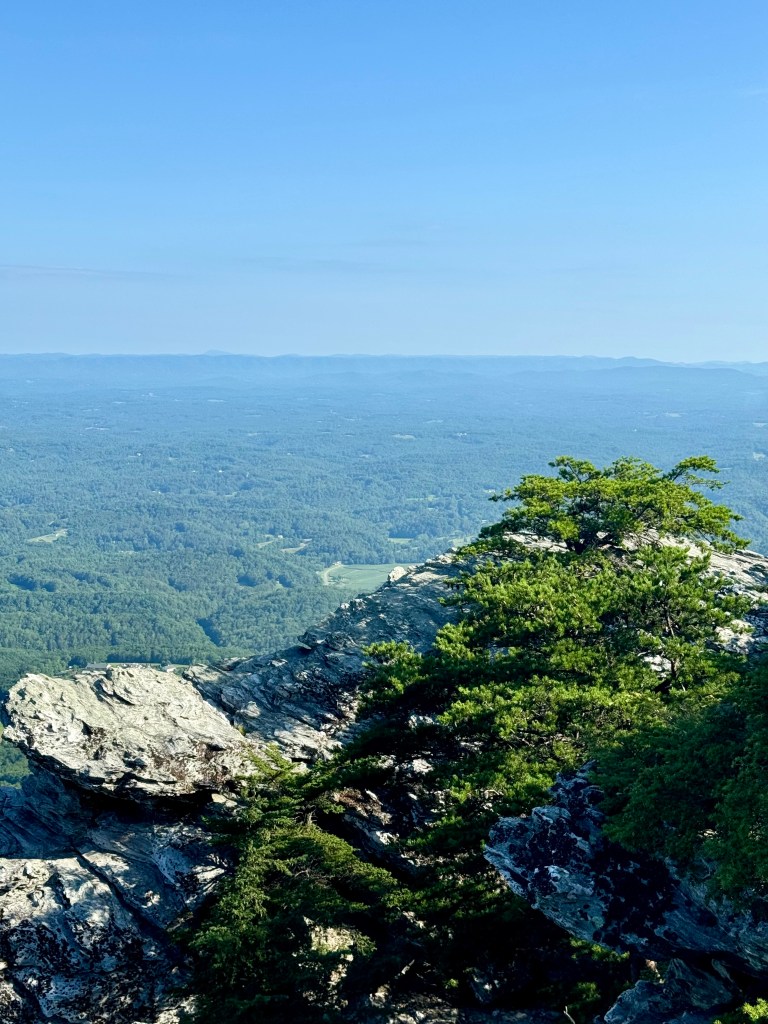
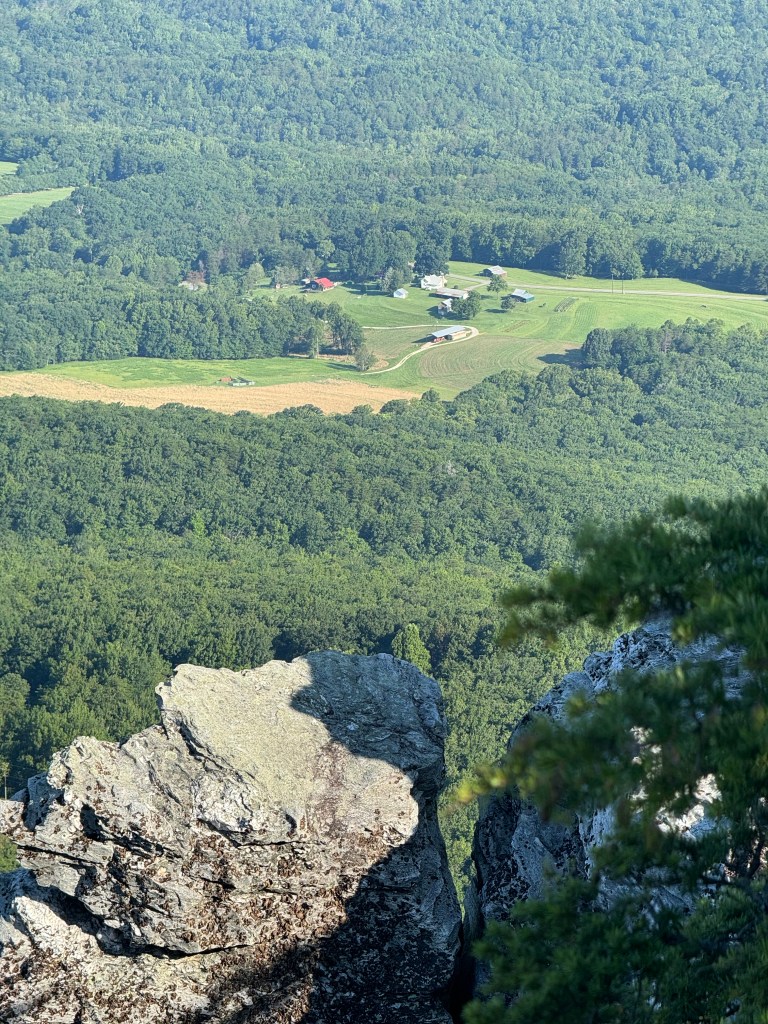
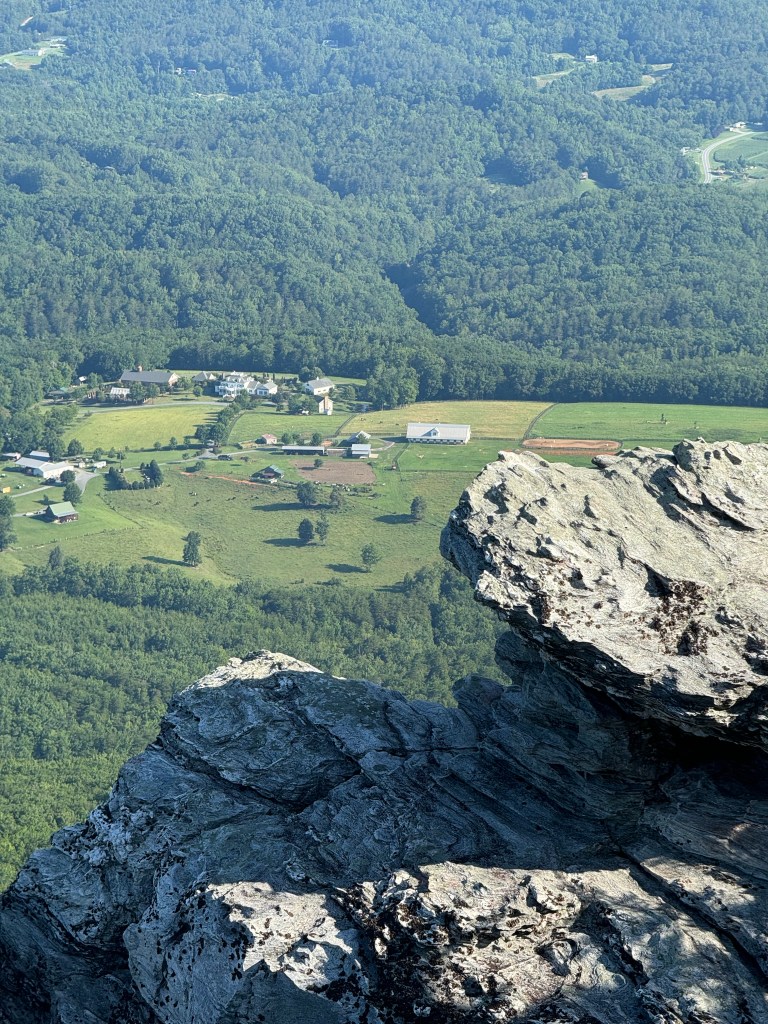
Hanging Rock is located 30 miles north of Winston-Salem, next to a small town called Danbury. We avoided the popular Hanging Rock Trail (1.3-mile one way) and instead opted for the moderately challenging and arguably more rewarding Moore’s Wall Loop Trail (4.7-mile loop), which leads to Moore’s Observation Tower (2497 ft). Remember to hike the loop in the clockwise direction if you would like a slow elevation climb. We hiked counterclockwise and was confronted with the 684-step “endless staircase” climb from the outset.

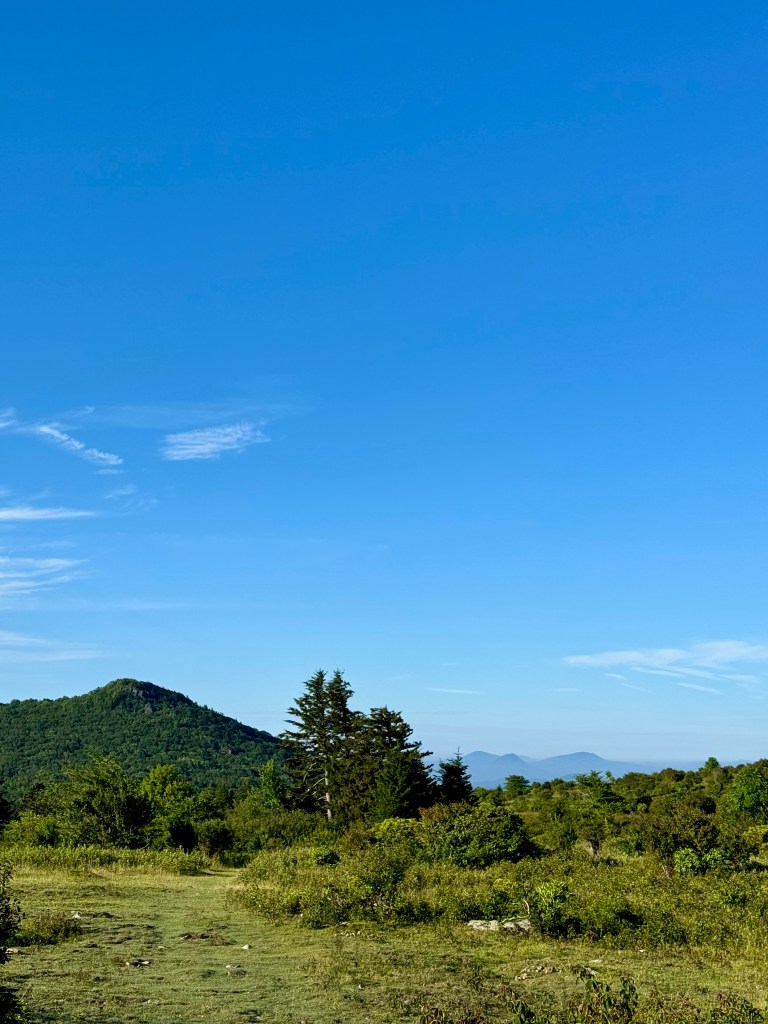
Roan Mountain is covered by rich hardwood forest and abundant wildflowers. For an easy-to-moderate out-and-back trail, park at Carvers Gap Trailhead (go early because spots fill up super fast) and hike to Grassy Ridge Bald (6,184 ft). This route is part of the Appalachian National Scenic Trail.

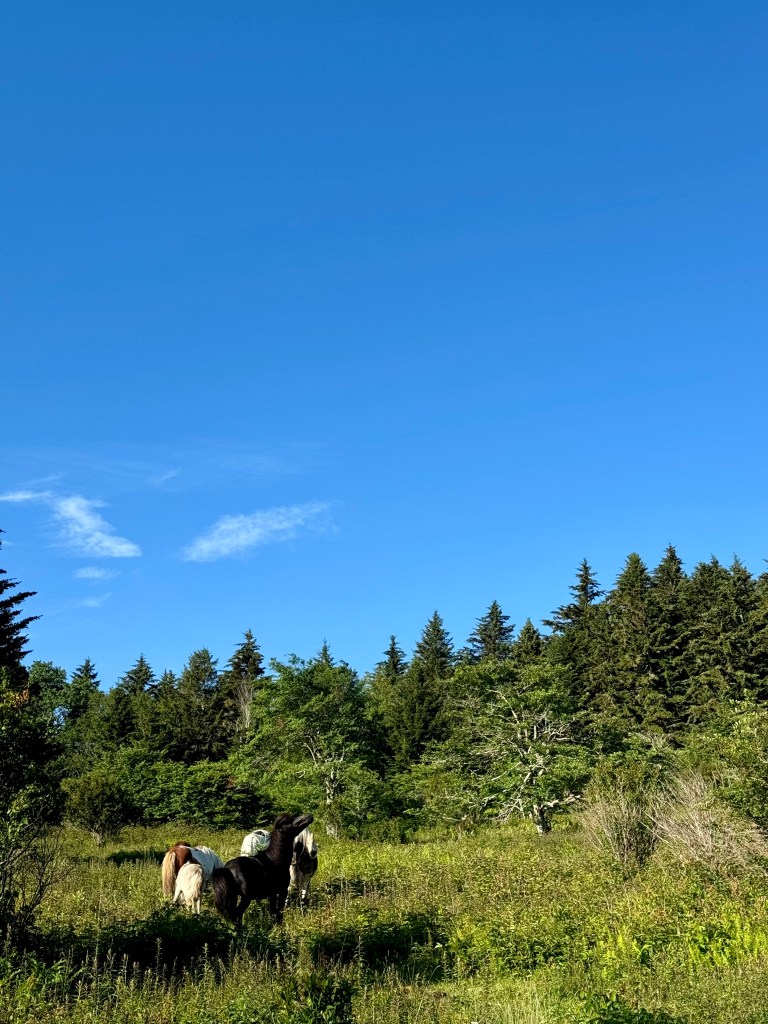
For wild ponies and scenic views, visit Grayson Highlands State Park, which is located next to Virginia’s two highest mountains, Mount Rogers (5729 ft) and Whitetop Mountain (5525 ft). We loved hiking around the Massie Gap, where we encountered the resident herd of ponies.

My dog had been having joint pain but was able to comfortably finish the hikes with me after getting treatment at the vet. So our plan is to do mountain hikes of increasing difficulty. We are planning to visit Crowders Mountains near Charlotte, Mount Pisgah near Asheville, and Chimney Rocks (recently reopened after hurricane damage). I’m also planning to hike Table Rock Mountain and Grandfather Mountain before I leave for San Diego.

Gay people and Christianity: a historical perspective

I encountered the American historian John Boswell’s 1980 book, Christianity, Social Tolerance, and Homosexuality: Gay People in Western Europe from the Beginning of the Christian Era to the Fourteenth Century, in a San Francisco bookstore specializing in queer literature. It is a work of classical philology and medieval social history that traces the transformation of Western European social attitudes toward gay people between the beginning of the Christian era and the end of the High Middle Ages. It immediately caught my eye because the subject matter appeared relevant to today’s social climate. Many people have strong beliefs about the relationship between religion and sexuality; I was curious to see what a social historian had to say about this topic. I bought the first paperback edition of the book, which I believe is currently out of print, but the 35th Anniversary Edition is on sale here.

In this work, Boswell explores the socio-historical origins of intolerance against gay people in medieval Europe, with a focus on the role played by early Christianity. Was early Christian teaching the cause of prejudice against gay people? Or was Christianity used as rationale for antigay attitudes that in fact arose for other, quite different, reasons?

Boswell’s answers to these questions are as innovative as they are controversial. His main argument is that, in the centuries after the fall of the Roman empire, neither “Christian society nor Christian theology as a whole evinced or supported any particular hostility to homosexuality, but both reflected and in the end retained positions adopted by some governments and theologians which could be used to derogate homosexual acts” (333). If Boswell is correct, then the historical source of Western European intolerance of gay people must be sought elsewhere. Boswell suggests some possible causes in the final chapters of the book, but he gives no definitive answers regarding the ultimate origins of prejudice against homosexuality.

In this post, I would like to provide a chapter-by-chapter summary (not an assessment) of Boswell’s claims and fill in the background needed to understand them. Let us start with classical antiquity.

Chapter 3, “Rome: The Foundation,” where Boswell debunks popular myths about Roman sexuality

Myth 1: Homosexual practices were illegal under Roman law.

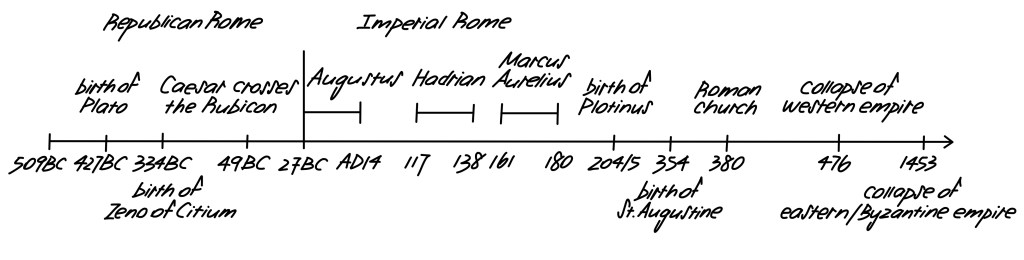
Homosexual practices were legal in republican and early imperial Rome (63-71; fig. 1). Early Roman society almost uniformly assumed that adult males were capable of engaging in sexual relations with both sexes (73). Tolerance of gay people started declining in the fourth century, and homosexual relations were categorically prohibited by Roman law for the first time in the sixth century (127).

Myth 2: Homosexuality and general immorality were associated with, or even caused, the decline of Rome.

The output of gay literature peaked in early imperial Rome rather than during its decline in the third and the fourth century (73). The tolerance of homosexuality thus appeared to have declined along with the empire.

Myth 3: Roman society was characterized by moral anarchy and loveless hedonism.

Roman society enacted a complex set of civil and moral strictures regarding sexuality, even though none were directly related to the regulation of homosexual relations as a specific class (74). The Roman society made strong efforts to protect free-born children from sexual abuse (81). There was social prejudice against adult male citizens who preferred a “passive role” in sexual intercourse (74-77), and against male citizens who became prostitutes (77-80).

Timeline of Rome
Figure 1. Chronology of the Roman Empire.

Chapter 4, “The Scriptures,” where Boswell discusses the so-called “clobber passages” in Christian Scripture

The “clobber passages” (a term that Boswell himself does not use in the book) are those typically invoked by certain modern interpreters of Scripture to condemn consensual homosexual relations (i.e., Genesis 19:1-38; Leviticus 18:22, 20:13; 1 Corinthians 6:9; 1 Timothy 1:10; Romans 1: 26-27). In this chapter of the book, Boswell argues that, historically speaking, these passages played no demonstrable role in the rise of antigay feelings among Christians.

Chapters 5-6, where Boswell argues that Christian communities were not specifically responsible for social intolerance against gay people in the late Roman Empire

Boswell isolates four type of Christian arguments that came to exert significant influence on the perception of gay people in Europe:

  1. Animal behavior. The author of the Epistle of Barnabas (c. first century) equated Mosaic prohibitions of eating certain animals with various sexual sins. It was said that the hare grows a new anus every year, the hyena changes its gender every year, and the weasel conceives through its mouth. The Clement of Alexandria (c. 150-250) invoked these zoological examples to argue against homosexuality in his Paedagogus, an instructional manual for Christian parents. The associations between Mosaic law, animal sexuality, and homosexual behavior found their way to the Physiologus, a collection of moralized beast tales and the most popular zoological work in the Middle Ages.
  2. Unsavory associations. Some Christian writers associated homosexuality with the sexual abuse of minors, accidental incest, and paganism.
  3. Concepts of “nature.” There is no unitary concept of “nature,” for different schools of thought held different and sometimes incompatible views. Even though there is no sound scriptural basis for the use of “nature” as a moral principle, early Christian thought was influenced by versions of Platonic and Aristotelian concepts of “ideal nature” (e.g., the Platonist Philo posited that any use of sexuality which did not produce legitimate offspring violated “nature”), as well as by Stoic concerns with “natural” morality.
  4. Gender expectations. Christian church fathers such as John Chrysostom (c. 347-407) objected to homosexuality largely due to its perceived violation of gender norms: “I maintain that not only are you made [by passive intercourse] into a woman, but you also cease to be a man; yet neither are you changed into that nature, nor do you retain the one you had” (In Epistolam ad Romanos, cited in 157).

Boswell nevertheless contends that these theological texts were not determinative of Christian sexual ethics in the late Roman Empire. Boswell lays out several arguments in support of this thesis:

  1. All organized philosophical traditions grew increasingly intolerant of sexual pleasure under the later Empire, including pagan philosophy (128).
  2. It appears unlikely that Christians in general subscribed to the extreme asceticism and narrow sexual attitudes of some of their leaders (128).
  3. The major moral traditions that influenced Christianity would not necessarily have prohibited homosexual relations as an option for Christians (i.e., the Judeo-Platonist schools of Alexandria [163, 164], dualist religious movements such as Manicheaism [128, 129], and Stoicism [129-131]).
  4. Many writers objected to Christianity precisely due to the supposed sexual looseness of its adherents and even leaders, including engagement in homosexual acts (131-133).

Boswell argues that the decline of Roman tolerance of sexual issues may alternatively be attributed to (1) the increasing ruralization of Roman civilization and ethics, and (2) the growing totalitarianism of Roman government and its control over the lives of Roman citizens.

Chapters 7-11, where Boswell outlines the vicissitudes of popular social attitudes toward gay people in the Middle Ages

In the early Middle Ages, gay people constituted a silent minority. Moral theology of this period treated homosexual practices as at worst comparable to premarital heterosexual intercourse but more often remained silent on this issue (333). In general, Boswell claims, attitudes toward homosexuality grew steadily more tolerant (333).

A gay subculture re-emerged in the eleventh and early twelfth century (1050-1150), along with urban economies and city life. It appeared to have its own slang (e.g., the equivalent of “gay” was “Ganymede”).

Beginning roughly in the late twelfth century, a “virulent hostility” toward homosexuality developed in popular literature as well as theological and legal writings (334). The cause of this shift is unknown and remains to be explored.

A quick note on finding happiness despite not having what I want

I want to keep this blog post brief because one, it’s late and almost bedtime for me and two, I don’t think I have anything profound to say about this topic. All I want to write about is the coping skills that have helped me in the past week or so.

The past week has been a challenging one. There is, first of all, the prospect of starting my first postgrad job amidst growing uncertainties about international students’ ability to obtain and retain temporary employment authorization. Then there is the pressure I feel to continue growing through a breakup while planning to relocate to another part of the country later this year.

The more I reflect on these things the more I experience what I perceive to be a complete loss of control, a lack of agency over my life circumstances. It is as if this year has been the year where I find out that everything I want in life could be taken away in the blink of an eye and against my will (as always, my mind has a taste for dramatizing things). And these experiences have led to a great deal of obsessive rumination, wrestling with reality and, for lack of a better term, general depression about where I’m at in life.

What have helped me the most are the following practices. The first has been to catch my negative thought patterns and reframe them one by one, CBT-style. The second involves the mindfulness practice known as “radical acceptance” (here is a New York Times article written by clinical psychologist and assistant professor in psychiatry Jenny Taitz that delves into the five steps of radical acceptance).

The point of radical acceptance is to accept reality as it is and to accept any feelings that might arise in response to it. Too often I hold judgements not only about the reality that confront me but also about my feelings about said reality – be it the more “socially acceptable” emotions like sadness and fear or the supposedly “unacceptable” and presumably “secondary” ones like anger, envy, and jealousy. But to hold judgements in this way, I think, is a sort of defense against experiencing what is disagreeable to me, an avoidance strategy that amounts to a refusal to process and work with what I am actually given. There are moments when such refusal is necessary, but more often than not, I’m willing to say, it achieves little other than holding me back from living life in the present and causing me unnecessary suffering.

It has been my experience this past week that I am most receptive to happy moments – and things I ought to be grateful for – when I am simultaneously most open to the realities of anxiety and pain. This has been an odd but ultimately hopeful lesson.