Author: Billy Cao

  • My Cross-Country Road Trip

    Mobile device users: this post is best read horizontally.

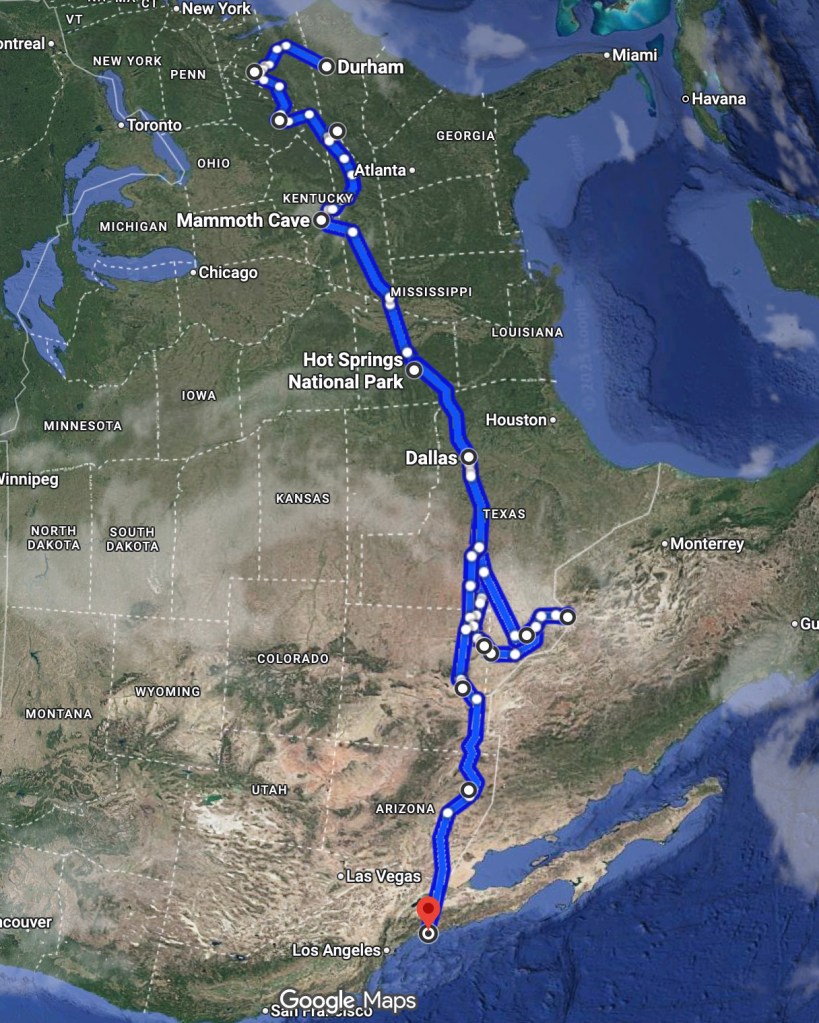
    I recently moved from Durham, North Carolina to San Diego, California. I used this opportunity to take a road trip across the southern United States with my dog. The total driving distance was about 5,000 miles, which we covered in the span of two weeks.

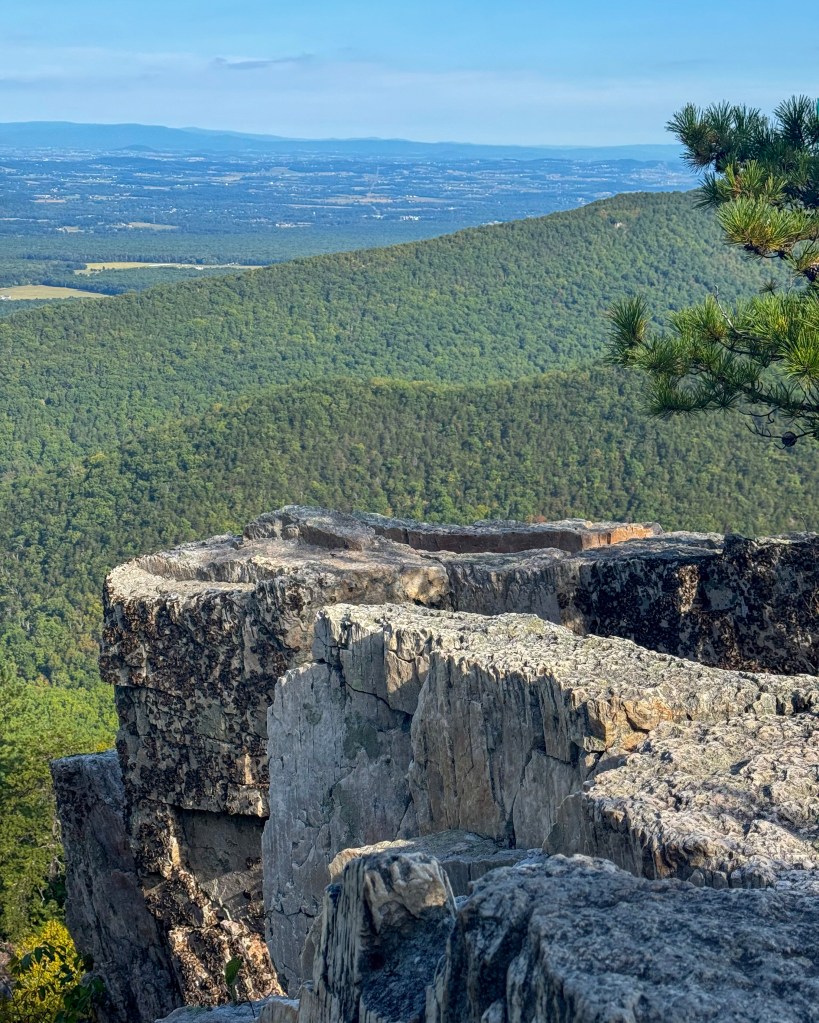
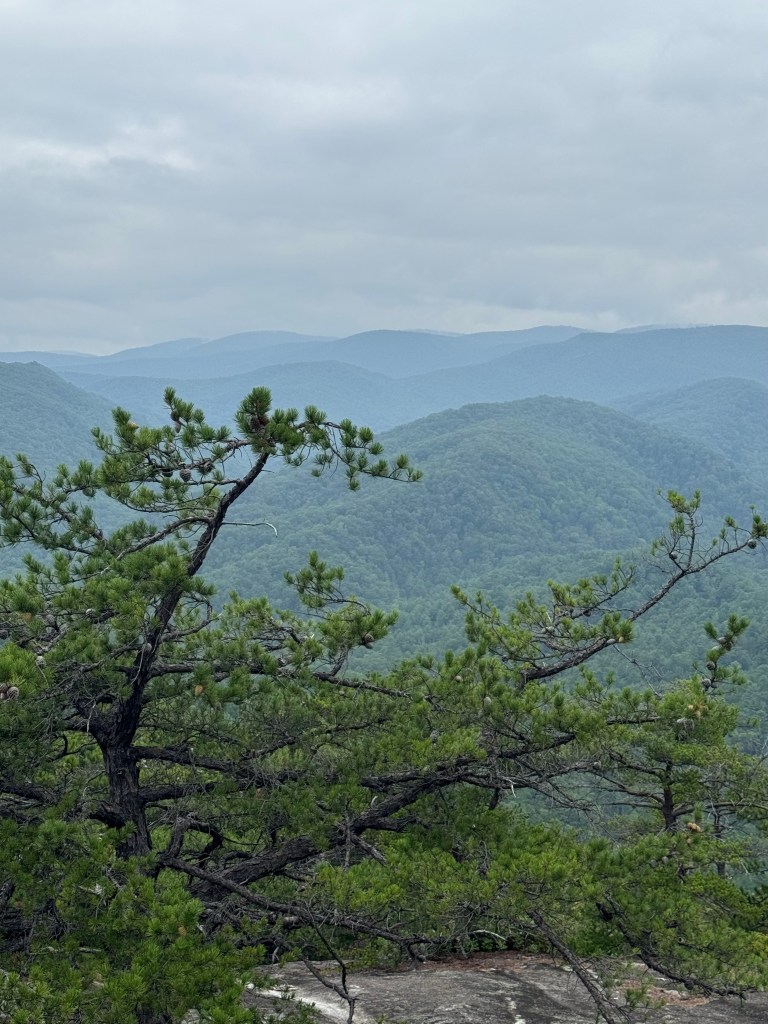
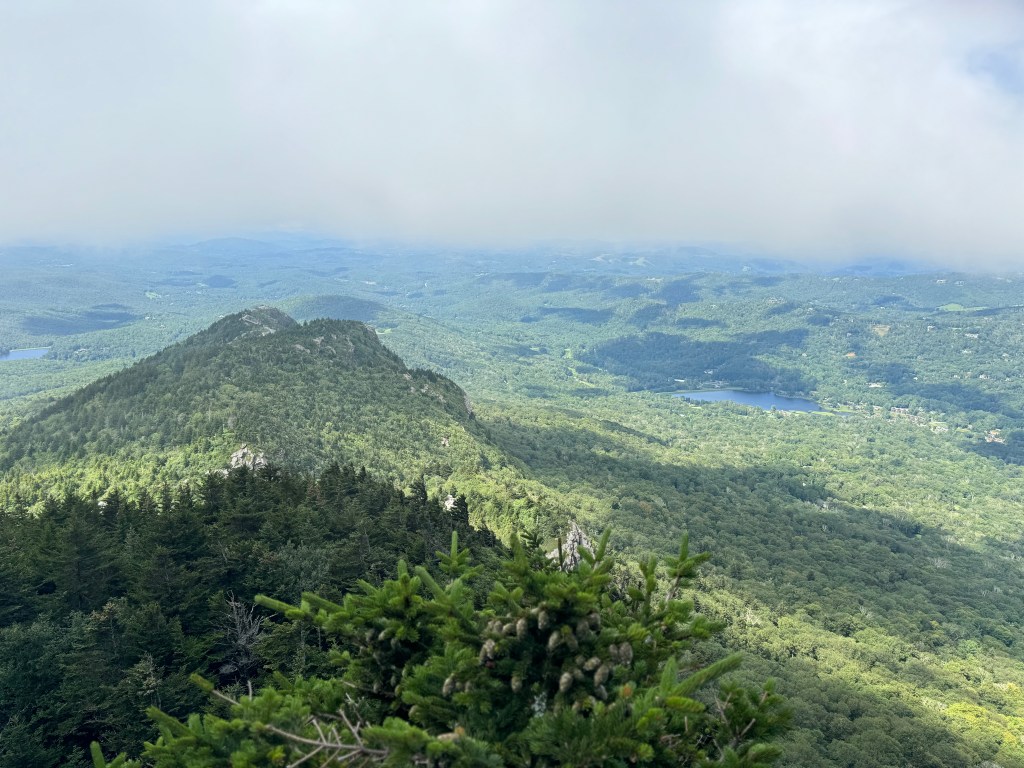
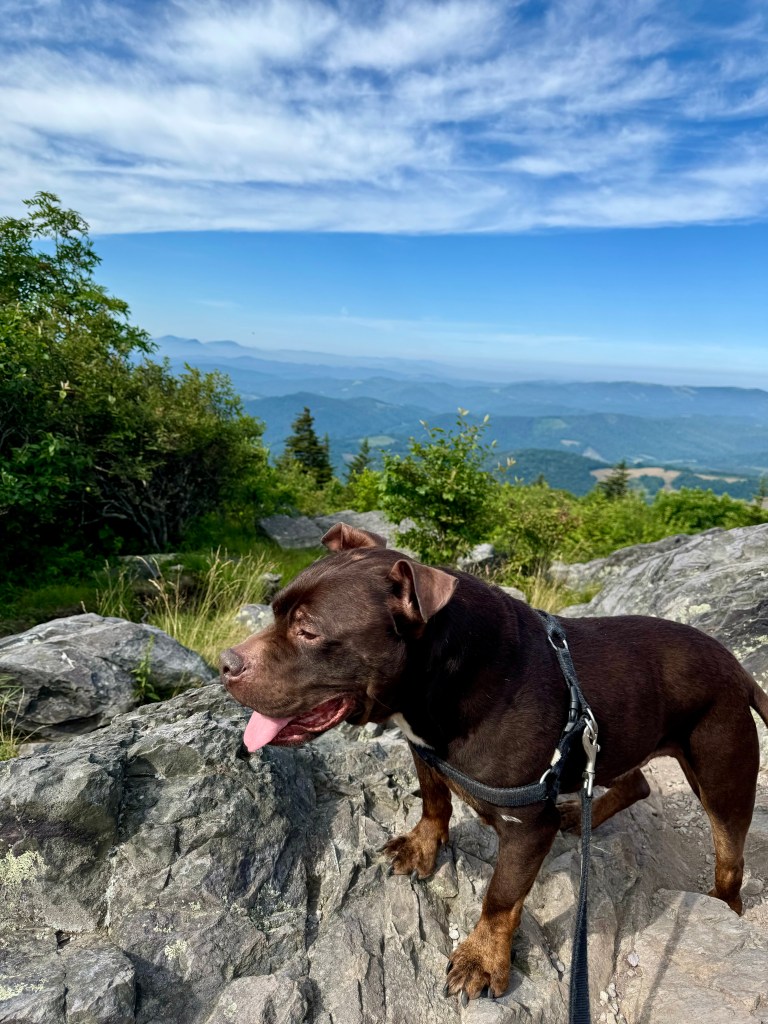
    Our first stop was Shenandoah National Park in Virginia. After catching sunset at the Hawksbill Summit (4049′), Shenandoah’s highest peak, and spending the night in Harrisonburg, we hiked the Riprap – Wildcat Ridge circuit the next day. This strenuous 9.8-mile loop featured several stream crossings, panoramic views at an overlook named Chimney Rock – where this photo was taken – and a final 2-mile stretch along the Appalachian Trail.

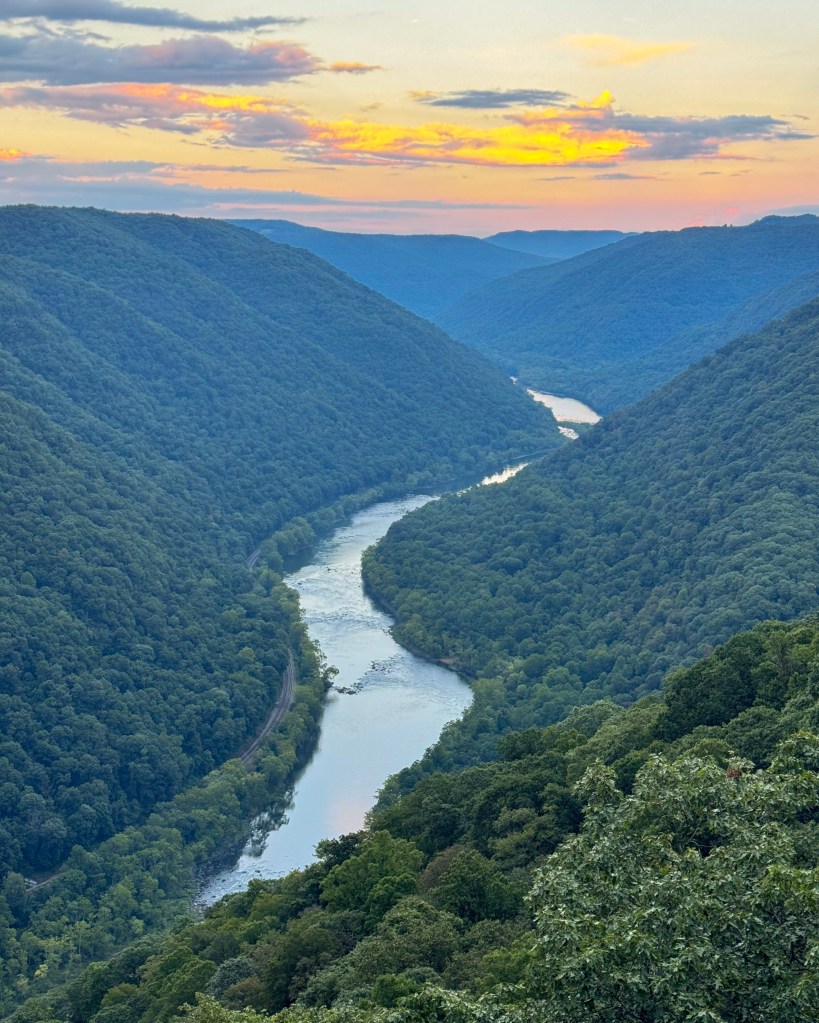
    A 3-hour drive brought us to the New River Gorge National Park & Preserve, located in West Virginia. Re-designated as a national park in 2021, this park protects more than 70,000 acres of land along 53 miles of the New River. As dusk fell, we enjoyed viewing the river from the Grandview Rim and along the Castle Rock Trail.

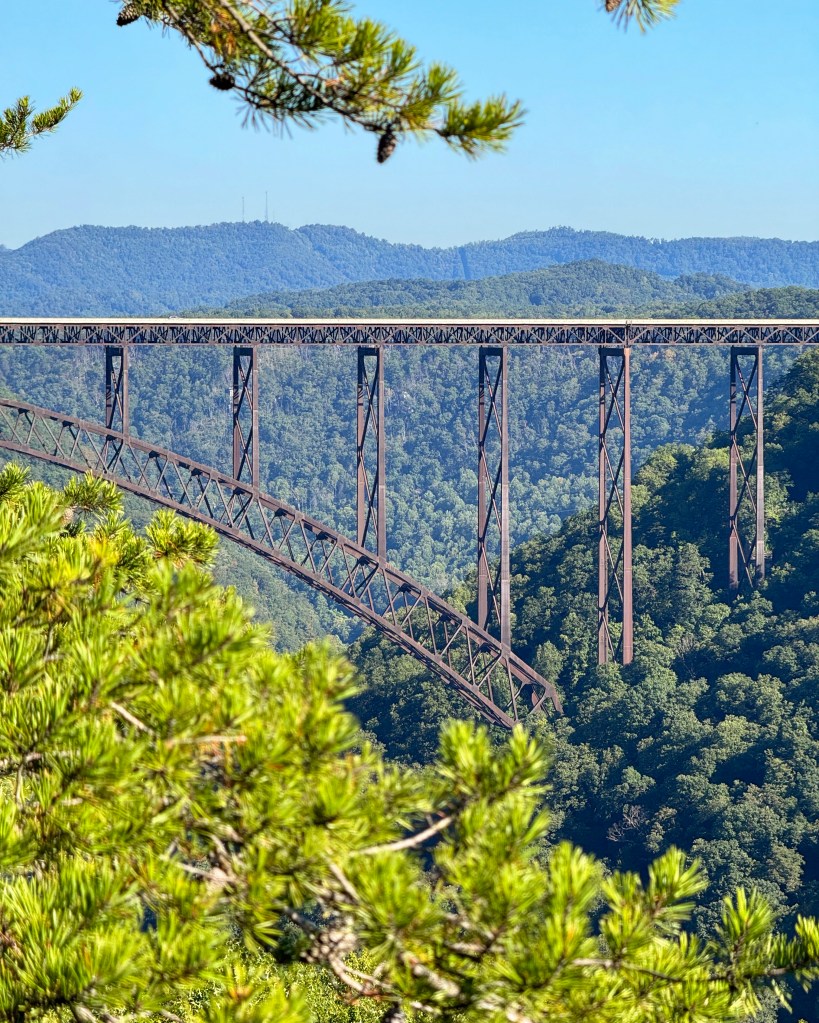
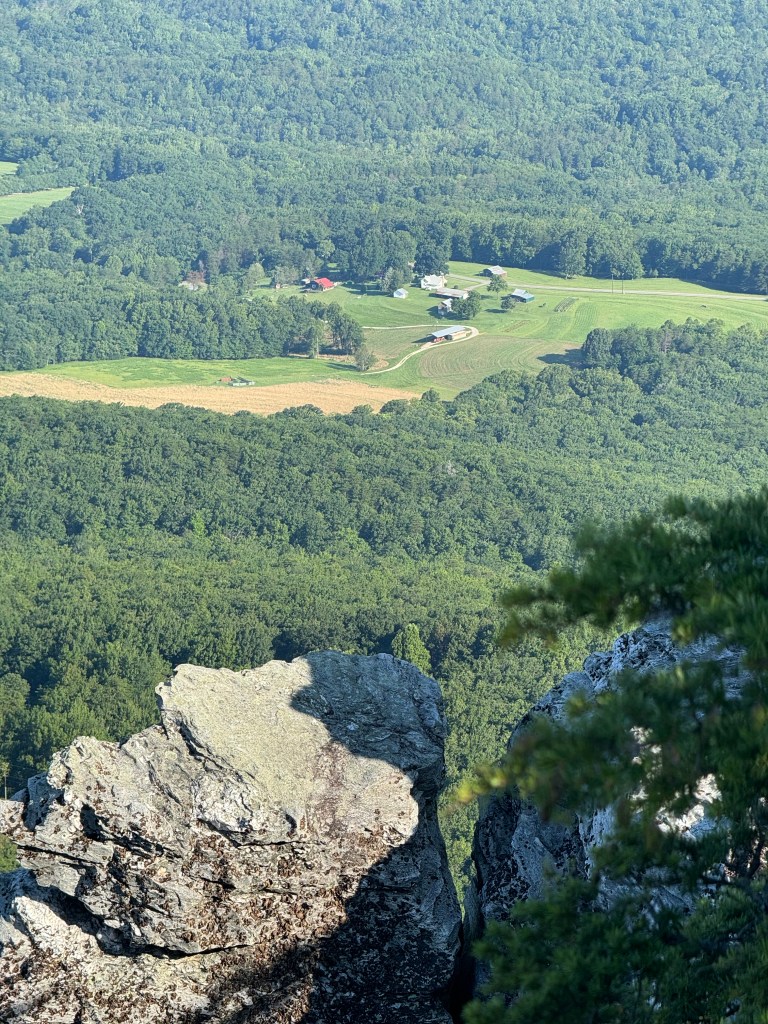
    We spent the night near Fayette Town Park and, from there, hiked the Fayetteville Trail and Long Point Trail to reach arguably the best overlook for the New River Gorge Bridge, the longest steel span in the western hemisphere and no doubt the centerpiece of this national park. It was foggy when we reached Long Point, but the weather soon cleared up, allowing me to take the picture to the right (zoom in to see how tiny a car is in relation to the bridge!).

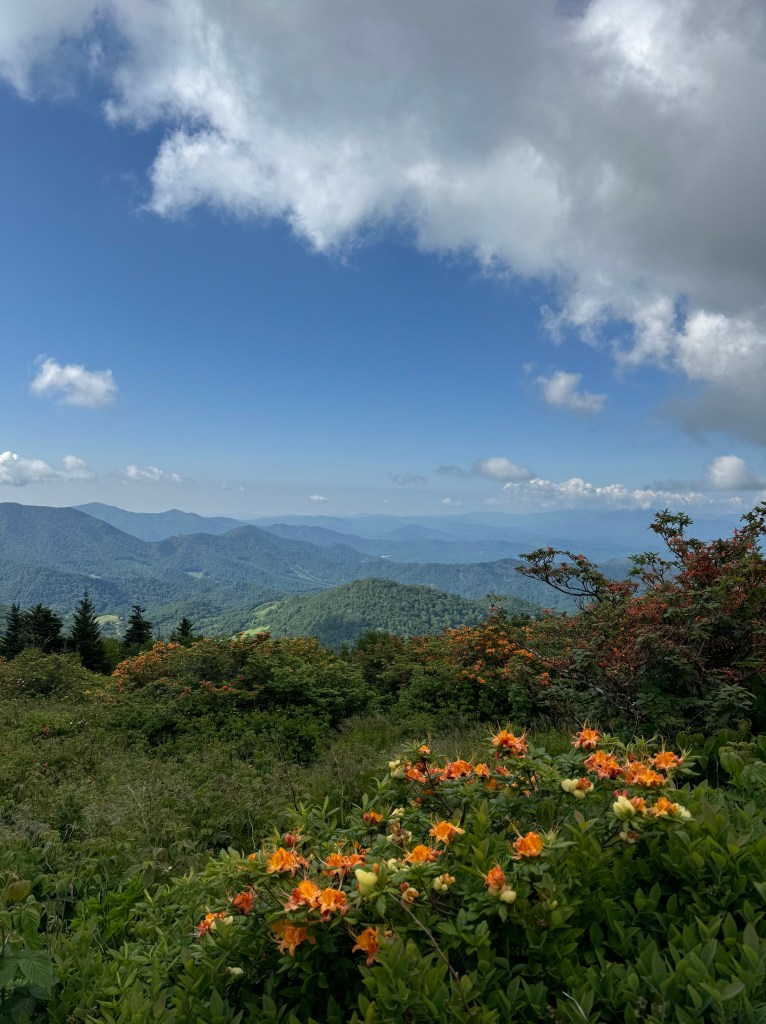
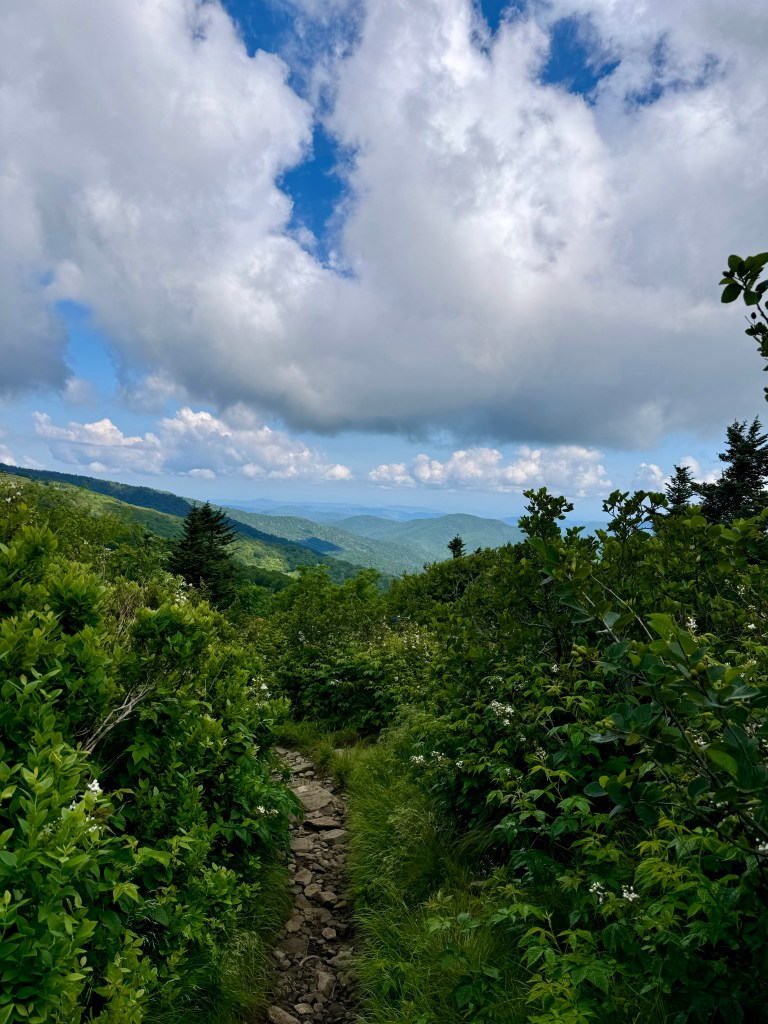
    On day 4, we looped back south to the North Carolina – Tennessee border for a hike through the Roan Mountain. The area has yet to recover from damage caused by Hurricane Helene. It nevertheless remained one of my favorite hiking spots in the high country, not least for its natural population of rhododendrons, which are in full bloom around mid-June. For this visit, We parked at the Carver’s Gap and hiked to the Roan High Bluff (6268′) and Rhododendron Gardens via the Appalachian Trail.

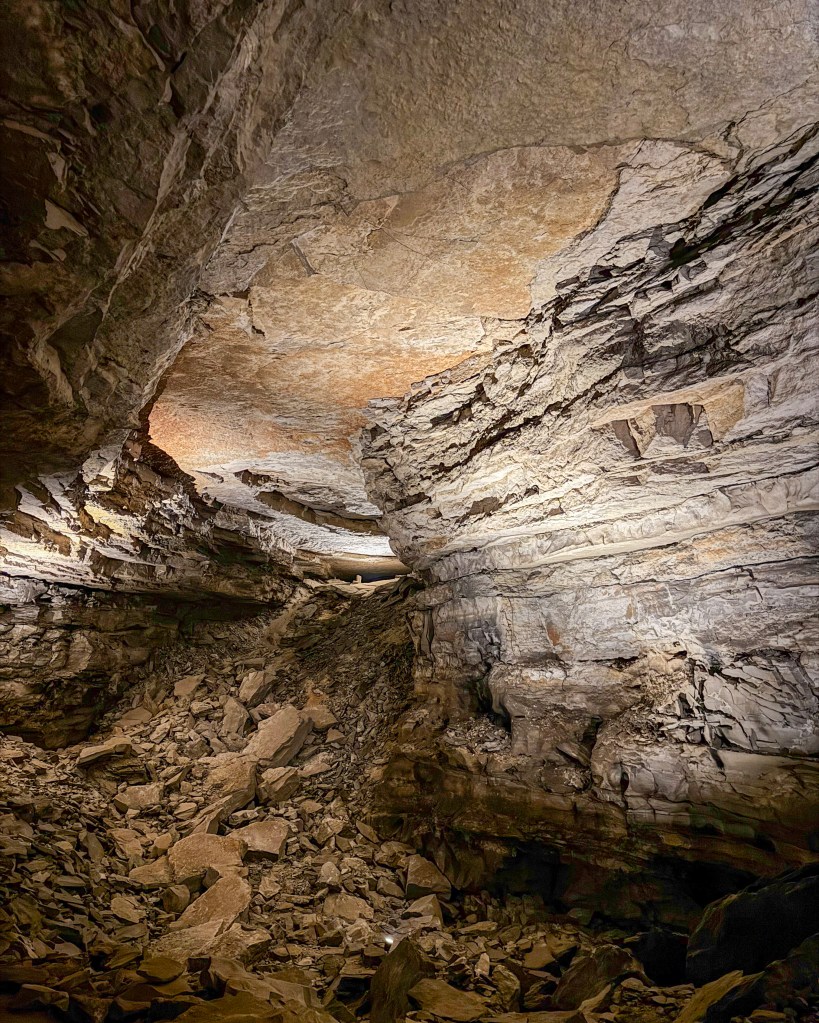
    I did not know Mammoth Cave existed before planning this trip. I was positively stunned when I went on a tour at the Mammoth Cave National Park. Located in Kentucky, it is the longest known cave system, with more than 400 miles of surveyed passageways. The 4-hour Grand Avenue Tour included 4 miles of hiking, stories about the cave’s unique cultural history, and rare views of gypsum formations known as “sunflowers,” “deer antlers,” and “celery stalks.”

    After driving through Tennessee and Arkansas, visiting my college friend in Dallas, and boarding my dog, I arrived at Carlsbad Caverns National Park in New Mexico. The 1-mile Slaughter Canyon Cave Trail offered a great introduction to the geological and ecological features of the Southwest and hinted at what to come for the next couple of days. After taking this picture, I made my way to the Bat Flight Amphitheater to watch hundreds of thousands of Brazilian free-tailed bats take flight in search of food and water.

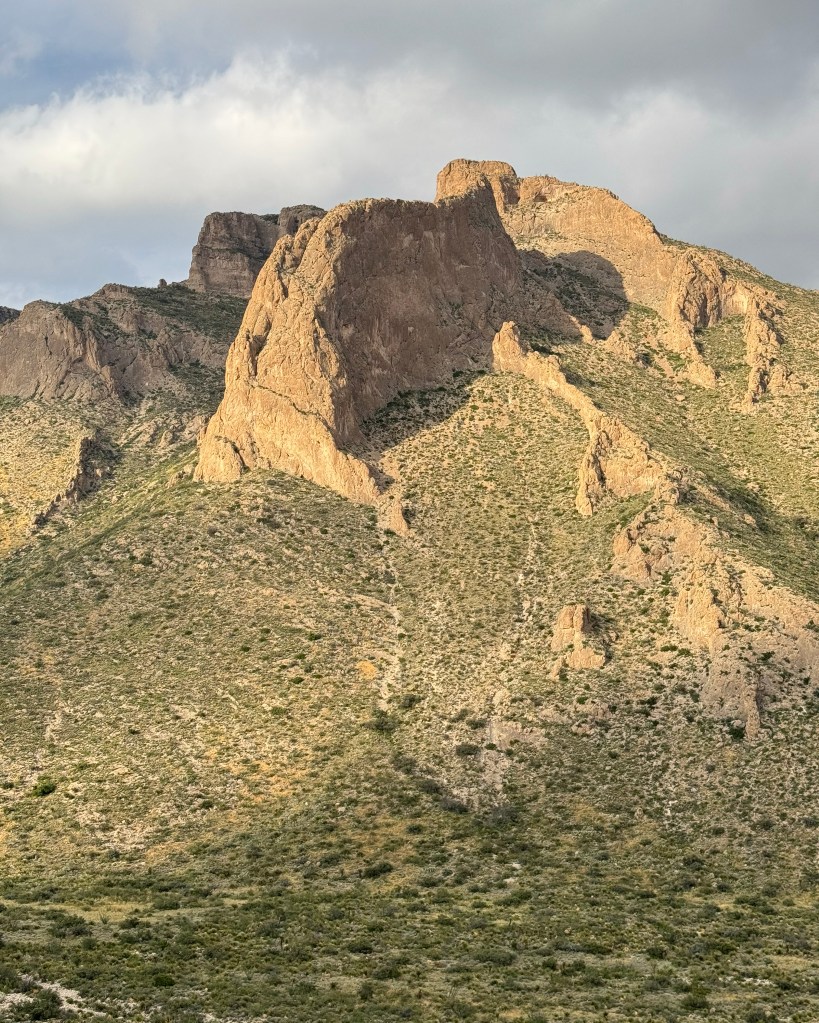
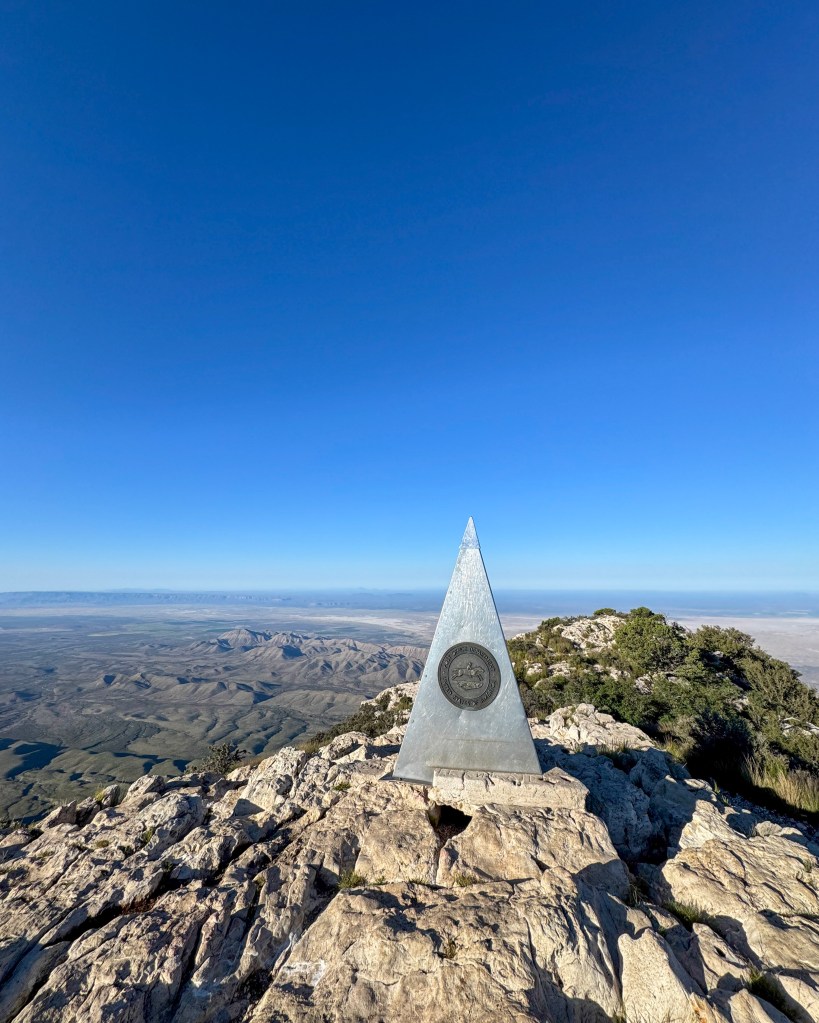
    I celebrated my 22nd birthday on this road trip! The goal was to summit Guadalupe Peak (8751′), Texas’s state high point, via an 8.4-mile hike in the Guadalupe Mountains National Park. I arrived at the trailhead at 5:00AM and, with the help of a flashlight and some courage, reached the peak at around 9:00AM on a windy yet beautifully clear day.

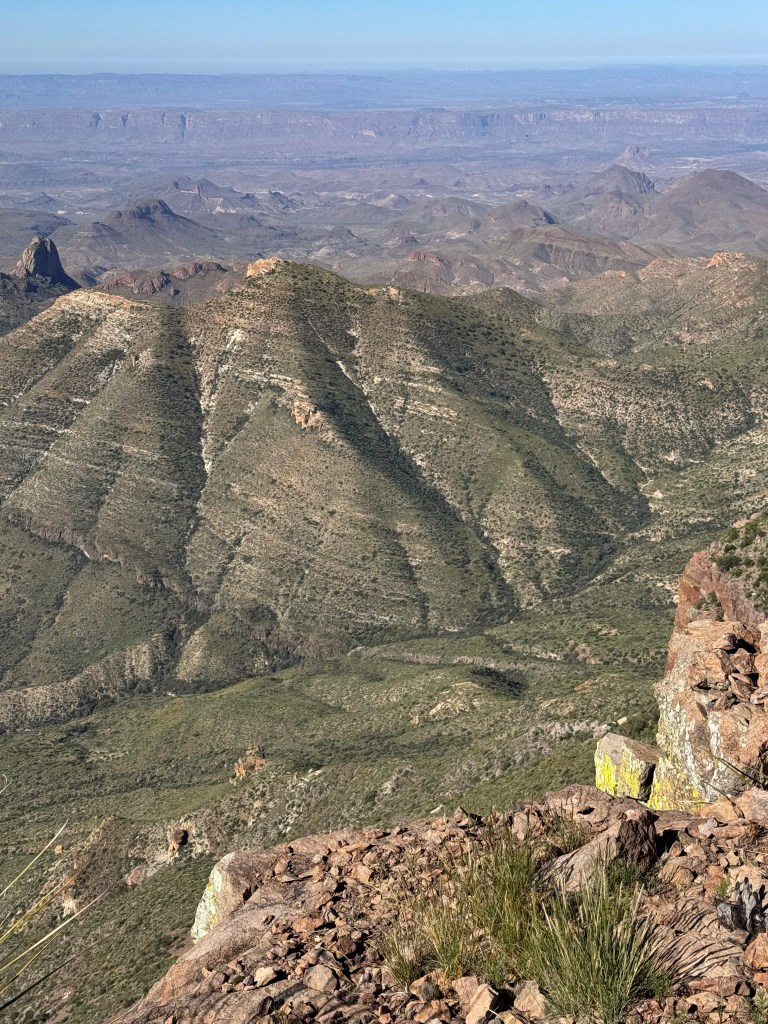
    The next day I challenged myself even further by attempting a 16-mile hike in Big Bend National Park for a comprehensive view of the Chisos Mountains and Basin. This strenuous circuit hike combined the Laguna Meadows Trail, the South Rim Trail, the East Rim Trail, the Boot Canyon Trail, the Emory Peak Trail, and the Pinnacles Trail. I adored the diversity of the flora and fauna here (saw my first wild tarantula!) and would totally come back for birdwatching.

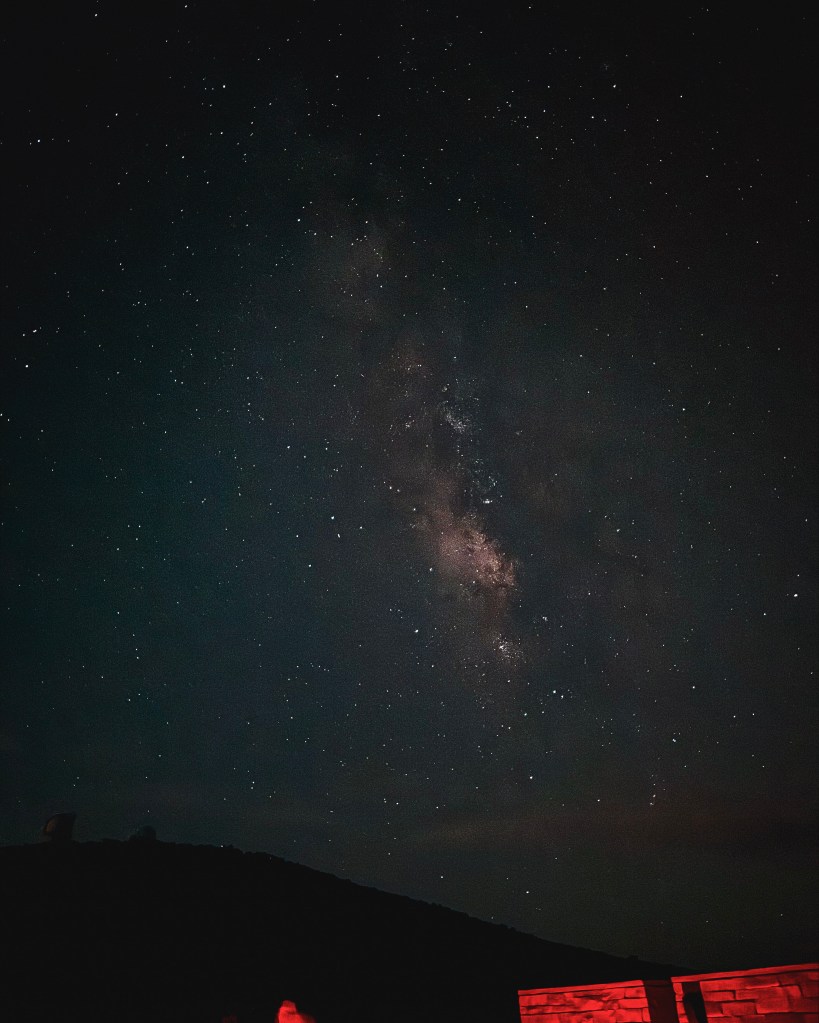
    After the hike at Big Bend, I drove northward to the University of Texas’s McDonald Observatory, located at the core of the largest Dark Sky Certified preserve in the world. I got to view Saturn, a dwarf star, and various young and old galaxies as a participant of their weekly Star Party.

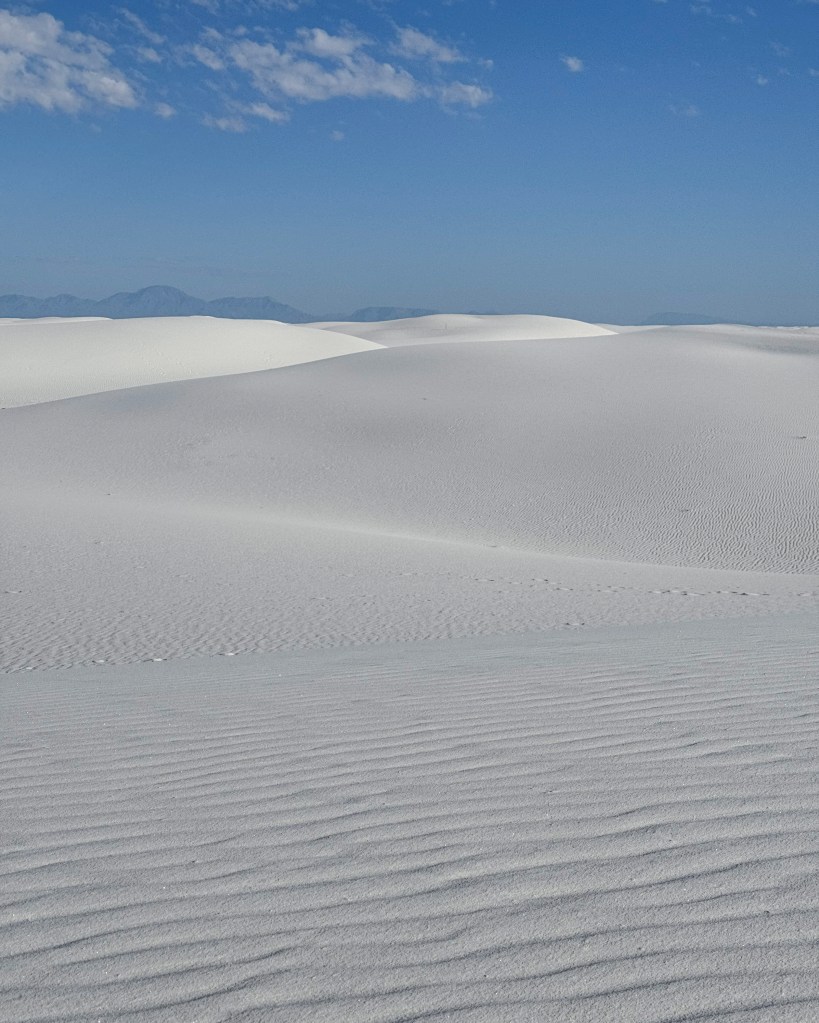
    The road trip was now coming to a close. My dog and I explored the world’s largest gypsum dunefield at White Sands National Park. In addition to being incredibly hot, I remember this park as being a fun playground for my dog to frolic on.

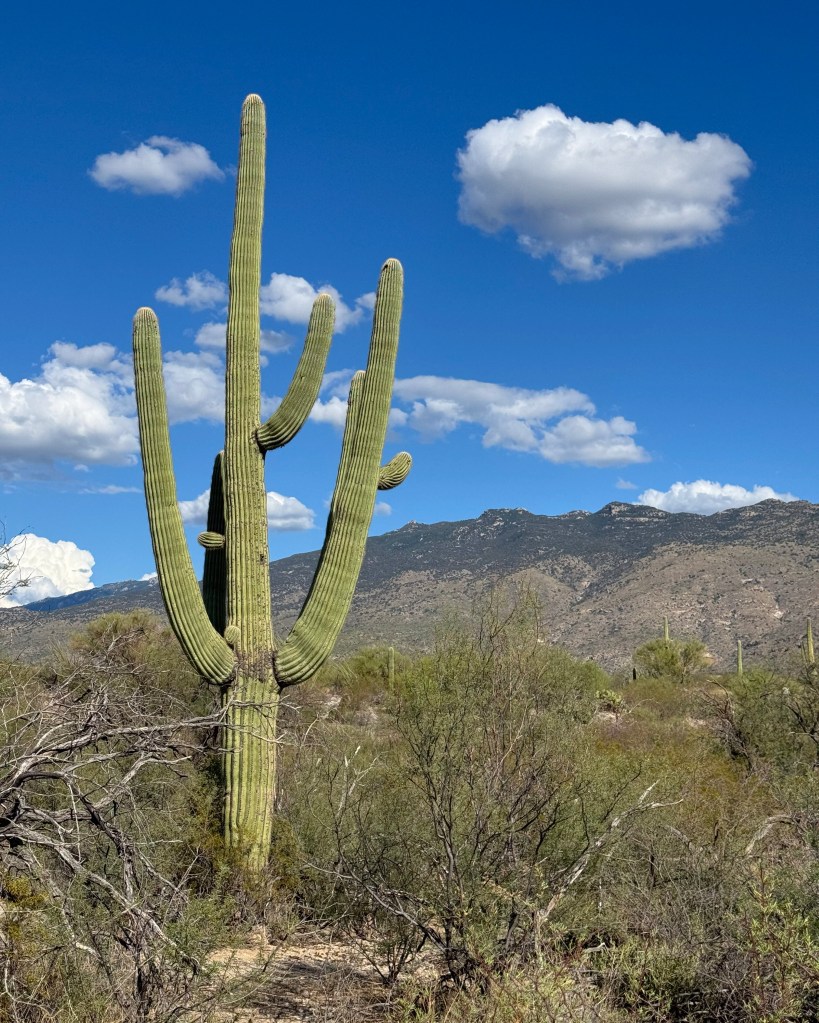
    Our last major stop was Saguaro National Park, which is next to Tucson, Arizona, and named after the tree-like cactus (Carnegiea gigantea) shown in the picture. It was getting unbearably hot for us so we opted for the scenic drive along the aptly-named Cactus Forest Drive and a stroll through the Desert Ecology Trail.

  • Best Hiking Trails in the North Carolina High Country

    Best Hiking Trails in the North Carolina High Country

    I have found hiking in the North Carolina high country to be one of the most exciting experiences of my post-undergrad life. From the stunning scenery to its unique geology1 and cultural history2, I am fascinated by everything Appalachian Mountains. In this blog post, I would like to share five of my favorite summer hiking day trips in the North Carolina mountains. These hikes are arranged in order of difficulty, from moderate (e.g., the Stone Mountain Loop Trail) to strenuous (e.g., the Grandfather Trail). You can use this link to access the list of hikes in Google Maps.

    In addition to documenting my weekend adventures, one of my goals in putting together this list is to make hiking in North Carolina accessible to more people. Hiking is one of the most budget-friendly activities and is, therefore, an excellent option for those looking for affordable forms of recreation. To safely hike these trails,3 which are well-marked and mostly well-maintained,4 all you likely need is water, snacks, a backpack, hiking boots, and, in the case of certain state parks, entrance fees. Most of these trails are dog-friendly: I did every hike with my eight-year-old dog, with the exception of Charlies Bunion and the Macrae Peak, where pets are not allowed.

    Grassy Ridge Bald, Roan Mountain

    Grassy Ridge Bald is a popular destination that sits on the border of North Carolina and Tennessee. It is the first trail I decided to “seriously” hike this summer, and incidentally the easiest. This out-and-back hike starts at the Carvers Gap and follows a 2.5-mile section of the Appalachian Trail, for a total of 5 miles and an elevation gain of about 1,000 feet. The surrounding mountains are covered by rich hardwood forest and abundant rhododendrons. I recommend arriving at the Carvers Gap Trailhead early in the morning because the parking lot fill up quickly.

    Stone Mountain Loop, Stone Mountain State Park

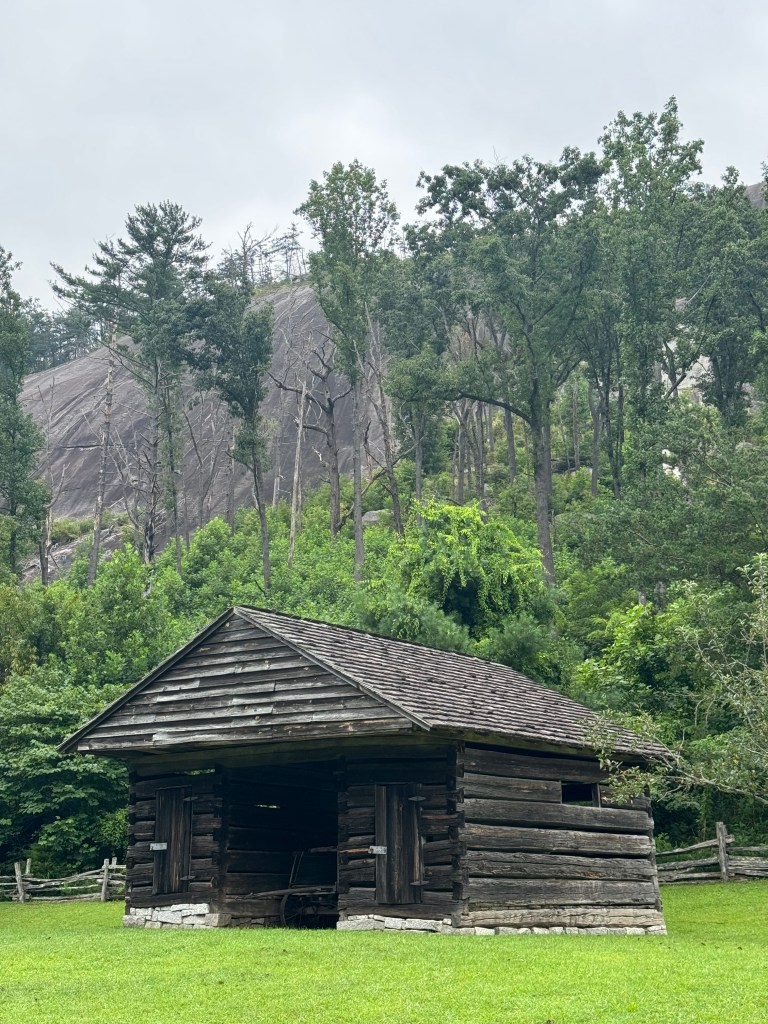
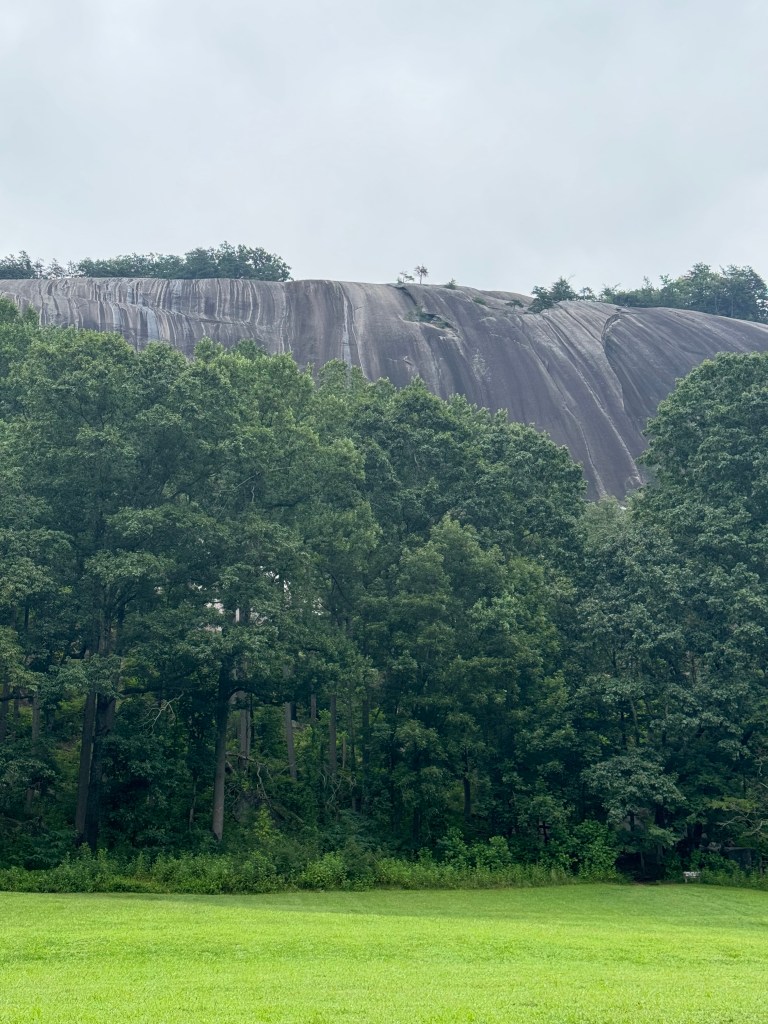
    I remember the 4.5-mile Stone Mountain Loop as a trail that has it all, even on an overcast day. It offers an amazing variety of experiences, including sections that traverse the 600-foot granite dome, beautiful summit views, a waterfall, winding creeks, and a historical farmhouse. To top it all off, I also encountered a couple of raucous Red-headed Woodpeckers drumming and flying in between perches.

    There are two access points to this trail: the Lower Trailhead, which is next to the historical Hutchinson Homestead, and the Upper Trailhead, which is closer to the Stone Mountain Falls. For a slow elevation climb, park at the Upper Trailhead and hike in the counterclockwise direction.

    The Chimneys, Linville Gorge Wilderness Area

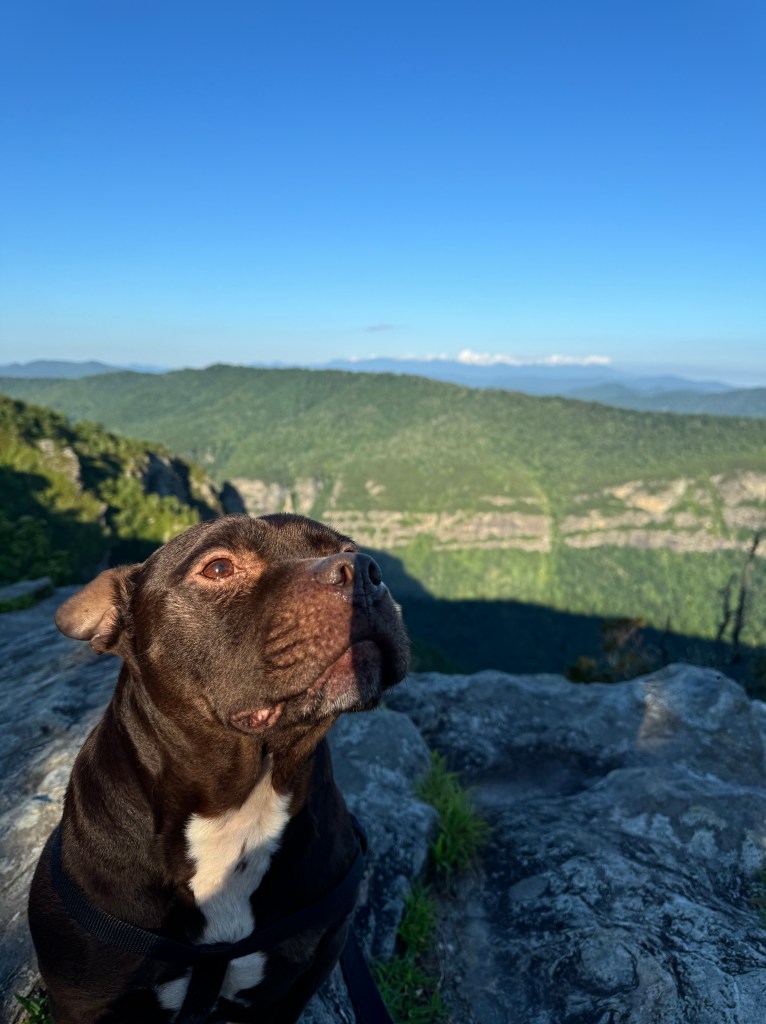
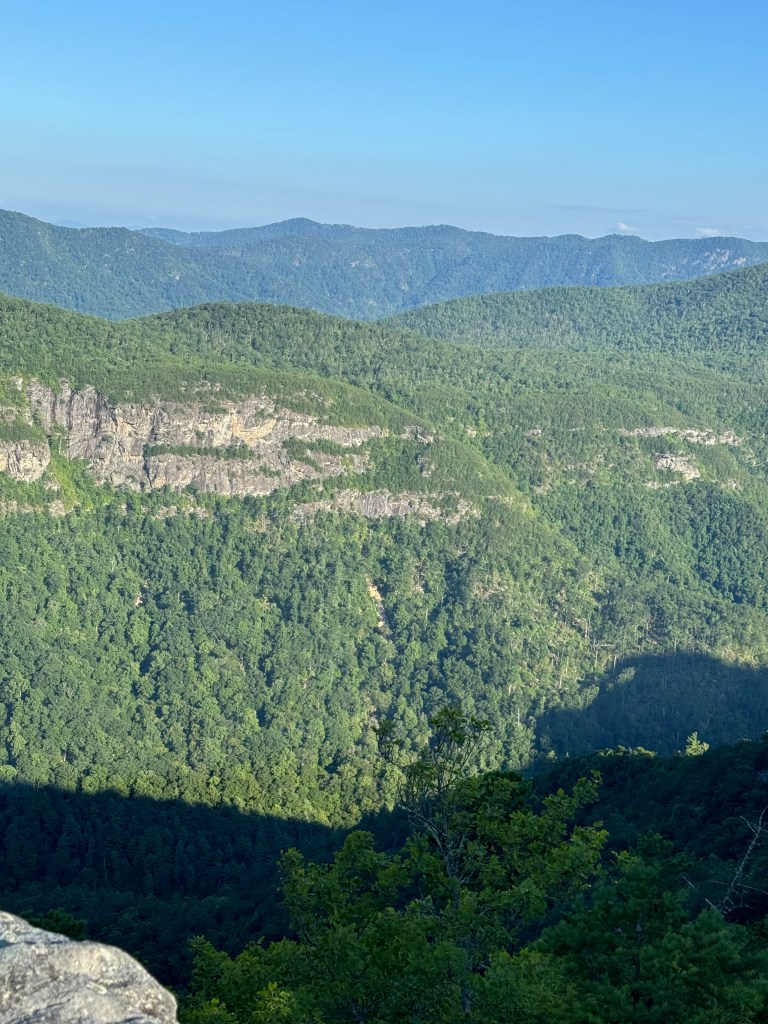
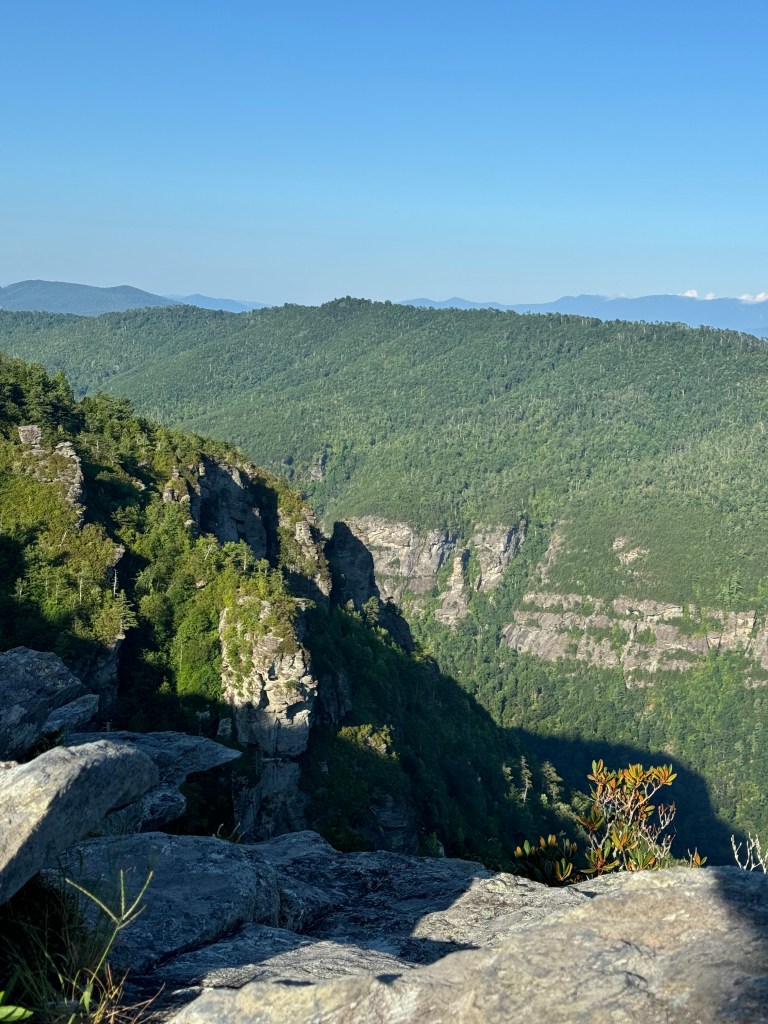
    The Chimneys in the Linville Gorge Wilderness features, in my opinion, one of the most stunning sceneries in all of North Carolina. It is usually easily accessible via the Table Rock Summit parking lot; however, at the time of writing, the parking area is closed due to a landslide. I parked at the Hawksbill Mountain Trailhead up north and hiked to the Chimneys via the Spence Ridge Trailhead, Table Rock Gap Trail, and a short portion of the Mountain-to-Sea Trail for a total of 5.8 miles.

    Safety is of the utmost concern when hiking in the Gorge. Trails are not signed or blazed inside the wilderness and can be difficult to navigate, not least due to the rugged terrain. It is, therefore, important to bring a map of the area and adequate water. Also note that the forest service road leading up to the wilderness area is unpaved and quite challenging to drive on.

    Charlies Bunion, Great Smoky Mountains National Park

    Charlies Bunion” describes a rock formation named after a local Appalachian Trail supervisor, Charlie Conner, who presumably hiked the trail with worn-out shoes, and features panoramic mountain views. My friend and I hiked 8 miles roundtrip from the Newfound Gap along the Appalachian Trail, traveling through high-elevation, spruce-fir forest on a rainy Wednesday.

    Calloway Peak, Grandfather Mountain State Park

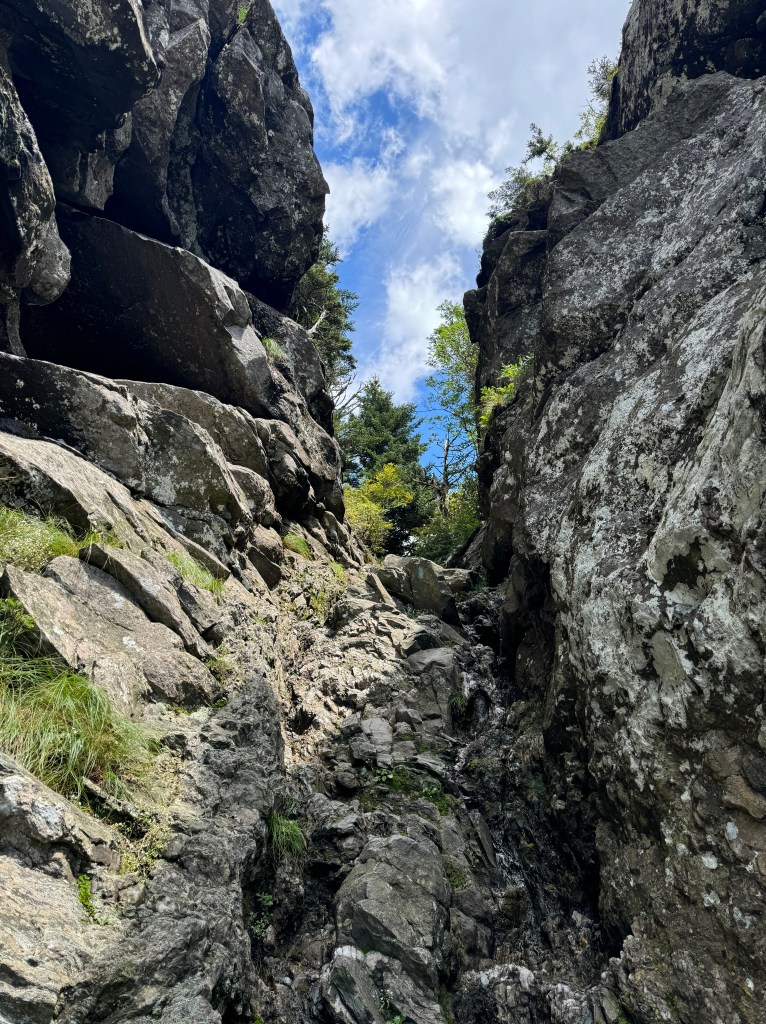
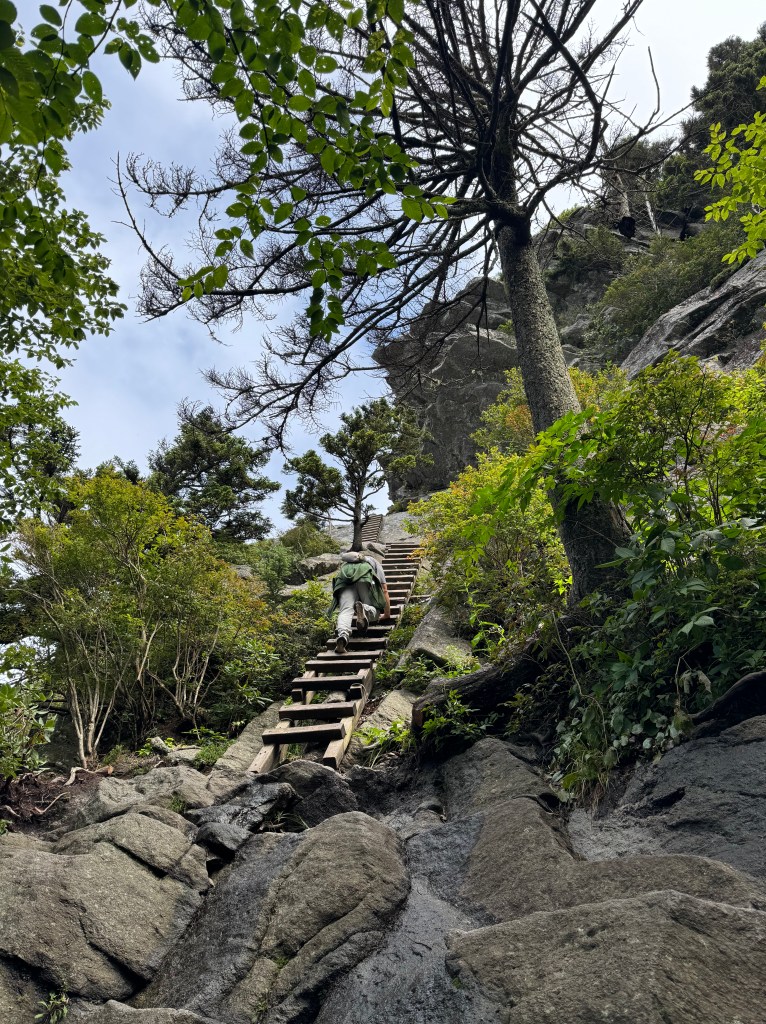
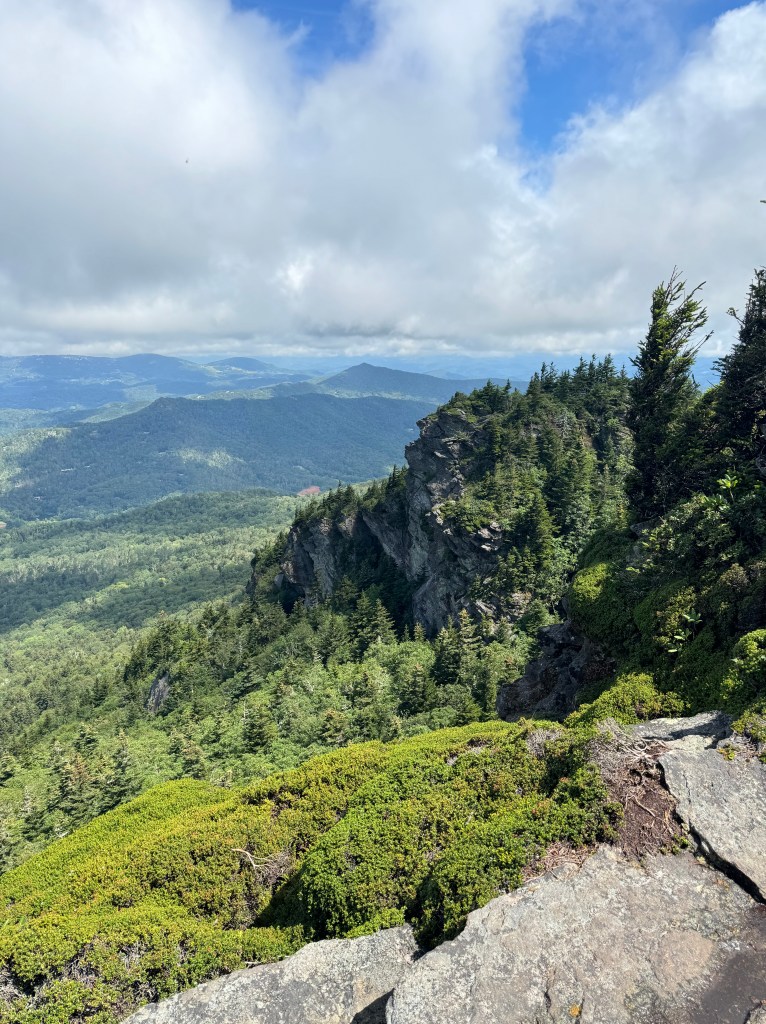
    The Grandfather Trail is one of the most technically challenging hikes in North Carolina and perhaps on the entire east coast. This 4.8-mile out-and-back trail follows the ridge of the Grandfather Mountain from the Top Shop Parking Area, passing through the Macrae Peak (5845 ft) and the Attic Window Peak (5880 ft), to the Calloway Peak (5946 ft). It is an incredibly fun and rewarding trail for more experienced hikers: the steepest sections of the trail require the use of in-place cables and ladders, and there is a fair amount of rock scrambling involved.

    I found this trail quite strenuous and, as someone who is working on his fear of heights, nerve-racking at times, but nevertheless highly rewarding and doable with previous hiking experience. My friend and I started hiking at 10am, and it almost took us the entire day to complete the trail (it is said that even the best hikers only average about a mile per hour). More logistical detail about this trail can be found on the Grandfather Mountain website. While no special equipment is required for this trail, it is essential to bring a pair of hiking boots with solid traction. Note, also, that the Grandfather Mountain State Park charges an entrance fee of $28-32 per day for each adult during summer months.

    Footnote

    1. For an engaging introduction to the geological history of North Carolina mountains, see Sandra Clark’s Birth of the Mountains: The Geologic Story of the South Appalachian Mountains (U.S. geological survey, U.S. Department of the Interior, 2001). ↩︎
    2. The Cherokees were the largest southeastern tribe by the sixteenth century. For an introduction to the social history of the Cherokees, see The Cherokee Perspective: Written by Eastern Cherokees, pp. 3-114 (Appalachian Consortium Press, 1981). ↩︎
    3. For hiking basics, visit this excellent blog post on understanding mileage, elevation, and routes, this post on beginner hiking gear, and this one on trail etiquette. ↩︎
    4. Conditions at many trails in western North Carolina have changed due to damage from Hurricane Helene. Notably, the Mount Mitchell State Park remains closed indefinitely (as of August 2025) and is thus not included in this list. ↩︎
  • State Parks Are Underappreciated

    This summer, I’ve been in the habit of visiting state parks in the high country and piedmont region of North Carolina. I would make the drive from Durham on Friday evening and get a couple hours of sleep in before starting the hike early in the morning. Part of the reason for this kind of schedule is to help me and my dog get used to crashing out in the car for our big road trip in September.

    I’m starting to realize just how amazing and underrated some of the state parks are in North Carolina. They don’t have the prestige of National Parks but can be just as rewarding to visit. I wanted to share three parks that have stood out to me thus far: Hanging Rock in North Carolina, Roan Mountain on the North Carolina-Tennessee border, and Grayson Highlands in Virginia.

    Hanging Rock is located 30 miles north of Winston-Salem, next to a small town called Danbury. We avoided the popular Hanging Rock Trail (1.3-mile one way) and instead opted for the moderately challenging and arguably more rewarding Moore’s Wall Loop Trail (4.7-mile loop), which leads to Moore’s Observation Tower (2497 ft). Remember to hike the loop in the clockwise direction if you would like a slow elevation climb. We hiked counterclockwise and was confronted with the 684-step “endless staircase” climb from the outset.

    Roan Mountain is covered by rich hardwood forest and abundant wildflowers. For an easy-to-moderate out-and-back trail, park at Carvers Gap Trailhead (go early because spots fill up super fast) and hike to Grassy Ridge Bald (6,184 ft). This route is part of the Appalachian National Scenic Trail.

    For wild ponies and scenic views, visit Grayson Highlands State Park, which is located next to Virginia’s two highest mountains, Mount Rogers (5729 ft) and Whitetop Mountain (5525 ft). We loved hiking around the Massie Gap, where we encountered the resident herd of ponies.

    My dog had been having joint pain but was able to comfortably finish the hikes with me after getting treatment at the vet. So our plan is to do mountain hikes of increasing difficulty. We are planning to visit Crowders Mountains near Charlotte, Mount Pisgah near Asheville, and Chimney Rocks (recently reopened after hurricane damage). I’m also planning to hike Table Rock Mountain and Grandfather Mountain before I leave for San Diego.

  • Confocal microscopy

    Introduction

    The primary purpose of a confocal microscope is to image deep into the tissues of thick specimens and produce optical sections for 3D reconstruction. This is achieved by the elimination of out-of-focus glare from the detector via the use of pinholes.

    When fluorescent specimens are imaged using a conventional widefield microscope, fluorescence emitted by the specimen that appears outside the focal plane can interfere with the resolution of those features that are in focus, leading to blurred images. This is especially the case for tissues that have a thickness of greater than 2 μm. In the confocal approach, the use of a detection-side pinhole that is in the same conjugate focal plane as the point of illumination prevents secondary fluorescence originating from below or above the focal plane from reaching the detector.

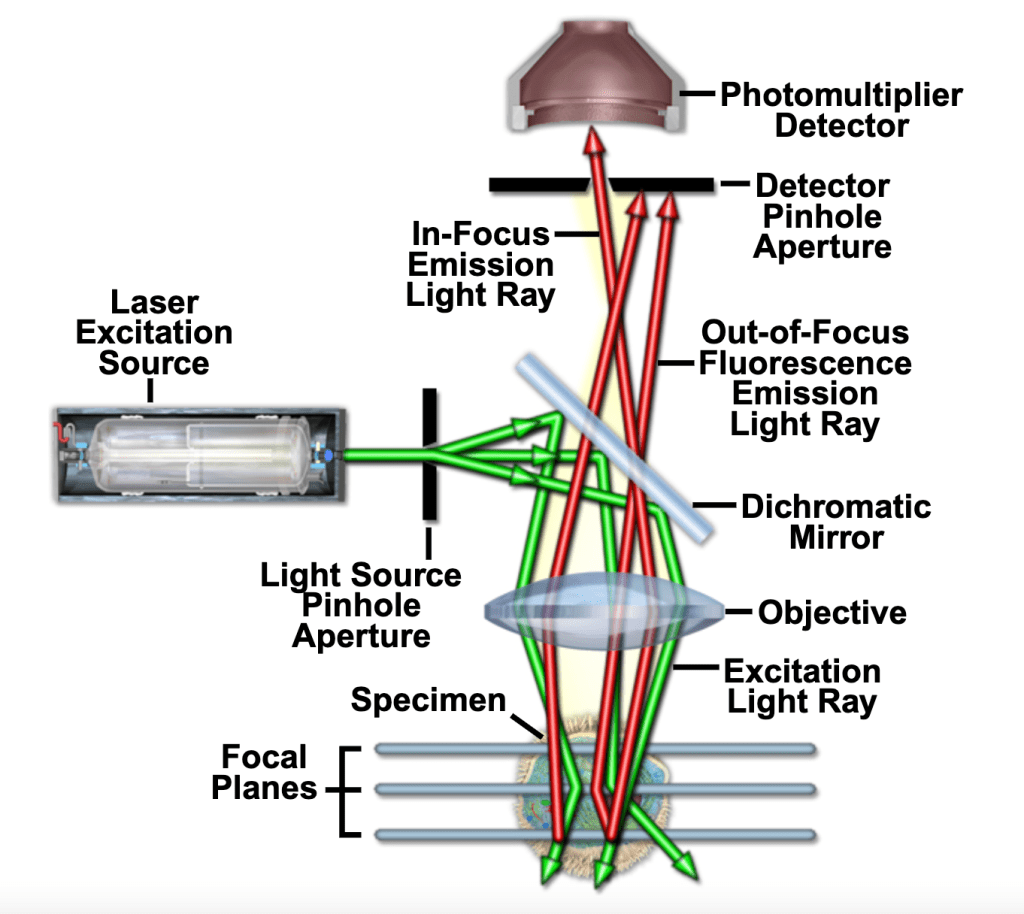
    The basic components of a modern confocal microscope are the pinhole, the objective lens, and low-noise detectors. A confocal microscope also typically includes fast scanning mirrors, filters for wavelength selection, and laser illumination. The principal light pathways of a confocal microscope are shown below. In fig. 1, light from a laser source passes through a dichromatic (i.e., dichroic) mirror and is reflected to the objective, which focuses the beam on a point in the sample. Emitted light passes back through the objective lens, the dichromatic mirror, and is detected by the photomultiplier detector (PMT). The detection-side pinhole works to prevent out-of-focus glare from reaching the detector. Varying the size of the pinhole alters the amount of light collected and the thickness of optical sections.

    Figure 1. Principal light pathways in confocal microscopy, adapted from Nikon.

    The confocal approach provides marginal improvements in axial and lateral resolution when compared to widefield microscopy. The best resolution in confocal microscopy is ~0.2 μm laterally (i.e., in the xy-plane) and ~0.6 μm axially (along the z-axis), and may be achieved when the pinhole is closed to the minimum size. The resolution possible in confocal microscopy is somewhat better than that in widefield microscopy, yet still considerably less than that of transmission electron microscopy.

    Pinhole and its effects

    When light passes through an aperture of any size, diffraction occurs. Even for perfectly designed optics, the image of a point source will be blurry due to diffraction. The smallest shape that can be generated is the image of a spot-shaped light and is called a “point spread function” (PSF). The PSF is formally defined as the distribution of light in the focus of an optical device when imaging a dimensionless spot (see fig. 2). The central spot in this pattern is called an “Airy disc.” The size of the Airy disc is a function of the wavelength, the numerical aperture (NA), the magnification of the objective lens, and the magnification of internal optics of the microscope.

    Figure 2. Airy disc, adapted from Leica.

    In the confocal approach, the illumination source is projected on a pinhole which acts as a spot-shaped source. The emission light is similarly fed through a detection-side pinhole before recorded by a sensing element. In this way, both illumination and detection are focused to the same spot (i.e., the two points are “confocal”). For general confocal imaging, the detection-side pinhole should just pass the Airy disc. The diameter in this case is designated as one Airy Unit (1 AU). Since the size of the Airy disc is not constant, the required pinhole diameter is different for different colors and for distinct objective lenses.

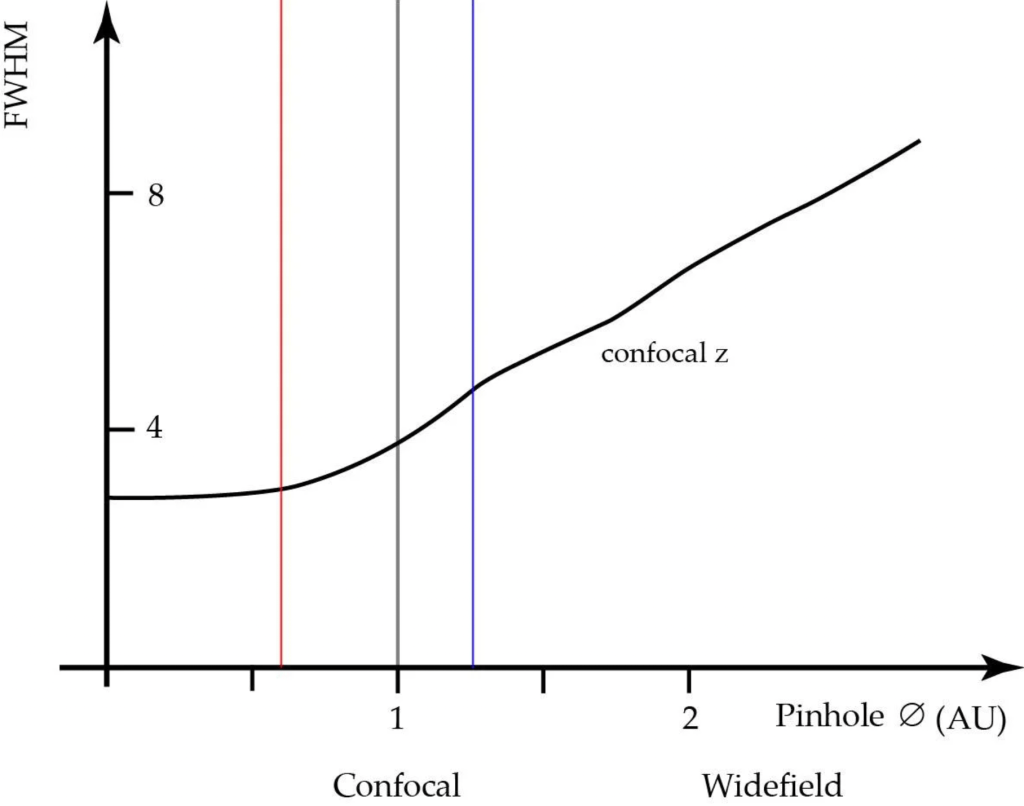
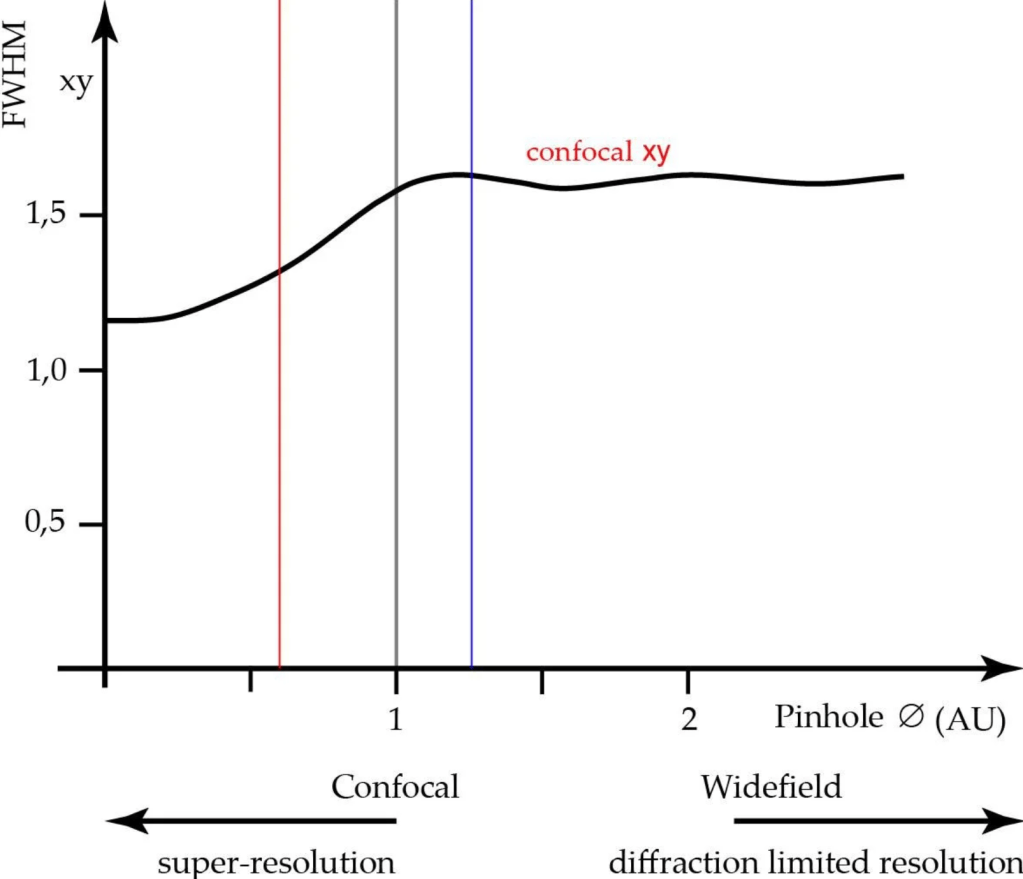
    The pinhole diameter affects both axial and lateral resolution (see fig. 3 and fig. 4). The axial resolution can be improved by closing the detection-side pinhole to smaller than 1 AU, but at the cost of signal to noise ratio (SNR). The best axial resolution is obtained when the pinhole diameter is at zero, but practically speaking, the thickness of the optical section at the diffraction limit is only about 25% better than at 1 AU. Moreover, at pinhole zero, lateral resolution improves by around 30%.

    If pinhole size increases beyond 1 AU, more and more extrafocal glare will reach the sensing element and start to blur the sharp focal signal. There is an apparent increase in contrast (SNR) due to the collection of light from outside the focal plane. As the pinhole approaches infinity, the microscope behaves like a conventional widefield microscope.

    Figure 3. Axial response to pinhole diameter, FWHM stands for full width at half minimum, adapted from Leica. Resolution is directly related to the FWHM of the instrument’s intensity PSF in the component direction.
    Figure 4. Lateral response to pinhole diameter, FWHM stands for full width at half minimum, adapted from Leica.

    Types of confocal microscopes

    Confocal microscopes can be classified by the means by which the illumination beam is scanned across the specimen. In stage scanning confocal microscopes, the illumination beam is kept stationary and the specimen itself moves on a vibrating stage. However, this scanning method can cause wobble and distortion in biological samples, is slower compared to scanning the beam, and requires a high degree of mechanical precision for optimal resolution.

    For these reasons, most modern confocal microscopes scan the illumination beam across a stationary specimen. Two different kinds of beam scanning technologies are typically used: single-beam scanning and multiple-beam scanning. In a laser scanning confocal microscope (LSCM), the most common type of single-beam scanning technology, a single laser beam is swept over the sample through computer-controlled galvanometer mirrors at the rate of one frame per second. Scanning at near video frame rates can be achieved via acousto-optical devices or oscillating mirrors.

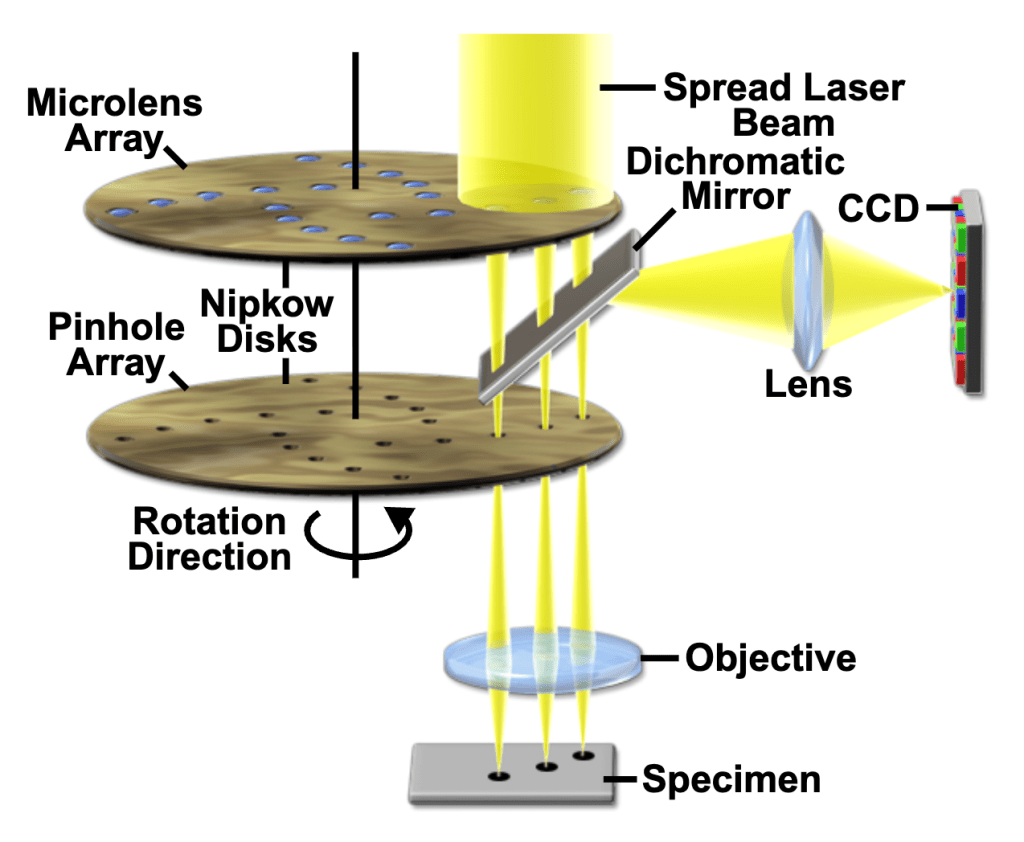
    Spinning disk confocal microscopes use some form of Nipkow disks to scan multiple beams at near real time. The Nipkow disk, conceived by German engineer Paul Nipkow (1860-1940) in the 1880s, is a metal disk with ~1% of the surface consisting of fixed-width holes arranged in outwardly spiraling tracks. In systems that employ Nipkow disks, the entire field can be covered at a higher rate. The image is captured with a camera (e.g., CCD) instead of a PMT (see fig. 5).

    Figure 5. Spinning disk confocal microscope, adapted from Nikon.

    Aberrations in confocal microscopy

    Simply put, optical aberrations cause the images produced by an optical system to not be a faithful representation of the specimen being imaged. In confocal microscopy, there are two major types of aberrations: chromatic and spherical aberration.

    Ideally, an objective lens would focus all wavelengths of light to a single point. In reality, all objectives have chromatic aberration, a property whereby different colors of light are focused to different points. In lateral chromatic aberration, horizontal displacements in the image plane cause different colors of light to be magnified differently. This issue can be resolved by restricting the analysis to the center of the image field.

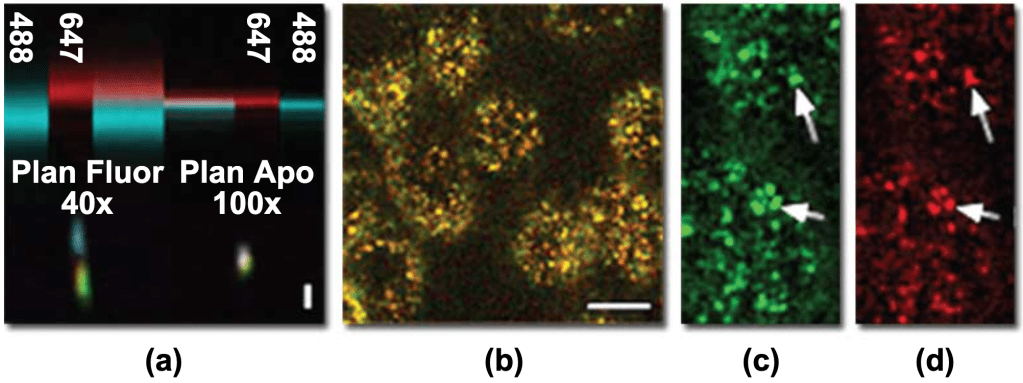
    In contrast, axial chromatic aberration, or vertical displacements along the optical axis, is present throughout the microscope field (see fig. 6). The effects of axial chromatic aberration could be minimized in two ways. The first is to sum the entire vertical series of the image volume into a single projection, which circumvents the discrepancy in focal plane but at the cost of losing all vertical information. The second solution is to measure the axial offset of different colors and combine images from different focal planes.

    Figure 6. Chromatic aberration in a plan fluor 40x objective and a plan apochromat 100x objective, adapted from Nikon. The top half of panel (a) illustrates the xz-sections of the glass reflection, with the focal axis oriented vertically, and demonstrates that the 100x objective can resolve the two colors of light to a depth within 0.1 μm of one another. In contrast, the minimally corrected 40x objective detects the reflection of 647 nm light approximately 1.2 μm above the 488 nm light. The bottom half of this panel shows vertical cross-sections of image volumes of beads labeled with three fluorophores.

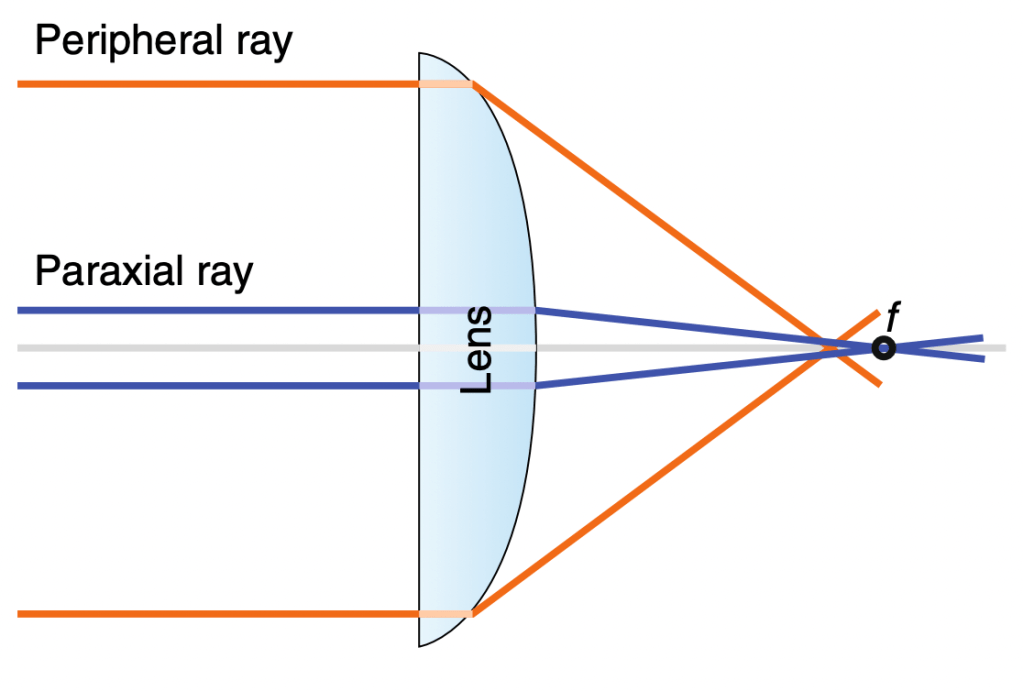
    Spherical aberration is a property by which light entering the periphery of a lens is focused to a different point on the optical axis than paraxial light rays that enter near the lens’s center (see fig. 7). A spherically aberrated lens severely decreases the signal in confocal microscopy. Spherical aberration can also be induced by a mismatch between immersion and sample media, worsening axial resolution and can even eliminate fluorescence detection entirely. For instance, spherical aberration can occur when one images a watery cell sample with an oil immersion objective.

    Figure 7. Lens-induced spherical aberration, adapted from Diel et al., 2020.

    References

    Borlinghaus, Rolf. “Pinhole Effect in Confocal Microscopes.” Leica Microsystems, 2017.

    Diel, Erin, et al. “Tutorial: Avoiding and Correcting Sample-Induced Spherical Aberration Artifacts in 3D Fluorescence Microscopy.” Nature Protocols, 2020.

    Dunn, Kenneth and Exing Wang. “Aberrations in Confocal Microscopy.” Nikon MicroscopyU.

    Elliott, Amicia. “Confocal Microscopy: Principles and Modern Practices.” Current Protocols in Cytometry, 2020.

    Paddock, Stephen, et al. “Introductory Confocal Concepts.” Nikon MicroscopyU.

  • Gay people and Christianity: a historical perspective

    I encountered the American historian John Boswell’s 1980 book, Christianity, Social Tolerance, and Homosexuality: Gay People in Western Europe from the Beginning of the Christian Era to the Fourteenth Century, in a San Francisco bookstore specializing in queer literature. It is a work of classical philology and medieval social history that traces the transformation of Western European social attitudes toward gay people between the beginning of the Christian era and the end of the High Middle Ages. It immediately caught my eye because the subject matter appeared relevant to today’s social climate. Many people have strong beliefs about the relationship between religion and sexuality; I was curious to see what a social historian had to say about this topic. I bought the first paperback edition of the book, which I believe is currently out of print, but the 35th Anniversary Edition is on sale here.

    In this work, Boswell explores the socio-historical origins of intolerance against gay people in medieval Europe, with a focus on the role played by early Christianity. Was early Christian teaching the cause of prejudice against gay people? Or was Christianity used as rationale for antigay attitudes that in fact arose for other, quite different, reasons?

    Boswell’s answers to these questions are as innovative as they are controversial. His main argument is that, in the centuries after the fall of the Roman empire, neither “Christian society nor Christian theology as a whole evinced or supported any particular hostility to homosexuality, but both reflected and in the end retained positions adopted by some governments and theologians which could be used to derogate homosexual acts” (333). If Boswell is correct, then the historical source of Western European intolerance of gay people must be sought elsewhere. Boswell suggests some possible causes in the final chapters of the book, but he gives no definitive answers regarding the ultimate origins of prejudice against homosexuality.

    In this post, I would like to provide a chapter-by-chapter summary (not an assessment) of Boswell’s claims and fill in the background needed to understand them. Let us start with classical antiquity.

    Chapter 3, “Rome: The Foundation,” where Boswell debunks popular myths about Roman sexuality

    Myth 1: Homosexual practices were illegal under Roman law.

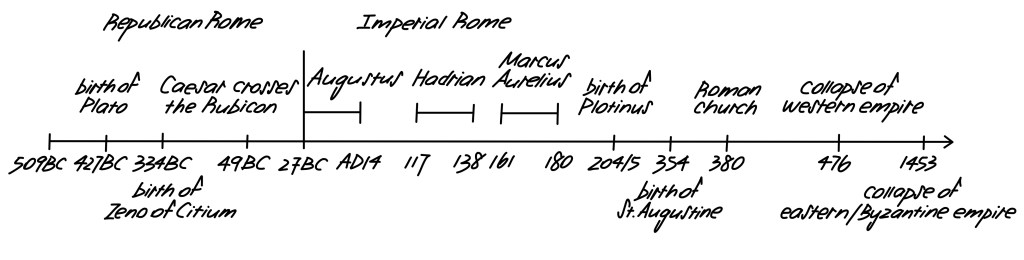
    Homosexual practices were legal in republican and early imperial Rome (63-71; fig. 1). Early Roman society almost uniformly assumed that adult males were capable of engaging in sexual relations with both sexes (73). Tolerance of gay people started declining in the fourth century, and homosexual relations were categorically prohibited by Roman law for the first time in the sixth century (127).

    Myth 2: Homosexuality and general immorality were associated with, or even caused, the decline of Rome.

    The output of gay literature peaked in early imperial Rome rather than during its decline in the third and the fourth century (73). The tolerance of homosexuality thus appeared to have declined along with the empire.

    Myth 3: Roman society was characterized by moral anarchy and loveless hedonism.

    Roman society enacted a complex set of civil and moral strictures regarding sexuality, even though none were directly related to the regulation of homosexual relations as a specific class (74). The Roman society made strong efforts to protect free-born children from sexual abuse (81). There was social prejudice against adult male citizens who preferred a “passive role” in sexual intercourse (74-77), and against male citizens who became prostitutes (77-80).

    Timeline of Rome
    Figure 1. Chronology of the Roman Empire.

    Chapter 4, “The Scriptures,” where Boswell discusses the so-called “clobber passages” in Christian Scripture

    The “clobber passages” (a term that Boswell himself does not use in the book) are those typically invoked by certain modern interpreters of Scripture to condemn consensual homosexual relations (i.e., Genesis 19:1-38; Leviticus 18:22, 20:13; 1 Corinthians 6:9; 1 Timothy 1:10; Romans 1: 26-27). In this chapter of the book, Boswell argues that, historically speaking, these passages played no demonstrable role in the rise of antigay feelings among Christians.

    Chapters 5-6, where Boswell argues that Christian communities were not specifically responsible for social intolerance against gay people in the late Roman Empire

    Boswell isolates four type of Christian arguments that came to exert significant influence on the perception of gay people in Europe:

    1. Animal behavior. The author of the Epistle of Barnabas (c. first century) equated Mosaic prohibitions of eating certain animals with various sexual sins. It was said that the hare grows a new anus every year, the hyena changes its gender every year, and the weasel conceives through its mouth. The Clement of Alexandria (c. 150-250) invoked these zoological examples to argue against homosexuality in his Paedagogus, an instructional manual for Christian parents. The associations between Mosaic law, animal sexuality, and homosexual behavior found their way to the Physiologus, a collection of moralized beast tales and the most popular zoological work in the Middle Ages.
    2. Unsavory associations. Some Christian writers associated homosexuality with the sexual abuse of minors, accidental incest, and paganism.
    3. Concepts of “nature.” There is no unitary concept of “nature,” for different schools of thought held different and sometimes incompatible views. Even though there is no sound scriptural basis for the use of “nature” as a moral principle, early Christian thought was influenced by versions of Platonic and Aristotelian concepts of “ideal nature” (e.g., the Platonist Philo posited that any use of sexuality which did not produce legitimate offspring violated “nature”), as well as by Stoic concerns with “natural” morality.
    4. Gender expectations. Christian church fathers such as John Chrysostom (c. 347-407) objected to homosexuality largely due to its perceived violation of gender norms: “I maintain that not only are you made [by passive intercourse] into a woman, but you also cease to be a man; yet neither are you changed into that nature, nor do you retain the one you had” (In Epistolam ad Romanos, cited in 157).

    Boswell nevertheless contends that these theological texts were not determinative of Christian sexual ethics in the late Roman Empire. Boswell lays out several arguments in support of this thesis:

    1. All organized philosophical traditions grew increasingly intolerant of sexual pleasure under the later Empire, including pagan philosophy (128).
    2. It appears unlikely that Christians in general subscribed to the extreme asceticism and narrow sexual attitudes of some of their leaders (128).
    3. The major moral traditions that influenced Christianity would not necessarily have prohibited homosexual relations as an option for Christians (i.e., the Judeo-Platonist schools of Alexandria [163, 164], dualist religious movements such as Manicheaism [128, 129], and Stoicism [129-131]).
    4. Many writers objected to Christianity precisely due to the supposed sexual looseness of its adherents and even leaders, including engagement in homosexual acts (131-133).

    Boswell argues that the decline of Roman tolerance of sexual issues may alternatively be attributed to (1) the increasing ruralization of Roman civilization and ethics, and (2) the growing totalitarianism of Roman government and its control over the lives of Roman citizens.

    Chapters 7-11, where Boswell outlines the vicissitudes of popular social attitudes toward gay people in the Middle Ages

    In the early Middle Ages, gay people constituted a silent minority. Moral theology of this period treated homosexual practices as at worst comparable to premarital heterosexual intercourse but more often remained silent on this issue (333). In general, Boswell claims, attitudes toward homosexuality grew steadily more tolerant (333).

    A gay subculture re-emerged in the eleventh and early twelfth century (1050-1150), along with urban economies and city life. It appeared to have its own slang (e.g., the equivalent of “gay” was “Ganymede”).

    Beginning roughly in the late twelfth century, a “virulent hostility” toward homosexuality developed in popular literature as well as theological and legal writings (334). The cause of this shift is unknown and remains to be explored.

  • A quick note on finding happiness despite not having what I want

    I want to keep this blog post brief because one, it’s late and almost bedtime for me and two, I don’t think I have anything profound to say about this topic. All I want to write about is the coping skills that have helped me in the past week or so.

    The past week has been a challenging one. There is, first of all, the prospect of starting my first postgrad job amidst growing uncertainties about international students’ ability to obtain and retain temporary employment authorization. Then there is the pressure I feel to continue growing through a breakup while planning to relocate to another part of the country later this year.

    The more I reflect on these things the more I experience what I perceive to be a complete loss of control, a lack of agency over my life circumstances. It is as if this year has been the year where I find out that everything I want in life could be taken away in the blink of an eye and against my will (as always, my mind has a taste for dramatizing things). And these experiences have led to a great deal of obsessive rumination, wrestling with reality and, for lack of a better term, general depression about where I’m at in life.

    What have helped me the most are the following practices. The first has been to catch my negative thought patterns and reframe them one by one, CBT-style. The second involves the mindfulness practice known as “radical acceptance” (here is a New York Times article written by clinical psychologist and assistant professor in psychiatry Jenny Taitz that delves into the five steps of radical acceptance).

    The point of radical acceptance is to accept reality as it is and to accept any feelings that might arise in response to it. Too often I hold judgements not only about the reality that confront me but also about my feelings about said reality – be it the more “socially acceptable” emotions like sadness and fear or the supposedly “unacceptable” and presumably “secondary” ones like anger, envy, and jealousy. But to hold judgements in this way, I think, is a sort of defense against experiencing what is disagreeable to me, an avoidance strategy that amounts to a refusal to process and work with what I am actually given. There are moments when such refusal is necessary, but more often than not, I’m willing to say, it achieves little other than holding me back from living life in the present and causing me unnecessary suffering.

    It has been my experience this past week that I am most receptive to happy moments – and things I ought to be grateful for – when I am simultaneously most open to the realities of anxiety and pain. This has been an odd but ultimately hopeful lesson.

  • Split ubiquitin systems

    This is a yeast two-hybrid system used to detect protein-protein interactions between non-nuclear or insoluble proteins. For further information, please refer to Obrdlik et al. 2004, PNAS, vol. 101, no. 33, pp. 12242-12247.

    The ubiquitin protein is split into two halves – the N-terminal “Nub” (from N-ubiquitin, amino acids 1-34) and the C-terminal “Cub” (from C-ubiquitin, amino acids 35-76). NubG is a mutant with decreased affinity for Cub; functional ubiquitin is reconstituted only when NubG and Cub are in closed proximity to each other. The C terminus of Cub is fused to an artificial transcription factor, protein A-LexA-VP16 (PLV). The Cub-PLV and NubG peptides are fused to bait and prey proteins, respectively.

    If bait and prey proteins interact, Cub-PLV and NubG are brought into close vicinity. Functional ubiquitin is thereby reconstituted and recognized by ubiquitin-specific proteases (USPs). The activity of USPs leads to the release of PLV and the activation of LexA-driven reporter genes in the nucleus.

  • Building community, as an adult

    One thing that I’ve been working on since my breakup five months ago is building communities around myself. For most of college I had quite a small social circle as I adapted to life in North Carolina. During my last relationship, my ex’s family was my primary support system. But now that the relationship’s ended and I’m moving on to a new stage of my life, I realize that it’s time for me to take a more active role in creating meaningful connections.

    Here are four lessons I’ve learned so far.

    Showing up consistently to events / shared experiences

    This is the single most important advice. Adult friendships take genuine effort and commitment, even if they are formed on the basis of shared interests. In college, we are guaranteed to have shared intimate experiences with a large group of people. This is no longer the case for college grads, for whom it becomes important to be intentional in creating shared experiences with new people on a regular basis.

    The best way to expand my world has been to show up consistently to places and events. For me it has looked like joining volleyball rec leagues, signing up for beginner ultimate frisbee lessons and for a night class, and going to silent book club meetings. It is much easier to form connections when I see the same people over an extended period of time. It gives me time to get to know people better and assess whether I enjoy spending time with them.

    Deepening preexisting interests and aspects of identity

    As an introvert, always going to new events to meet people is not always sustainable. I’ve found it easier to connect with people who share a preexisting interest of mine and/or an aspect of my identity (e.g., having grown up in multiple cultures). This way I can find like-minded people while doing something that I already enjoy.

    Deepening my interests have also helped create value and meaning in my life. For example, captaining for my indoor volleyball team has challenged me in ways that I did not expect while revealing to me aspects of myself I did not know existed. This experience has, for instance, reaffirmed my interest in bringing people together and creating spaces where people feel welcome.

    Diversifying the type of relationships

    Connections with different people may look different, and that’s okay. The relationships I have, say, with my literature friends look different from those I have with my volleyball friends. I value these connections differently, and they have worked to enrich my life in very diverse ways.

    Not all connections have to be “deep”

    This is a big revelation for me. I’ve lived most of my life thinking that what I needed was one or two “deep” relationships. I’m not saying that deep connection don’t exist; rather, such an expectation often places an unrealistic pressure on a handful of people to satisfy my needs. In a community there are bound to be casual acquaintances, and they can be a huge source of love and support as well. It can be tremendously helpful, for example, to be on a first name basis with your neighbors, something that I am trying to build as I move into my new home.

  • What we know and don’t know about human history

    I want to start by talking about a particularly illuminating passage in David Graeber and David Wengrow’s The Dawn of Everything: A New History of Humanity (2021). In it, Graeber and Wengrow (GW) take issue with what evolutionary psychologists such as Robin Dunbar have typically assumed about the nature of human society.

    The narrative offered by evolutionary psychologists, GW observes, usually goes something like this: the most basic and tight-knit social unit is the one based on biological kinship. This is presumably evidenced by the structure of ancient and modern hunter-gatherer societies, which supposedly consist of small-scale alliances between pair-bonded, nuclear families with “shared investment in offspring” (279). When larger social structures arose in human history, however, internal group conflicts tended to increase, which necessitated the establishment of centralized institutions and the emergence of sovereign power to maintain social cohesion.

    GW’s objection to this type of evolutionary narrative is amusingly simple. Many of us don’t like our families very much. Many, that is, “find the prospect of living their entire lives surrounded by close relatives so unpleasant that they will travel very long distances just to get away from them” (279, 280). Why wouldn’t this also be the case for hunter-gatherers? The idea that hunter-gatherers typically organize themselves in family units, and the related thesis that social ties based on blood relationship are the most enduring, must, therefore, not be simply taken for granted but carefully evaluated.

    Anthropological and archaeological data appear to discredit what evolutionary psychologists say about the nature of human group formation. Studies of modern hunter-gatherers, such as the Martu in Australia, have shown that most foragers in residential groups are genetically unrelated (GW cites two studies: Hill et al. [2011] and Bird et al. [2019]). Moreover, a 2017 study of the Agta camps in the Philippines and the BaYaKa camps in the Republic of the Congo suggests that, in hunter-gatherer groups, strong friendships are more important than family ties in predicting shared knowledge and information exchange (much like Facebook and other Internet communities, the authors of the study suggest).

    It would be unreasonable to use the behavior of modern hunter-gatherers to infer how humans acted in prehistoric times. Recent genomic evidence has nevertheless suggested that the population structure of modern hunter-gatherer bands can be traced back to at least the early Upper Paleolithic (~32,000 BC), characterized by small group sizes and “limited levels of within-band relatedness.”

    GW concludes:

    “It would seem, then, that kinship [in forager groups such as the Martu] is really a kind of metaphor for social attachments, in much the same way we’d say ‘all men are brothers’ when trying to express internationalism (even if we can’t stand our actual brother and haven’t spoken to him for years). What’s more, the shared metaphor often extended over very long distances, as we’ve seen with the way that Turtle or Bear clans once existed across North America, or moiety systems across Australia. This made it a relatively simple matter for anyone disenchanted with their immediate biological kin to travel very long distances and still find a welcome” (280).

    This passage typifies the general project GW lays out in The Dawn of Everything – to dismantle some of the most popular narratives about the formation of human society. In doing so, GW challenges many deep-seated assumptions we hold about the way in which societies have been and could potentially be organized. If, for instance, it is the case, as GW has argued, that biological kinship does not undergird social attachment, even in small and supposedly primitive hunter-gatherer bands, then an entirely different picture of the nature of human sociality emerges.

    GW bases their arguments on the latest research in archaeology and anthropology, which would otherwise have been inaccessible to nonprofessionals. This is made possible by the combination of their respective academic expertise. David Graeber (1961-2020) was an anthropologist and political activist who studied under Marshall Sahlins (1930-2021) at the University of Chicago. David Wengrow is an archaeologist and professor of comparative archaeology at University College London.

    Just to illustrate the sheer breadth of GW’s critical project, here is an (incomplete) list of grand narratives about human history that they find in some respect misleading:

    1. Thomas Hobbes’s Leviathan (1651);
    2. Jean-Jacques Rousseau’s Discourse on the Origin and Foundation of Inequality Among Mankind (1754);
    3. Robin Dunbar’s How Many Friends Does One Person Need? Dunbar’s Number and Other Evolutionary Quirks (2010).
    4. Francis Fukuyama’s The Origins of Political Order: From Prehuman Times to the French Revolution (2011);
    5. Jared Diamond’s The World Until Yesterday: What Can We Learn from Traditional Societies? (2012)
    6. Yuval Noah Harari’s Sapiens: A Brief History of Humankind (2014)
    7. Steven Pinker’s Enlightenment Now: The Case for Reason, Science, Humanism, and Progress (2018)

    Ultimately, however, GW’s work raises more questions than it gives answers. GW makes innovative points about topics ranging from the advent of agriculture and urban civilization to the historical origins of slavery and private property, but they have, for the most part, refrained from weaving their claims into a coherent grand narrative. The tentativeness of their claims suggests that more research needs to be done in their fields rather than reflecting a lack of intellectual labor or capacity on their part.

    Instead of summarizing all of GW’s claims, in what follows, I will focus on what appears to me as two of the important myths about human history that GW’s work succeeds in subverting.

    Myth 1: Hobbesian Hawks and Rousseauian Doves

    Foundational figures in modern political theory, Hobbes (1588-1679) and Rousseau (1712-1778) both proffered their views on human nature by imagining how humans acted in the original, prehistoric “state of nature,” without the presence of social institutions such as the government, the court, and the police. For Hobbes, the state of nature is basically a state of war (bellum omnium contra omnes), where people fight against each other unless their baser passions are kept in check by a sovereign. Rousseau holds the opposite view. In the Discourse on Inequality, Rousseau accuses Hobbes of having projected into the state of nature values which are in fact products of civil society. Contra Hobbes, he thought that the “savage,” whose action was regulated by the instinct for self-preservation (amour de soi) and feelings of pity (pitié), lived in a prolonged state of childlike innocence and egalitarianism (99).1 For Rousseau, it is the advent of private property, which is in turn brought about by the development of metallurgy and agriculture, that effectively put an end to the peace and egalitarianism of former times:

    “The first man who, having enclosed a piece of land, thought of saying ‘This is mine’ and found people simple enough to believe him, was the real founder of civil society. How many crimes, wars, murders; how much misery and horror the human race would have been spared if someone had pulled up the stakes and filled in the ditch and cried out to his fellow men: ‘Beware of listening to this impostor. You are lost if you forget that the fruits of the earth belong to everyone and that the earth itself belongs to no one!’” (109)

    Grand narratives about the trajectory of human history are typically modeled after Hobbesian or Rousseauian lines. The former dignifies civil society while the latter condemns it. In the Hobbesian account, progress is dependent upon regulative mechanisms that represses our murderous and selfish instincts. In the Rousseauian account, it is precisely civil society and its laws that irretrievably destroyed the innocent and largely peaceful egalitarianism with which prehistoric humans conducted their lives.

    The problem with both of these narratives, GW argues, is that they lead to a pessimistic outlook on the possibilities of human politics. Both presuppose that societies with sizeable populations must be organized rigidly and hierarchically. It matters little that Hobbesians celebrate this whereas Rousseauians laments it: both assume that that’s the direction that human history inevitably takes. For GW, this deterministic view of history is not only unnecessarily pessimistic but also just plainly false, given what we now know about prehistoric human societies.

    Current archaeological research now suggests that, in GW’s words,

    “From the very beginning, or at least as far as we can trace such things, human beings were self-consciously experimenting with different social possibilities.”

    That is, hunter-gatherer bands did not always endorse egalitarian principles (contra Rousseau), neither were ancient cities invariably stratified or organized under a sovereign power (contra Hobbes). In Ukrainian mega-sites (~4000 BC), the Uruk Mesopotamia (~3300 BC), and the Indus Valley (~2600 BC), for instance, the emergence of large urban civilizations did not seem to lead to the concomitant concentration of wealth and power in a sovereign or ruling class.

    Myth 2: Societies Developed in Evolutionary Stages

    The historical origin of this evolutionary (and materialist) view of social progress can be traced back to an essay written in 1750/51 by French economist Anne Robert Jacques Turgot (1727-1781), entitled “Plan of Two Discourses on Universal History.” In this essay, Turgot outlines what later came to be known as the “four stages” theory of social development. In this view, social progress is measured by the mode of subsistence of its people, which has evolved in four distinct and normally consecutive stages (i.e., hunting, pasturage, farming, and finally commerce). Each stage has associated with it a distinct form of social organization.

    What GW has done successfully, I think, is to point to the limitations of theories which view social progress as proceeding in evolutionary stages. For the European thinkers who advocated for this view (e.g., economists like Turgot, Adam Smith, Adam Ferguson, John Miller, etc.), the evolutionary model served to portray European societies as the pinnacle of social progress, while neutralizing what GW has termed the “indigenous critique” of European society which arose among indigenous peoples in the New World. As GW describes it, the American indigenous critique highlighted the perceived inability of European societies to “promote mutual aid and protect personal liberties” and later focused on inequalities of property.

    References

    Graeber, David, and David Wengrow. The Dawn of Everything: A New History of Humanity. Picador / Farrar, Straus and Giroux, 2021.

    Rousseau, Jean-Jacques. A Discourse on Inequality. Translated by Maurice Cranston, Penguin Books, 1984.

    Footnotes
    1. This is of course a highly simplified account of Rousseau’s view. In fact, Rousseau denies that his account of the savage man is a reconstruction of human history as it actually was. ↩︎